

Virginia capital likely has 742 unmarked graves, some of Confederate soldiers, study finds
Advertisement
Read this article for free:
or
Already have an account? Log in here »
To continue reading, please subscribe:
Monthly Digital Subscription
$1 per week for 24 weeks*
- Enjoy unlimited reading on winnipegfreepress.com
- Read the E-Edition, our digital replica newspaper
- Access News Break, our award-winning app
- Play interactive puzzles
*Billed as $4.00 plus GST every four weeks. After 24 weeks, price increases to the regular rate of $19.95 plus GST every four weeks. Offer available to new and qualified returning subscribers only. Cancel any time.
Monthly Digital Subscription
$4.99/week*
- Enjoy unlimited reading on winnipegfreepress.com
- Read the E-Edition, our digital replica newspaper
- Access News Break, our award-winning app
- Play interactive puzzles
*Billed as $19.95 plus GST every four weeks. Cancel any time.
To continue reading, please subscribe:
Add Free Press access to your Brandon Sun subscription for only an additional
$1 for the first 4 weeks*
*Your next subscription payment will increase by $1.00 and you will be charged $16.99 plus GST for four weeks. After four weeks, your payment will increase to $23.99 plus GST every four weeks.
Read unlimited articles for free today:
or
Already have an account? Log in here »
Hey there, time traveller!
This article was published 30/05/2025 (300 days ago), so information in it may no longer be current.
RICHMOND, Va. (AP) — An acre of land owned by the city of Richmond contains potentially hundreds of unmarked graves, some of which could belong to Confederate soldiers who died in the Civil War, according to a study released Friday.
The city commissioned the land survey after drawing scrutiny for spending $16,000 to upgrade an area around a grave marker on the property that pays tribute to Confederate soldiers, the Richmond Times-Dispatch reported.
The stone marker was placed there in 1939 by the United Daughters of the Confederacy. It honors more than 100 Confederate soldiers from South Carolina who died in a wartime hospital across the street.
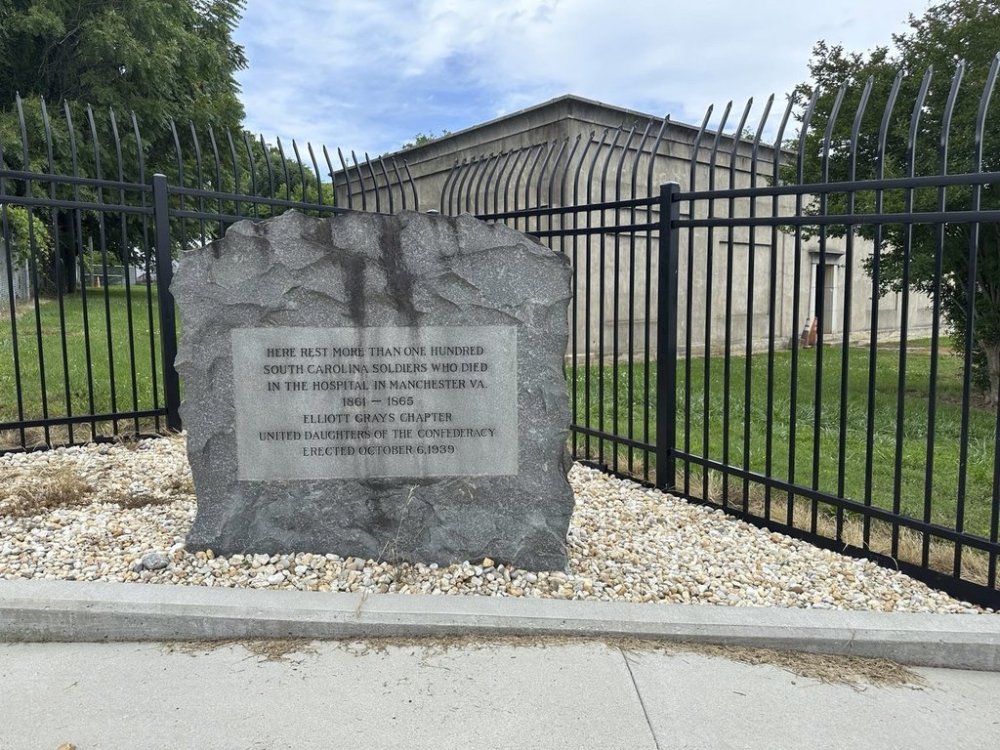
The Richmond Free Press, a newspaper with a large Black readership, first reported on the upgrades, which had included fencing, landscaping and a new bench. The newspaper raised questions about city expenditures on the project in the wake of removing various other Confederate monuments in recent years. Richmond was the capital of the Confederacy.
The city noted the scrutiny in the study, which sought to verify that the land had been used as a cemetery for Confederate soldiers. Using ground penetrating radar and other research methods, the study found that there are more than 472 probable graves and 270 possible graves there, if not more.
The land was originally in the former Richmond suburb of Manchester, which was later encompassed by the city. Manchester bought the land in 1857, possibly for a cemetery, four years before the Civil War started in 1861.
The study included a review of old municipal, hospital and burial records. Newspaper articles from the late 19th century and early 20th century reference people who died in the Civil War being buried there. Maps also show a cemetery existing in that spot in 1876, after the Civil War.
The study found “a circumstantial case that the property was used for wartime burials,” while the research also “indicates that soldiers from states other than South Carolina may have also been buried here.”
The city bought the property in 1930. It now serves as a natural gas booster and storage facility.
In its statement Friday, the city said it has consulted with historians and other officials to develop an access plan for the site. It would allow visitation to descendants of those believed to have been interred there and to others interested in genealogical research.