

Swedish inquiry finds abuse and fraud in international adoptions dating back decades
Advertisement
Read this article for free:
or
Already have an account? Log in here »
To continue reading, please subscribe:

Digital Subscription
One year of digital access for only $205*
- Enjoy unlimited reading on winnipegfreepress.com
- Read the E-Edition, our digital replica newspaper
- Access News Break, our award-winning app
- Play interactive puzzles
*First annual payment billed as $205.00 + GST for one year. This annual subscription will automatically renew at $233.00 + GST every 52 weeks (10% off the regular annual price of $259.35). Offer available to new and qualified returning subscribers only. Cancel any time.
To continue reading, please subscribe:
Add Free Press access to your Brandon Sun subscription for only an additional
$1 for the first 4 weeks*
- Enjoy unlimited reading on winnipegfreepress.com
- Read the E-Edition, our digital replica newspaper
- Access News Break, our award-winning app
- Play interactive puzzles
*Your next Brandon Sun subscription payment will increase by $1.00 and you will be charged $17.95 plus GST for four weeks. After four weeks, your payment will increase to $24.95 plus GST every four weeks.
Read unlimited articles for free today:
or
Already have an account? Log in here »
Hey there, time traveller!
This article was published 02/06/2025 (484 days ago), so information in it may no longer be current.
STOCKHOLM (AP) — A Swedish commission recommended Monday that international adoptions be stopped after an investigation found a series of abuses and fraud dating back decades.
Sweden is the latest country to examine its international adoption policies after allegations of unethical practices, particularly in South Korea.
The commission was formed in 2021 following a report by Swedish newspaper Dagens Nyheter detailing Sweden’s problematic international adoption system. Monday’s recommendations were sent to Minister of Social Services Camilla Waltersson Grönvall, who said her department would review the report.
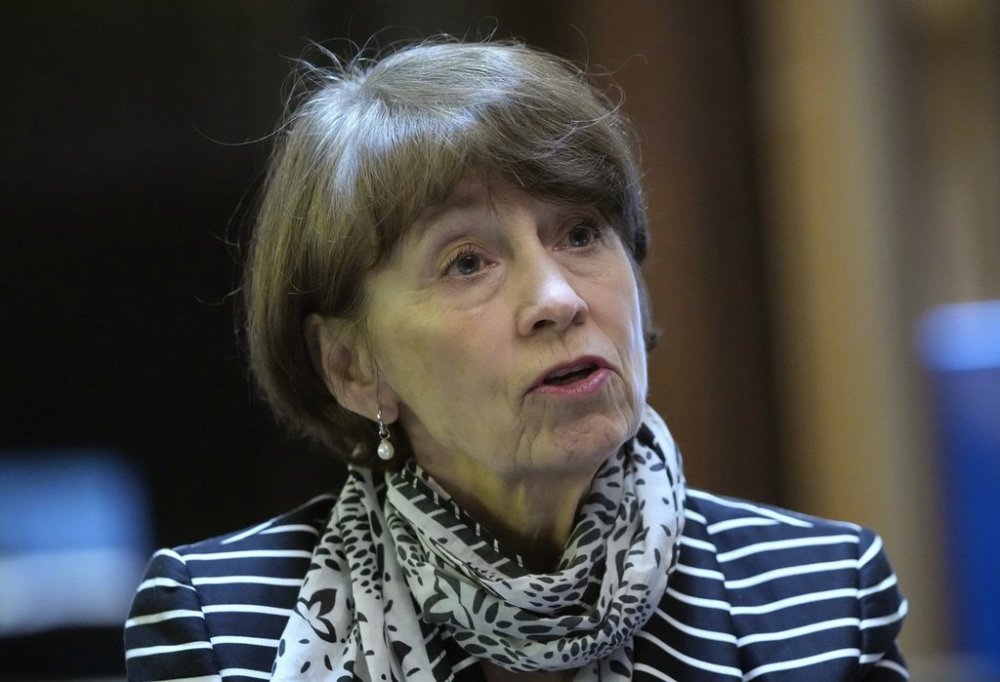
“The assignment was to investigate whether there had been irregularities that the Swedish actors knew about, could have done and actually did,” Anna Singer, a legal expert and the head of the commission, told a news conference. “And actors include everyone who has had anything to do with international adoption activities.
“It includes the government, the supervisory authority, organization, municipalities and courts. The conclusion is that there have been irregularities in the international adoptions to Sweden.”
The commission called on the government to formally apologize to adoptees and their families. Investigators found confirmed cases of child trafficking in every decade from the 1970s to the 2000s, including from Sri Lanka, Colombia, Poland and China.
Singer said that a public apology, beside being important for those who are personally affected, can help raise awareness about the violations because there is a tendency to downplay the existence and significance of the abuses.
An Associated Press investigation, in collaboration with Frontline (PBS), last year reported dubious child-gathering practices and fraudulent paperwork involving South Korea’s foreign adoption program, which peaked in the 1970s and ’80s amid huge Western demands for babies.
The AP and Frontline spoke with more than 80 adoptees in the U.S., Australia and Europe and examined thousands of pages of documents to reveal evidence of kidnapped or missing children ending up abroad, fabricated child origins, babies switched with one another and parents told their newborns were gravely sick or dead, only to discover decades later they had been sent to new parents overseas.
The findings are challenging the international adoption industry, which was built on the model created in South Korea.
In March, South Korea’s truth commission concluded that the government bears responsibility for facilitating a foreign adoption program rife with fraud and abuse, driven by efforts to reduce welfare costs and enabled by private agencies that often manipulated children’s backgrounds and origins.
The Netherlands last year announced it would no longer allow its citizens to adopt from abroad. Denmark’s only international adoption agency said it was shutting down, and Switzerland apologized for failing to prevent illegal adoptions. France released a scathing assessment of its own culpability.
South Korea has sent around 200,000 children to the West for adoptions in the past six decades, with more than half of them placed in the U.S. Along with France and Denmark, Sweden has been a major European destination of South Korean children, adopting nearly 10,000 of them since the 1960s.