

Xu Qiliang, former top Chinese general close to Xi, dies in Beijing
Advertisement
Read this article for free:
or
Already have an account? Log in here »
To continue reading, please subscribe:

Digital Subscription
One year of digital access for only $205*
- Enjoy unlimited reading on winnipegfreepress.com
- Read the E-Edition, our digital replica newspaper
- Access News Break, our award-winning app
- Play interactive puzzles
*First annual payment billed as $205.00 + GST for one year. This annual subscription will automatically renew at $233.00 + GST every 52 weeks (10% off the regular annual price of $259.35). Offer available to new and qualified returning subscribers only. Cancel any time.
To continue reading, please subscribe:
Add Free Press access to your Brandon Sun subscription for only an additional
$1 for the first 4 weeks*
- Enjoy unlimited reading on winnipegfreepress.com
- Read the E-Edition, our digital replica newspaper
- Access News Break, our award-winning app
- Play interactive puzzles
*Your next Brandon Sun subscription payment will increase by $1.00 and you will be charged $17.95 plus GST for four weeks. After four weeks, your payment will increase to $24.95 plus GST every four weeks.
Read unlimited articles for free today:
or
Already have an account? Log in here »
Hey there, time traveller!
This article was published 02/06/2025 (472 days ago), so information in it may no longer be current.
BEIJING (AP) — Xu Qiliang, a former air force general who was reportedly close to Chinese leader Xi Jinping, has died at age 75, according to the Defense MInistry.
Xu had been a vice commissioner of the body that overseas the People’s Liberation Army, the military branch of China’s ruling Communist Party, during Xi’s first few years in government.
China’s ultimate leader was at the time incorporating the army and navy into leadership bodies long dominated by the land forces.
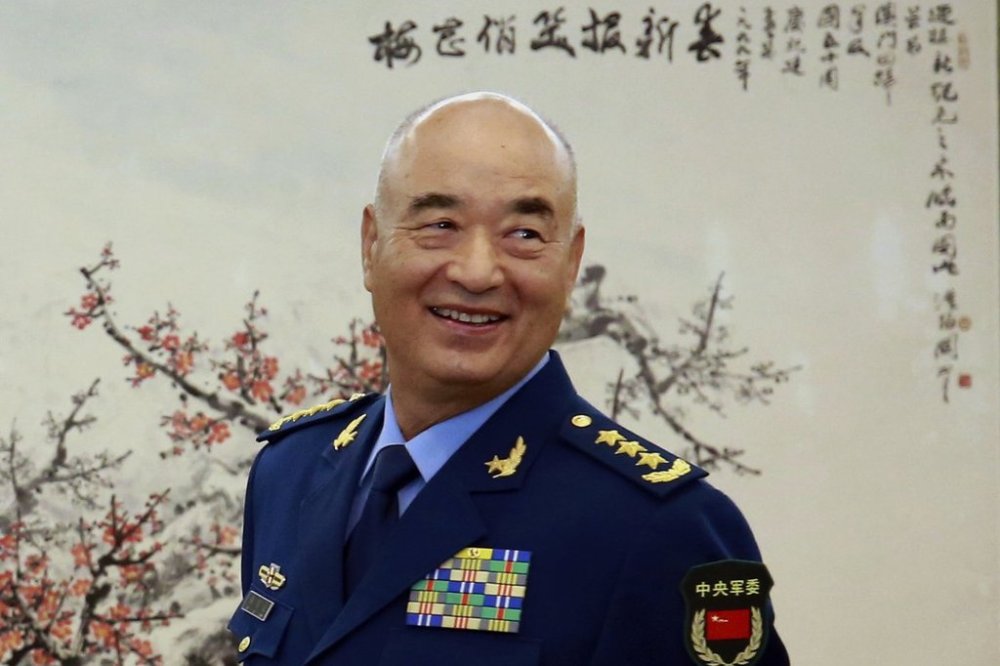
Xu was an “excellent Communist Party of China member, a time-tested and loyal communist soldier, a proletarian military strategist, and an outstanding leader of the People’s Liberation Army,” said a statement issued by the ministry.
Xu joined the PLA in 1966 just as China was plunged into the violent decade-long Cultural Revolution under Communist China’s founder Mao Zedong.
After climbing the ranks, Xu wielded considerable influence as a vice chairman of the Central Military Commission without, it appears, falling afoul of China’s party anti-corruption forces, who brought down several other high ranking retired and serving military leaders, including two former defense ministers. China has offered no information on the situation involving the pair, stirring rumors of a major shakeup in the ranks concerning corruption or spying for the U.S..
China has not fought a major campaign since the 1950-53 Korean War, so Xu built his career largely on his adherence to the party line and fealty to the leader of the time, who like Xi now, serves as chairman of the Central Military Commission.
In a February 2018 report, the official Xinhua News Agency quoted Xu as calling on the Chinese army to “thoroughly study and implement the spirit of the 19th party National Congress and President Xi Jinping’s strategy for strengthening the military.”
Xu also helped oversee the PLA’s transformation into a modern fighting force, eliminating its Cold War-era jets for stealth fighters and nuclear bombers.
Xu also met with foreign delegations, including then-U.S. Defense Secretary James Mattis in 2018, with whom he discussed “the importance of substantive military-to-military contacts to reduce risk and strategic uncertainty.” Relations between the militaries have since nose-dived, along with relations in general.