

Mexican 4-year-old is granted humanitarian parole to continue receiving lifesaving care in US
Advertisement
Read this article for free:
or
Already have an account? Log in here »
To continue reading, please subscribe:
Monthly Digital Subscription
$1 per week for 24 weeks*
- Enjoy unlimited reading on winnipegfreepress.com
- Read the E-Edition, our digital replica newspaper
- Access News Break, our award-winning app
- Play interactive puzzles
*Billed as $4.00 plus GST every four weeks. After 24 weeks, price increases to the regular rate of $19.95 plus GST every four weeks. Offer available to new and qualified returning subscribers only. Cancel any time.
Monthly Digital Subscription
$4.99/week*
- Enjoy unlimited reading on winnipegfreepress.com
- Read the E-Edition, our digital replica newspaper
- Access News Break, our award-winning app
- Play interactive puzzles
*Billed as $19.95 plus GST every four weeks. Cancel any time.
To continue reading, please subscribe:
Add Free Press access to your Brandon Sun subscription for only an additional
$1 for the first 4 weeks*
*Your next subscription payment will increase by $1.00 and you will be charged $16.99 plus GST for four weeks. After four weeks, your payment will increase to $23.99 plus GST every four weeks.
Read unlimited articles for free today:
or
Already have an account? Log in here »
Hey there, time traveller!
This article was published 03/06/2025 (297 days ago), so information in it may no longer be current.
LOS ANGELES (AP) — A 4-year-old Mexican girl who receives lifesaving medical care from a Southern California hospital was granted permission to remain in the country weeks after federal authorities said she could be deported, her family’s attorneys said Tuesday.
The U.S. Department of Homeland Security granted the girl and her mother humanitarian parole for one year so she can continue to receive treatment she has been getting since arriving at the U.S.-Mexico border in 2023, according to a copy of a letter received by Rebecca Brown, an attorney for the family from the nonprofit Public Counsel.
An email message was sent to the Department of Homeland Security seeking comment.
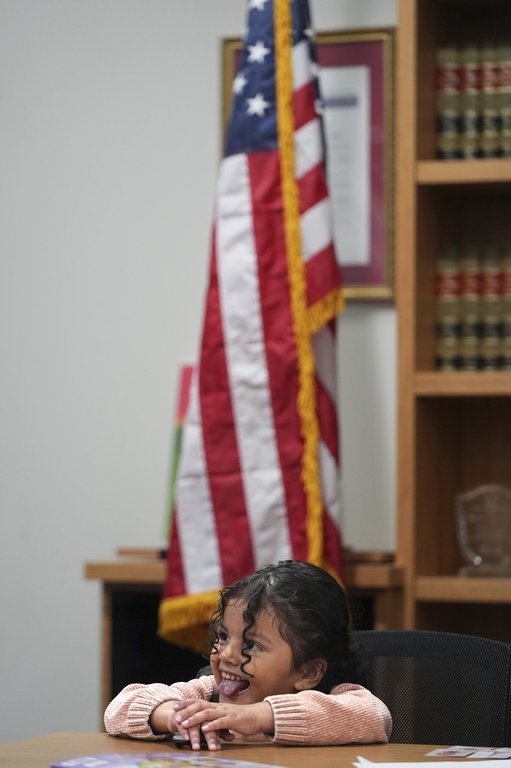
The girl’s family said they were notified in April and May that their humanitarian parole was being revoked and they would be subject to potential deportation.
The Trump administration has been pushing to dismantle policies from former President Joe Biden’s administration that granted temporary legal status for certain migrants and allowed them to live legally in the U.S., generally for two years.
The girl was taken to a hospital upon arriving on at the U.S.-Mexico border with her mother in 2023 and released once she was stable enough. She receives intravenous nutrition through a special backpack for short bowel syndrome, which prevents her from being able to take in and process nutrients on her own, and lawyers said the treatment she receives is necessary at this stage for her to survive and isn’t available in Mexico.
The family’s attorneys from Public Counsel said in a statement that while they were grateful the administration “acted swiftly” to ensure the girl could continue her life-saving treatment, they hoped the case highlighted the need for better communication with federal immigration officials.
“We cannot ignore the systemic challenges that brought Sofia to the brink,” the attorneys said, using a pseudonym for the girl. “Her parole was terminated without warning … It took an international outcry and pressure from elected officials to get a response—something that used to take a single phone call.”
Humanitarian parole, which doesn’t put migrants on a path to U.S. citizenship, was widely used during the Biden administration to alleviate pressure on the U.S.-Mexico southern border. It was previously used on a case-by-case basis to address individual emergencies and also for people fleeing humanitarian crises around the world including Vietnam, Cambodia and Laos during the late 1970s.
In Mexico, the girl was largely confined to a hospital because of her medical condition, said her mother, Deysi Vargas. After joining a program at Children’s Hospital Los Angeles, she can now receive treatment at home in Bakersfield, California, and go to the park and store like other children, Vargas has said.
Lawyers said the girl’s medical treatment, which requires 14 hours a day of intravenous nutrition, will not be necessary indefinitely but that she is not at the point where she could live without it.