

Syria’s post-war economic recovery will require ‘substantial’ international support, IMF says
Advertisement
Read this article for free:
or
Already have an account? Log in here »
To continue reading, please subscribe:
Monthly Digital Subscription
$1 per week for 24 weeks*
- Enjoy unlimited reading on winnipegfreepress.com
- Read the E-Edition, our digital replica newspaper
- Access News Break, our award-winning app
- Play interactive puzzles
*Billed as $4.00 plus GST every four weeks. After 24 weeks, price increases to the regular rate of $19.95 plus GST every four weeks. Offer available to new and qualified returning subscribers only. Cancel any time.
Monthly Digital Subscription
$4.99/week*
- Enjoy unlimited reading on winnipegfreepress.com
- Read the E-Edition, our digital replica newspaper
- Access News Break, our award-winning app
- Play interactive puzzles
*Billed as $19.95 plus GST every four weeks. Cancel any time.
To continue reading, please subscribe:
Add Free Press access to your Brandon Sun subscription for only an additional
$1 for the first 4 weeks*
*Your next subscription payment will increase by $1.00 and you will be charged $16.99 plus GST for four weeks. After four weeks, your payment will increase to $23.99 plus GST every four weeks.
Read unlimited articles for free today:
or
Already have an account? Log in here »
Hey there, time traveller!
This article was published 10/06/2025 (292 days ago), so information in it may no longer be current.
DAMASCUS, Syria (AP) — Syria will need “substantial international” support for its efforts to rehabilitate the economy, meet urgent humanitarian needs, and rebuild essential institutions and infrastructure, the International Monetary Fund said Tuesday.
Syria cannot afford hundreds of billions of dollars of damages and losses from the conflict that first started as protests in 2011 against former President Bashar Assad’s totalitarian government.
Since current President Ahmad al-Sharaa led an insurgency that ousted the Assad dynasty in December 2024, countries have gradually restored ties with Syria.
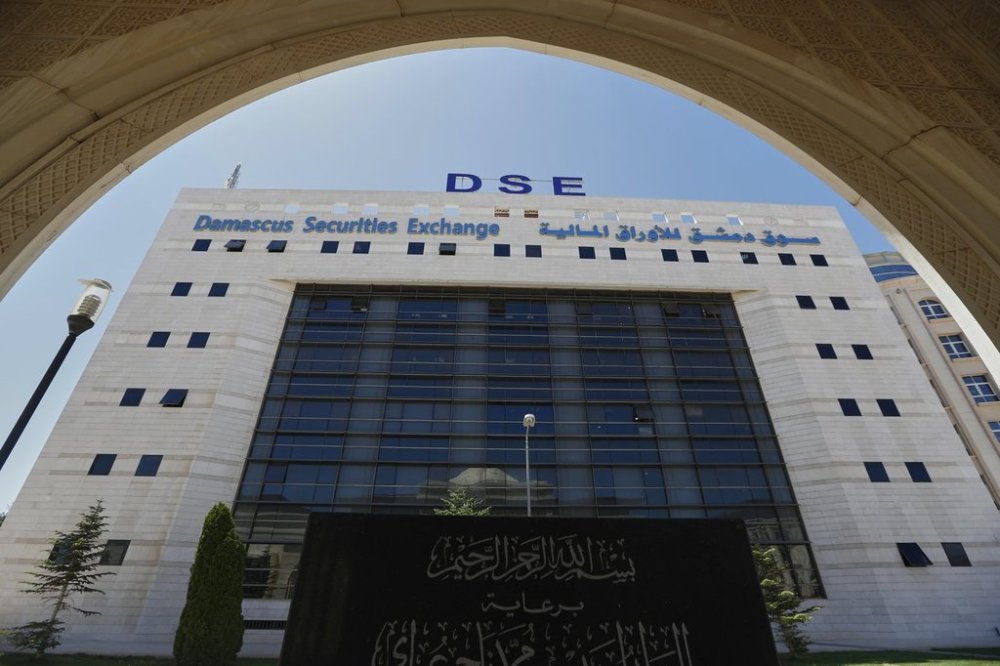
During a five-day visit by the IMF in early June — the first to Syria by the 191-country lending organization since 2009 — its team met with officials from the public and private sectors, notably the finance minister and central bank governor.
“Syria faces enormous challenges following years of conflict that caused immense human suffering and reduced its economy to a fraction of its former size,” the IMF said. “While the years of conflict and displacement have weakened administrative capacity, staff at the finance ministry and central bank demonstrated strong commitment and solid understanding.”
Some 6 million people fled Syria during the conflict, and the United Nations estimates that 90% of those who stayed lived in poverty and relied on humanitarian aid to survive. Half a million people were killed in the conflict.
Damascus now anticipates investments and business projects with Qatar, Turkey, Saudi Arabia, and others, as they reestablish flight paths and hold high-level political and economic meetings.
U.S. President Donald Trump said that Washington will lift decadeslong sanctions against Syria, but it is unclear how long that process could take. Britain and the European Union had eased some restrictions.
Meanwhile, oil-rich nations Saudi Arabia and Qatar paid off Syria’s debt to the World Bank, valued at near $15 billion.
The IMF said it is developing a roadmap for Syria’s policy and capacity building priorities for key economic institutions, including the finance ministry, central bank, and statistics agency.
But Syria has a laundry list of reforms it must undertake, including improving its tax collection system, making sure its national budget can pay public sector salaries and basic healthcare and education, empowering the central bank to take measures to bring back confidence to the local currency, and rehabilitate its outdated and battered banking system in line with international standards.
In 2017, the United Nations estimated that rebuilding Syria would cost about $250 billion. Since Assad was overthrown, some experts say that number could be as high as $400 billion.