

Serbia’s Moscow-friendly president visits Ukraine but refuses to sign ‘anti-Russian’ declaration
Advertisement
Read this article for free:
or
Already have an account? Log in here »
To continue reading, please subscribe:

Digital Subscription
One year of digital access for only $205*
- Enjoy unlimited reading on winnipegfreepress.com
- Read the E-Edition, our digital replica newspaper
- Access News Break, our award-winning app
- Play interactive puzzles
*First annual payment billed as $205.00 + GST for one year. This annual subscription will automatically renew at $233.00 + GST every 52 weeks (10% off the regular annual price of $259.35). Offer available to new and qualified returning subscribers only. Cancel any time.
To continue reading, please subscribe:
Add Free Press access to your Brandon Sun subscription for only an additional
$1 for the first 4 weeks*
- Enjoy unlimited reading on winnipegfreepress.com
- Read the E-Edition, our digital replica newspaper
- Access News Break, our award-winning app
- Play interactive puzzles
*Your next Brandon Sun subscription payment will increase by $1.00 and you will be charged $17.95 plus GST for four weeks. After four weeks, your payment will increase to $24.95 plus GST every four weeks.
Read unlimited articles for free today:
or
Already have an account? Log in here »
Hey there, time traveller!
This article was published 11/06/2025 (464 days ago), so information in it may no longer be current.
BELGRADE, Serbia (AP) — Serbia’s Russia-friendly leader made a surprise visit to Ukraine on Wednesday for a summit on strengthening European support for Kyiv’s fight against Russian aggression, but he refused to sign a joint declaration calling for tougher sanctions against Moscow.
It was President Aleksandar Vucic’s first visit to Ukraine since taking office over a decade ago. He attended the summit between Ukraine and 12 Southeast European states in Odesa.
While saying he wants Serbia to join the European Union, Vucic has maintained close relations with Russia. He defied EU warnings and attended Russia’s Victory Day parade in Moscow on May 9. EU officials said it was inappropriate for Vucic to stand side by side with President Vladimir Putin, considering Moscow’s invasion of Ukraine.
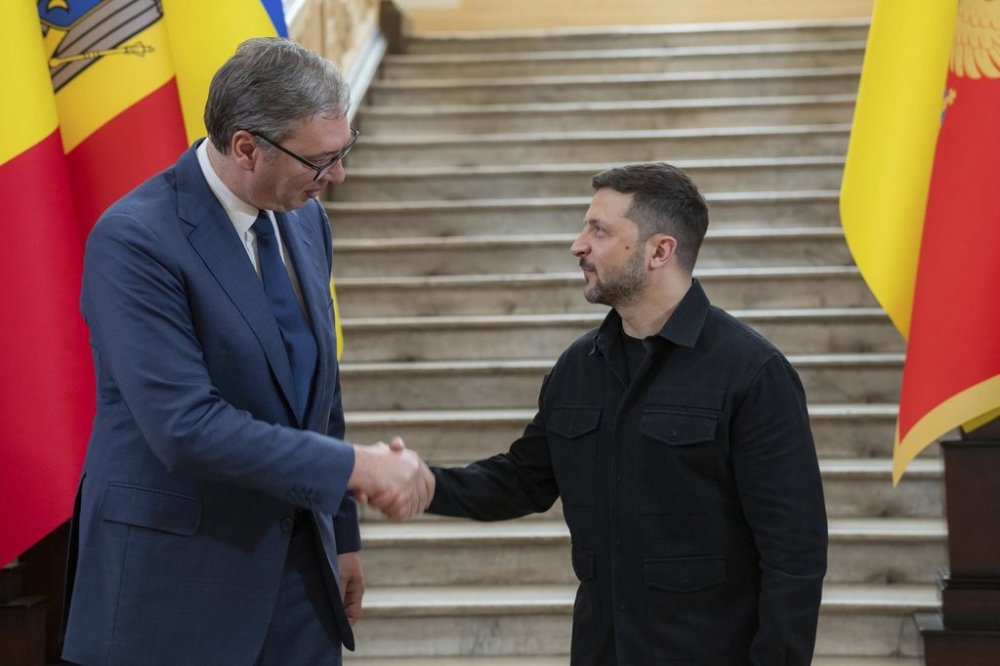
Vucic told Serbian media on Wednesday that the signing of the “anti-Russian” declaration wasn’t “easy and simple for us,” and he abstained, noting its mention of sanctions as one reason.
“But I would like to once again express my full gratitude to President (Volodymyr) Zelenskyy for the exceptional hospitality here in Odessa,” Vucic added.
Serbia, which relies almost fully on Russia for its energy supplies, has refused to join Western sanctions on Russia imposed after its full-scale invasion of Ukraine, though it officially supports Ukraine’s territorial integrity.
Vucic’s visit to Ukraine comes weeks after Russia accused Serbia of exporting arms to Ukraine, calling it a stab in the back by its longtime Balkan ally.
The Russian Foreign Intelligence Service alleged that the exports were going through NATO intermediaries, “primarily the Czech Republic, Poland and Bulgaria. Recently, exotic options involving African states have also been used for this purpose.”
Serbia has neither admitted nor denied reports that it has been providing ammunition to Ukraine, but it has promised Russia it would open an official investigation into the matter.