

Inquiries say social media fueled violence after a Maccabi-Ajax soccer match
Advertisement
Read this article for free:
or
Already have an account? Log in here »
To continue reading, please subscribe:

Digital Subscription
One year of digital access for only $205*
- Enjoy unlimited reading on winnipegfreepress.com
- Read the E-Edition, our digital replica newspaper
- Access News Break, our award-winning app
- Play interactive puzzles
*First annual payment billed as $205.00 + GST for one year. This annual subscription will automatically renew at $233.00 + GST every 52 weeks (10% off the regular annual price of $259.35). Offer available to new and qualified returning subscribers only. Cancel any time.
To continue reading, please subscribe:
Add Free Press access to your Brandon Sun subscription for only an additional
$1 for the first 4 weeks*
- Enjoy unlimited reading on winnipegfreepress.com
- Read the E-Edition, our digital replica newspaper
- Access News Break, our award-winning app
- Play interactive puzzles
*Your next Brandon Sun subscription payment will increase by $1.00 and you will be charged $17.95 plus GST for four weeks. After four weeks, your payment will increase to $24.95 plus GST every four weeks.
Read unlimited articles for free today:
or
Already have an account? Log in here »
Hey there, time traveller!
This article was published 16/06/2025 (481 days ago), so information in it may no longer be current.
THE HAGUE, Netherlands (AP) — Social media posts coupled with a lack of official information fueled the violence that followed a Maccabi Tel Aviv soccer match in Amsterdam last year, two inquiries into the events said in reports Monday.
Dozens were arrested and five people were treated in hospital in a series of violent overnight incidents following a November match between the Dutch team Ajax and Maccabi Tel Aviv.
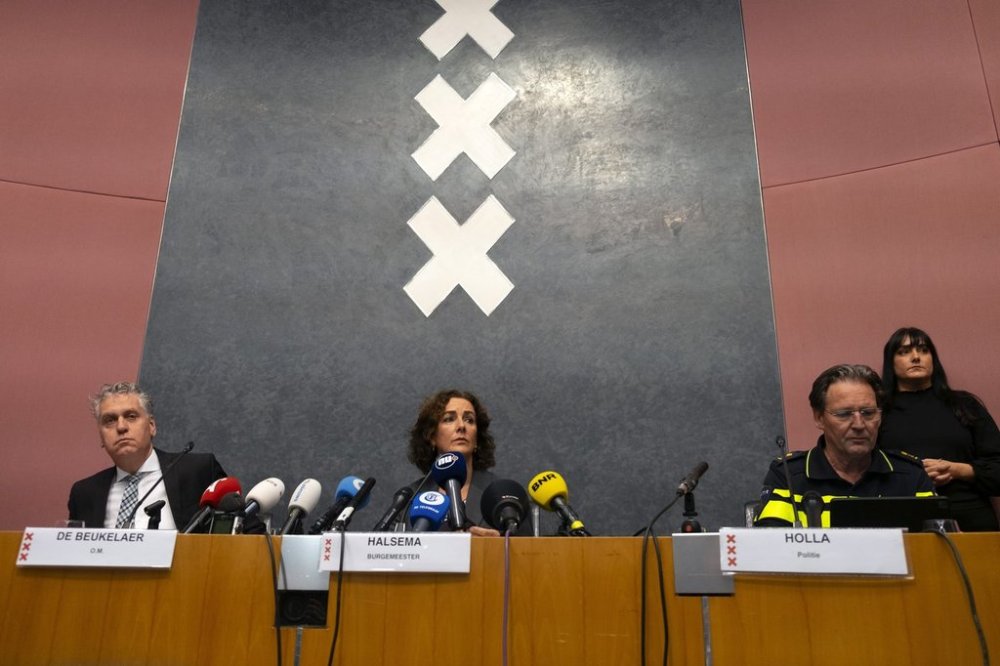
“The events have left their mark on the city and led to fear, anger and sadness,” Amsterdam Mayor Femke Halsema wrote in a letter to the city council presenting one of the reports.
Ahead of the game, pro-Palestinian demonstrators were banned by local authorities from gathering outside the stadium, and video showed a large crowd of Israeli fans chanting anti-Arab slogans on their way to the game. Afterward, youths on scooters and on foot crisscrossed the city in search of Israeli fans, punching and kicking them and then fleeing quickly to evade police.
The Rotterdam-based Institute for Safety and Crisis Management, tasked by the Amsterdam government to investigate the response to the violence, said the lack of official communication from the city allowed rumors on social media to flourish.
It noted that there was little to no official communication during the early hours of Nov. 8, in part because the situation was so unclear.
In a separate report, the inspectorate for the Justice Ministry concluded that the police were prepared for large-scale demonstrations, not the “flash attacks” perpetrated across the city and sparked by social media.
“Calls and images spread rapidly, reinforce existing tensions and can lead to group formation and confrontations on the street within a short period of time,” the 57-page report found.
Both reports cautioned that even with improved communication, the authorities still could not have fully controlled the rapidly spreading violence.
The Justice Ministry’s report noted that “incidents, such as the removal of a Palestinian flag by Maccabi supporters, were shared, interpreted and magnified within minutes.”
More than a dozen people have been charged in connection with the violence and several have already been convicted. Over the weekend, the public prosecution service announced it had dropped investigations into several Maccabi supporters because the city’s tram company GVB had deleted footage which could have been used as evidence.
The company replaced recording equipment at two metro stations in Amsterdam after the attacks and footage from the night was lost.
On Sunday, tens of thousands of demonstrators in the Netherlands donned red clothing and marched through The Hague, demanding that the Dutch government do more to oppose Israel’s policies in Gaza. Dutch public support for the Israeli military campaign has dropped in recent months.