

Trump moves to toughen US policy on Cuba
Advertisement
Read this article for free:
or
Already have an account? Log in here »
To continue reading, please subscribe:

Digital Subscription
One year of digital access for only $205*
- Enjoy unlimited reading on winnipegfreepress.com
- Read the E-Edition, our digital replica newspaper
- Access News Break, our award-winning app
- Play interactive puzzles
*First annual payment billed as $205.00 + GST for one year. This annual subscription will automatically renew at $233.00 + GST every 52 weeks (10% off the regular annual price of $259.35). Offer available to new and qualified returning subscribers only. Cancel any time.
To continue reading, please subscribe:
Add Free Press access to your Brandon Sun subscription for only an additional
$1 for the first 4 weeks*
- Enjoy unlimited reading on winnipegfreepress.com
- Read the E-Edition, our digital replica newspaper
- Access News Break, our award-winning app
- Play interactive puzzles
*Your next Brandon Sun subscription payment will increase by $1.00 and you will be charged $17.95 plus GST for four weeks. After four weeks, your payment will increase to $24.95 plus GST every four weeks.
Read unlimited articles for free today:
or
Already have an account? Log in here »
Hey there, time traveller!
This article was published 30/06/2025 (407 days ago), so information in it may no longer be current.
WASHINGTON (AP) — President Donald Trump has instructed his top Cabinet officers to review U.S. policy toward Cuba, ordering them to examine current sanctions and come up with ways to toughen them within 30 days.
In a memo Monday, Trump said the reviews should focus on Cuba’s treatment of dissidents, its policies directed at dissidents and restricting financial transactions that “disproportionately benefit the Cuban government, military, intelligence, or security agencies at the expense of the Cuban people.”
In one potential significant change, the order said the U.S. should look for ways to shut down all tourism to the island and to restrict educational tours to groups that are organized and run only by American citizens.
The move is not a surprise given that Trump has previously said he plans to rescind the easing of sanctions and other penalties in Cuba that were instituted during the terms of Democratic Presidents Barack Obama and Joe Biden. In the days before leaving office, Biden had moved to lift the U.S. designation of Cuba as a state sponsor of terrorism.
Trump’s memo “supports the economic embargo of Cuba and opposes calls in the United Nations and other international forums for its termination,” according to a fact sheet.
In Cuba, Foreign Minister Bruno Rodríguez responded swiftly to the document.
“The Presidential Memorandum vs #Cuba released today by the US government strengthens the aggression & economic blockade that punishes the whole Cuban people and is the main obstacle to our development,” he wrote on X. “It’s a criminal behavior that violates the #HumanRights of an entire nation.”
The Trump administration also has made Cuba one of seven countries facing heightened restrictions on visitors and revoked temporary legal protections for about 300,000 Cubans, which had protected them from deportation.
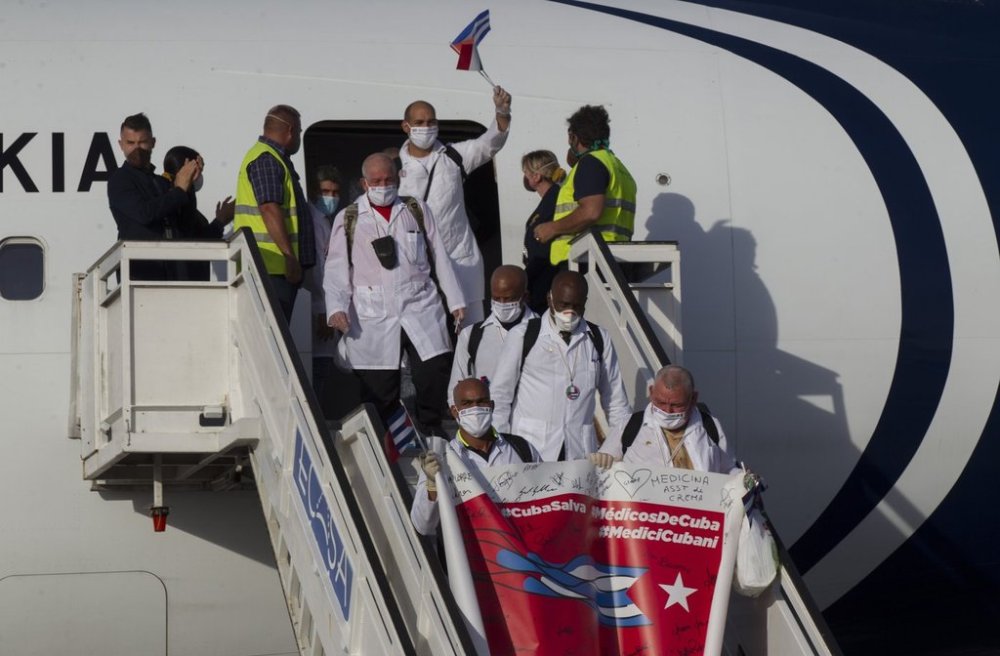
The administration also has announced visa restrictions on Cuban and foreign government officials involved in Cuba’s medical missions, which Secretary of State Marco Rubio has called “forced labor.”
In an interview with The Associated Press this month, Cuban Deputy Foreign Minister Carlos Fernandez de Cossio accused the United States of trying to discredit the medical missions and criticized reversal of policy welcoming Cubans to the U.S.
Rubio, whose family left Cuba in the 1950s before the communist revolution that brought Fidel Castro to power, has long been a proponent of sanctions on the communist island.
___
AP writer Andrea Rodríguez in Havana contributed to this report.