

Croatian right-wing singer Marko Perkovic and fans perform pro-Nazi salute at massive concert
Advertisement
Read this article for free:
or
Already have an account? Log in here »
To continue reading, please subscribe:
Monthly Digital Subscription
$1 per week for 24 weeks*
- Enjoy unlimited reading on winnipegfreepress.com
- Read the E-Edition, our digital replica newspaper
- Access News Break, our award-winning app
- Play interactive puzzles
*Billed as $4.00 plus GST every four weeks. After 24 weeks, price increases to the regular rate of $19.95 plus GST every four weeks. Offer available to new and qualified returning subscribers only. Cancel any time.
Monthly Digital Subscription
$4.99/week*
- Enjoy unlimited reading on winnipegfreepress.com
- Read the E-Edition, our digital replica newspaper
- Access News Break, our award-winning app
- Play interactive puzzles
*Billed as $19.95 plus GST every four weeks. Cancel any time.
To continue reading, please subscribe:
Add Free Press access to your Brandon Sun subscription for only an additional
$1 for the first 4 weeks*
*Your next subscription payment will increase by $1.00 and you will be charged $16.99 plus GST for four weeks. After four weeks, your payment will increase to $23.99 plus GST every four weeks.
Read unlimited articles for free today:
or
Already have an account? Log in here »
Hey there, time traveller!
This article was published 06/07/2025 (264 days ago), so information in it may no longer be current.
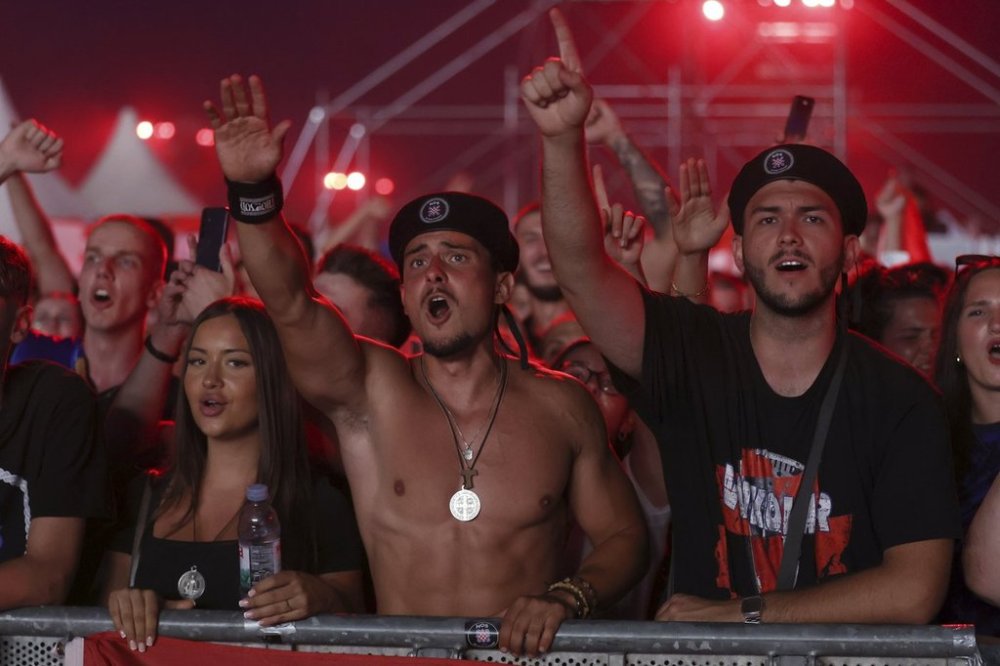
ZAGREB, Croatia (AP) — A hugely popular right-wing Croatian singer and hundreds of thousands of his fans performed a pro-Nazi World War II salute at a massive concert in Zagreb, drawing criticism.
One of Marko Perkovic’s most popular songs, played in the late Staurday concert, starts with the dreaded “For the homeland — Ready!” salute, used by Croatia’s Nazi-era puppet Ustasha regime that ran concentration camps at the time.
Perkovic, whose stage name is Thompson after a U.S.-made machine gun, had previously said both the song and the salute focus on the 1991-95 ethnic war in Croatia, in which he fought using the American firearm, after the country declared independence from the former Yugoslavia. He says his controversial song is “a witness of an era.”
The 1990s conflict erupted when rebel minority Serbs, backed by neighboring Serbia, took up guns, intending to split from Croatia and unite with Serbia.
Perkovic’s immense popularity in Croatia reflects prevailing nationalist sentiments in the country 30 years after the war ended.
The WWII Ustasha troops in Croatia brutally killed tens of thousands of Serbs, Jews, Roma and antifascist Croats in a string of concentration camps in the country. Despite documented atrocities, some nationalists still view the Ustasha regime leaders as founders of the independent Croatian state.
Organizers said that half a million people attended Perkovic’s concert in the Croatian capital. Video footage aired by Croatian media showed many fans displaying pro-Nazi salutes earlier in the day.
The salute is punishable by law in Croatia, but courts have ruled Perkovic can use it as part of his song, the Croatian state television HRT said.
Perkovic has been banned from performing in some European cities over frequent pro-Nazi references and displays at his gigs.
Croatia’s Vecernji List daily wrote that the concert’s “supreme organization” has been overshadowed by the use of the salute of a regime that signed off on “mass executions of people.”
Regional N1 television noted that whatever the modern interpretations of the salute may be its roots are “undoubtedly” in the Ustasha regime era.
N1 said that while “Germans have made a clear cut” from anything Nazi-related “to prevent crooked interpretations and the return to a dark past … Croatia is nowhere near that in 2025.”
In neighboring Serbia, populist President Aleksandar Vucic criticized Perkovic’s concerts as a display “of support for pro-Nazi values.” Former Serbian liberal leader Boris Tadic said it was a “great shame for Croatia” and “the European Union” because the concert “glorifies the killing of members of one nation, in this case Serbian.”
Croatia joined the EU in 2013.
Croatian police said Perkovic’s concert was the biggest ever in the country and an unseen security challenge, deploying thousands of officers.
No major incidents were reported.