

Daredevils run with charging bulls at Pamplona’s famous San Fermín festival
Advertisement
Read this article for free:
or
Already have an account? Log in here »
To continue reading, please subscribe:

Digital Subscription
One year of digital access for only $205*
- Enjoy unlimited reading on winnipegfreepress.com
- Read the E-Edition, our digital replica newspaper
- Access News Break, our award-winning app
- Play interactive puzzles
*First annual payment billed as $205.00 + GST for one year. This annual subscription will automatically renew at $233.00 + GST every 52 weeks (10% off the regular annual price of $259.35). Offer available to new and qualified returning subscribers only. Cancel any time.
To continue reading, please subscribe:
Add Free Press access to your Brandon Sun subscription for only an additional
$1 for the first 4 weeks*
- Enjoy unlimited reading on winnipegfreepress.com
- Read the E-Edition, our digital replica newspaper
- Access News Break, our award-winning app
- Play interactive puzzles
*Your next Brandon Sun subscription payment will increase by $1.00 and you will be charged $17.95 plus GST for four weeks. After four weeks, your payment will increase to $24.95 plus GST every four weeks.
Read unlimited articles for free today:
or
Already have an account? Log in here »
Hey there, time traveller!
This article was published 07/07/2025 (412 days ago), so information in it may no longer be current.
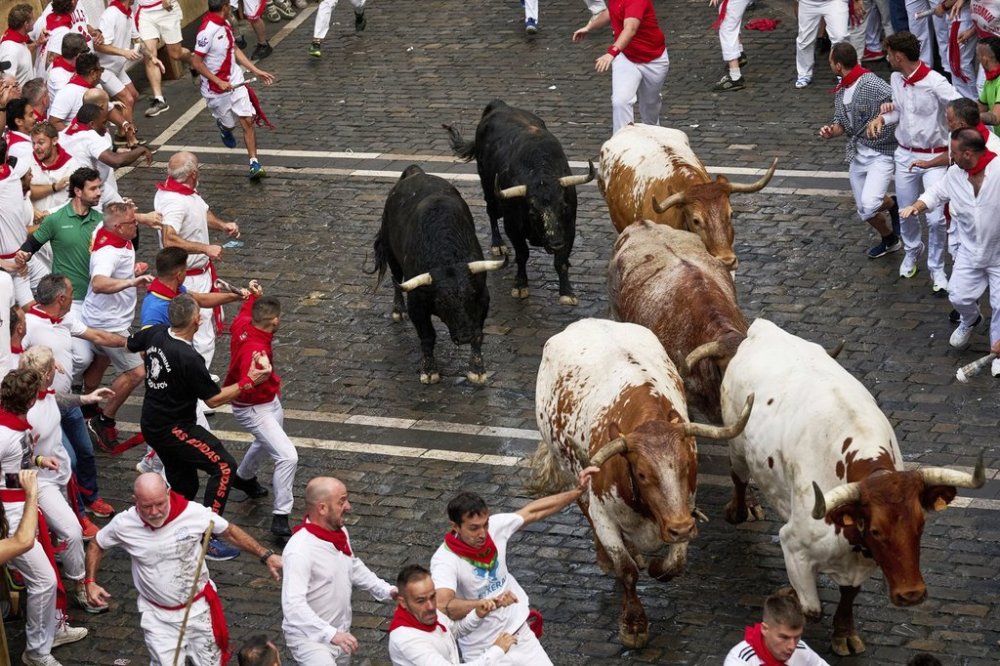
PAMPLONA, Spain (AP) — Thousands of daredevils ran, skidded and tumbled out of the way of a stampeding group of bulls at the opening run of the San Fermín festival Monday.
It was the first of nine morning runs or “encierros” during the famous celebrations held in the northern Spanish city of Pamplona.
The bulls pounded along the twisting cobblestone streets after being led by six steers. Up to 4,000 runners take part in each bull run, which takes place over 846 meters (2,775 feet) and can last two to four minutes.
Most runners wear the traditional garb of white trousers and shirt with red sash and neckerchief. The expert Spanish runners try to sprint just in front of the bull’s horns for a few death-defying seconds while egging the animal on with a rolled newspaper.
Thousands of spectators watched from balconies and wooden barricades along the course. Millions more follow the visceral spectacle on live television.
The festival kicked off Sunday with the traditional “chupinazo” firework blast after which revelers doused one another with red or sparkling wine.
While gorings are not rare, many more people are bruised and injured in falls and pileups with each other. Medics rush in to treat the injured and take the seriously hurt to a hospital.
On Monday, Spanish newspaper El País reported that a few revelers had been injured, but it wasn’t clear if their injuries were from gorings.
Unofficial records say at least 15 people have died in the bull runs over the past century. The deadliest day on record was July 13, 1980, when four runners were killed by two bulls. The last death was in 2009.
The rest of each day is for eating, drinking, dancing and cultural entertainment, including bull fights where the animals that run in the morning are slain in the bull ring by professional matadors each afternoon.
The festival isn’t without its detractors. On Saturday, animal rights activists marched through Pamplona wearing horns and splotched with fake blood in protest against the San Fermin bull runs. Some held up signs saying “bullfights are a sin.”
The festival was made internationally famous by Ernest Hemingway’s classic 1926 novel “The Sun Also Rises,” about American bohemians wasting away in Europe.
___
Wilson reported from Barcelona, Spain.