

Leaders of Azerbaijan and Armenia reach no breakthrough on decades-long conflict
Advertisement
Read this article for free:
or
Already have an account? Log in here »
To continue reading, please subscribe:

Digital Subscription
One year of digital access for only $205*
- Enjoy unlimited reading on winnipegfreepress.com
- Read the E-Edition, our digital replica newspaper
- Access News Break, our award-winning app
- Play interactive puzzles
*First annual payment billed as $205.00 + GST for one year. This annual subscription will automatically renew at $233.00 + GST every 52 weeks (10% off the regular annual price of $259.35). Offer available to new and qualified returning subscribers only. Cancel any time.
To continue reading, please subscribe:
Add Free Press access to your Brandon Sun subscription for only an additional
$1 for the first 4 weeks*
- Enjoy unlimited reading on winnipegfreepress.com
- Read the E-Edition, our digital replica newspaper
- Access News Break, our award-winning app
- Play interactive puzzles
*Your next Brandon Sun subscription payment will increase by $1.00 and you will be charged $17.95 plus GST for four weeks. After four weeks, your payment will increase to $24.95 plus GST every four weeks.
Read unlimited articles for free today:
or
Already have an account? Log in here »
Hey there, time traveller!
This article was published 10/07/2025 (456 days ago), so information in it may no longer be current.
The leaders of Armenia and Azerbaijan met Thursday in Abu Dhabi for the latest round of talks on ending their almost four decades of a conflict in the South Caucasus but reached no immediate breakthrough.
The two nations are working toward a peace treaty after Azerbaijan regained full control of the Karabakh province that had been under the control of ethnic Armenian forces, backed by Armenia, since the 1990s.
Despite both sides agreeing on the wording of a potential bilateral peace treaty in March, the talks on Thursday brought about little clarity on when the treaty could be finalized.
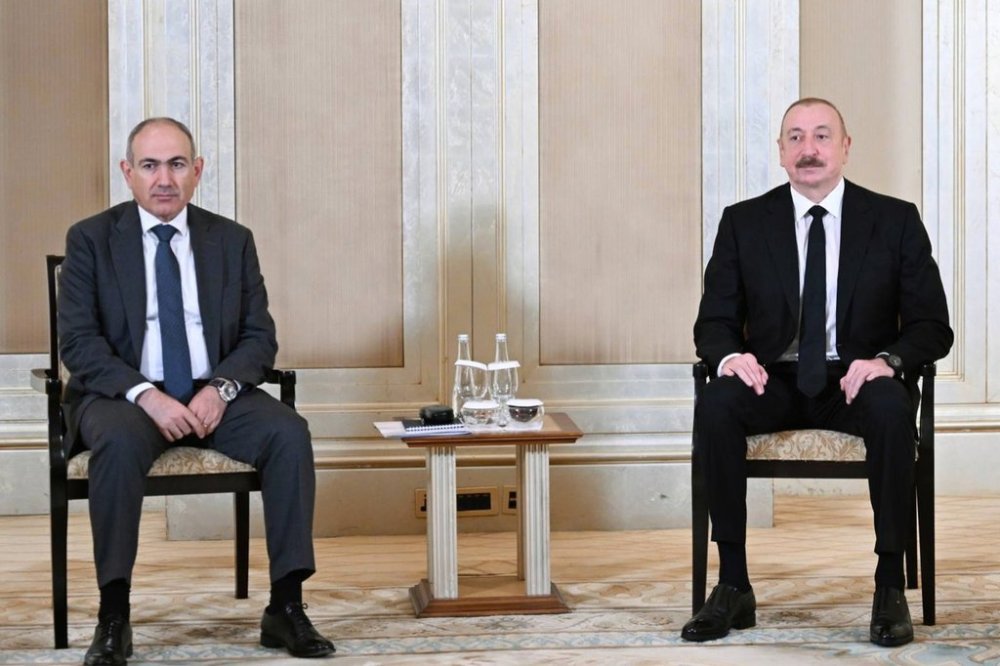
Armenian Prime Minister Nikol Pashinyan and Azerbaijani President Ilham Aliyev instead both pledged to continue work on sensitive issues such as border demarcation.
In a joint statement published Thursday, the two countries reaffirmed their commitment to bilateral negotiations and said the two sides would continue “confidence building measures.”
Armenia and Azerbaijan have been locked in a bitter conflict over territory since the early 1990s, when ethnic Armenian forces took control over the Karabakh province and nearby territories.
A six-week war in 2020 resulted in Azerbaijan retaking large parts of the breakaway region. In September 2023, Azerbaijani forces launched a lightning blitz to retake remaining portions, forcing Karabakh’s Armenian authorities to capitulate in negotiations mediated by Russian forces. Armenia later also handed over several border villages to Azerbaijan.
Both sides also have struggled to resolve a dispute over opening a land corridor to Azerbaijan’s Nakhichevan exclave, passing through Armenia’s Syunik region.
Last year, Pashinyan said that Armenia needs to quickly define the border with Azerbaijan to avoid a new round of hostilities. Many residents of Armenia’s border regions have resisted the demarcation effort, seeing it as Azerbaijan’s encroachment on areas they consider their own.
A series of demonstrations last year protested against the transfer of villages to Azerbaijani control and called for Pashinyan’s resignation.
Pashinyan has responded to the growing tension by cracking down on protest leaders.
Two leaders of the opposition group Sacred Struggle, Archbishop Mikael Ajapahyan and Archbishop Bagrat Galstanyan — senior leaders in the country’s influential Apostolic Church — were placed in pre-trial detention in recent weeks after being accused of taking part in an alleged plot to overthrow the government.