

Trump to host Philippine president to discuss trade and security in Asia
Advertisement
Read this article for free:
or
Already have an account? Log in here »
To continue reading, please subscribe:
Monthly Digital Subscription
$1 per week for 24 weeks*
- Enjoy unlimited reading on winnipegfreepress.com
- Read the E-Edition, our digital replica newspaper
- Access News Break, our award-winning app
- Play interactive puzzles
*Billed as $4.00 plus GST every four weeks. After 24 weeks, price increases to the regular rate of $19.95 plus GST every four weeks. Offer available to new and qualified returning subscribers only. Cancel any time.
Monthly Digital Subscription
$4.99/week*
- Enjoy unlimited reading on winnipegfreepress.com
- Read the E-Edition, our digital replica newspaper
- Access News Break, our award-winning app
- Play interactive puzzles
*Billed as $19.95 plus GST every four weeks. Cancel any time.
To continue reading, please subscribe:
Add Free Press access to your Brandon Sun subscription for only an additional
$1 for the first 4 weeks*
*Your next subscription payment will increase by $1.00 and you will be charged $16.99 plus GST for four weeks. After four weeks, your payment will increase to $23.99 plus GST every four weeks.
Read unlimited articles for free today:
or
Already have an account? Log in here »
Hey there, time traveller!
This article was published 10/07/2025 (262 days ago), so information in it may no longer be current.
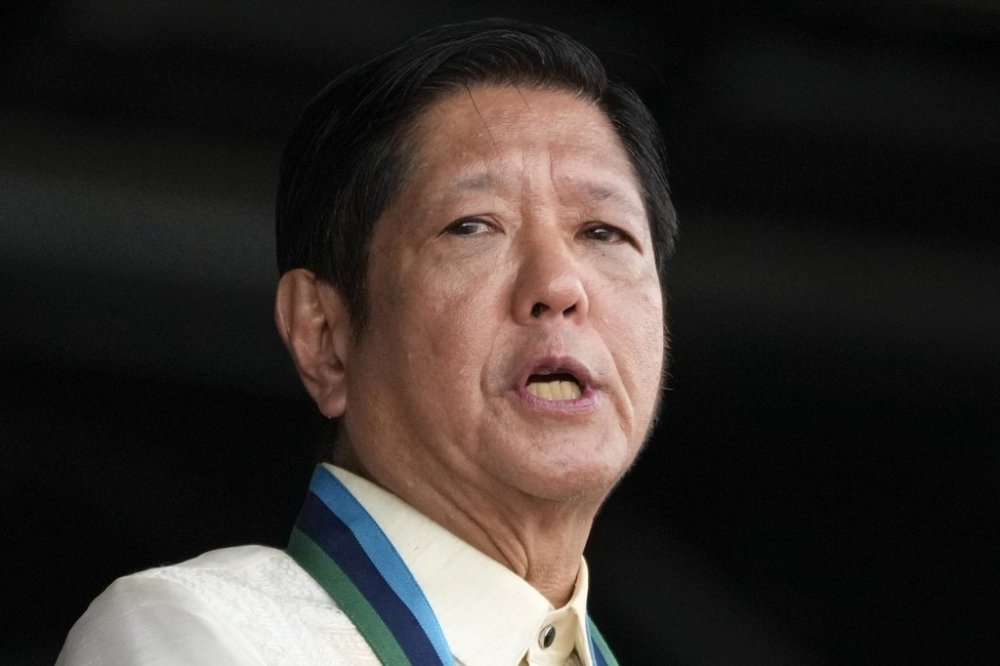
MANILA, Philippines (AP) — U.S. President Donald Trump will host his Philippine counterpart in the White House this month to discuss how the longtime treaty allies can further deepen their security and economic engagements, Philippine officials said Friday.
President Ferdinand Marcos Jr.’s will visit the United States from July 20 to 22 but Philippine officials were still finalizing details of his meeting with Trump with the U.S. State Department, the Philippine government said. The allies have boosted mutual defense engagements, including large-scale combat exercises in the Philippines, to strengthen deterrence against China’s increasingly aggressive actions in the region.
Among the proposed topics for discussion is strengthening “peace through deterrence,” Philippine Ambassador to Washington Jose Manuel Romualdez told The Associated Press by telephone.
That echoed Defense Secretary Pete Hegseth ’s remarks about the U.S. military’s plan to ratchet up deterrence against China’s increasingly assertive actions in the disputed South China Sea by intensifying security engagements with the Philippines and allied nations in the region.
The Philippines has also expressed concern over a 20% tariff the Trump administration plans to impose on Manila’s exports starting Aug. 1 unless a deal was reached. A Philippine trade delegation would travel to the U.S. next week to pursue negotiations with American counterparts.
U.S. Secretary of State Marco Rubio met his Japanese and Philippine counterparts in a meeting Thursday on the sidelines of the Association of Southeast Asian Nations’ annual ministerial meetings in Malaysia. The U.S., Japan and the Philippines have been building a trilateral bloc to broaden security and economic cooperation.
“We have a great relationship with Japan and the Philippines and work closely with them on the economic corridor, on maritime security and territorial integrity and continue to build upon that partnership,” Rubio said after his meeting in Malaysia with Japanese Foreign Minister Takeshi Iwaya and Philippine Foreign Secretary Theresa Lazaro. Washington looks “forward to hosting the president of the Philippines in Washington in a few days.”
The U.S. has repeatedly warned that it is obligated to defend the Philippines, its oldest treaty ally in Asia, if Philippine forces, ships or aircraft come under armed attack, including in the South China Sea. China, the Philippines, Vietnam, Malaysia, Brunei and Taiwan have been involved in long-unresolved territorial conflicts in the busy sea passage, a key global trade route.
Japan also has a separate territorial conflict with China over small, Japanese-controlled islands in the East China Sea.