

US sanctions Cuban President Díaz-Canel and other officials for human rights violations
Advertisement
Read this article for free:
or
Already have an account? Log in here »
To continue reading, please subscribe:
Monthly Digital Subscription
$1 per week for 24 weeks*
- Enjoy unlimited reading on winnipegfreepress.com
- Read the E-Edition, our digital replica newspaper
- Access News Break, our award-winning app
- Play interactive puzzles
*Billed as $4.00 plus GST every four weeks. After 24 weeks, price increases to the regular rate of $19.95 plus GST every four weeks. Offer available to new and qualified returning subscribers only. Cancel any time.
Monthly Digital Subscription
$4.99/week*
- Enjoy unlimited reading on winnipegfreepress.com
- Read the E-Edition, our digital replica newspaper
- Access News Break, our award-winning app
- Play interactive puzzles
*Billed as $19.95 plus GST every four weeks. Cancel any time.
To continue reading, please subscribe:
Add Free Press access to your Brandon Sun subscription for only an additional
$1 for the first 4 weeks*
*Your next subscription payment will increase by $1.00 and you will be charged $16.99 plus GST for four weeks. After four weeks, your payment will increase to $23.99 plus GST every four weeks.
Read unlimited articles for free today:
or
Already have an account? Log in here »
Hey there, time traveller!
This article was published 11/07/2025 (259 days ago), so information in it may no longer be current.
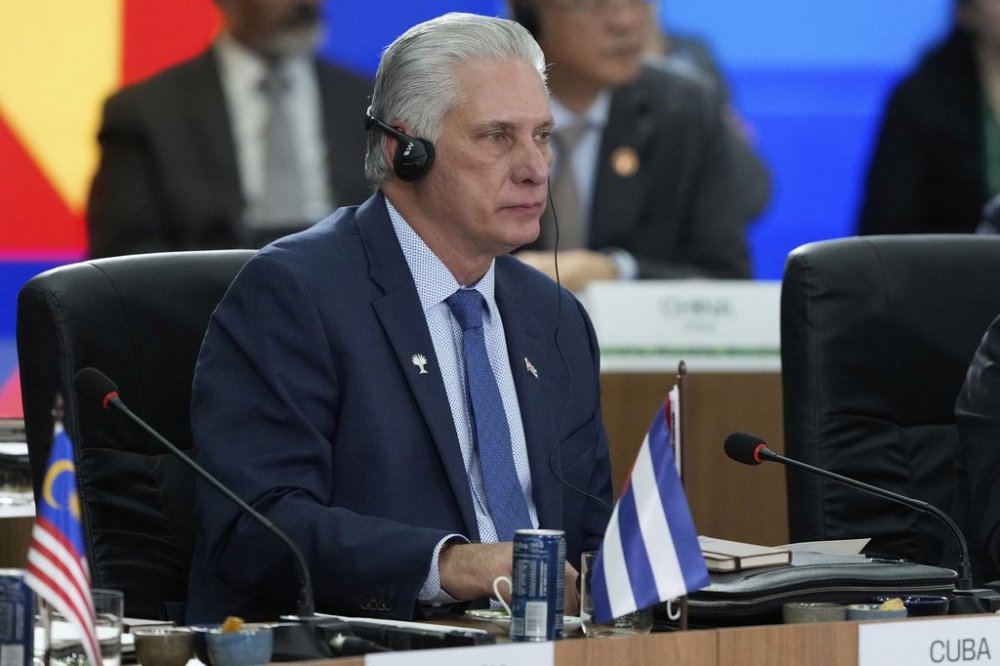
HAVANA (AP) — The United States government announced Friday it was sanctioning Cuban President Miguel Díaz-Canel and other top officials for human rights violations and restricting access to visas on the anniversary of the biggest protests on the island in recent decades.
U.S. Secretary of State Marco Rubio said on social media platform X that the State Department also would impose visa restrictions on Cuban judicial and prison officials “responsible for, or complicit in, the unjust detention and torture of the July 2021 protesters.”
The protests, which were not led by an opposition group, developed July 11 and 12, 2021, drawing attention to the depths of Cuba’s economic crisis.
“The U.S. will continue to stand for the human rights and fundamental freedoms of the people of Cuba, and make clear no illegitimate, dictatorial regimes are welcome in our hemisphere,” Rubio said in the statement.
The Trump administration has taken a harder line against Cuba’s government than the Biden administration.
In addition to Díaz-Canel, the U.S. sanctioned Cuban Defense Minister Álvaro López Miera and Interior Minister Lázaro Álvarez Casas.
Shortly after the announcement, Johana Tablada, deputy director of the U.S. department in the Cuban Foreign Ministry, lashed out at Rubio, calling him a “defender of genocide, prisons and mass deportations.”
The rare protests in 2021 came about after repeated blackouts in Havana and other cities. One man died and some marches ended in vandalism.
Groups supporting the government responded along with authorities to repress the protests. Human rights groups estimated there were more than 1,000 arrests but the government gave no official figures.
At the time, the Cuban government said it was the result of a U.S. media campaign and decades of U.S. sanctions.
In 2022, Cuban prosecutors said some 790 people were investigated for acts related to the protests ranging from disorder to sabotage and vandalism.
The advocacy group 11J, whose name alludes to the protests, said late last year there were 554 people serving sentences related to the protests, but some were given conditional release in January after an appeal from Pope Francis.