

Iran says it would resume nuclear talks with US if guaranteed no further attacks
Advertisement
Read this article for free:
or
Already have an account? Log in here »
To continue reading, please subscribe:
Digital Subscription
One year of digital access for only $1.44 a week*
- Enjoy unlimited reading on winnipegfreepress.com
- Read the E-Edition, our digital replica newspaper
- Access News Break, our award-winning app
- Play interactive puzzles
*Billed as $5.77 plus GST every four weeks. After 52 weeks, price increases to the regular rate of $19.95 plus GST every four weeks. Offer available to new and qualified returning subscribers only. Cancel any time.
To continue reading, please subscribe:
Add Free Press access to your Brandon Sun subscription for only an additional
$1 for the first 4 weeks*
- Enjoy unlimited reading on winnipegfreepress.com
- Read the E-Edition, our digital replica newspaper
- Access News Break, our award-winning app
- Play interactive puzzles
*Your next Brandon Sun subscription payment will increase by $1.00 and you will be charged $17.95 plus GST for four weeks. After four weeks, your payment will increase to $24.95 plus GST every four weeks.
Read unlimited articles for free today:
or
Already have an account? Log in here »
Hey there, time traveller!
This article was published 12/07/2025 (321 days ago), so information in it may no longer be current.
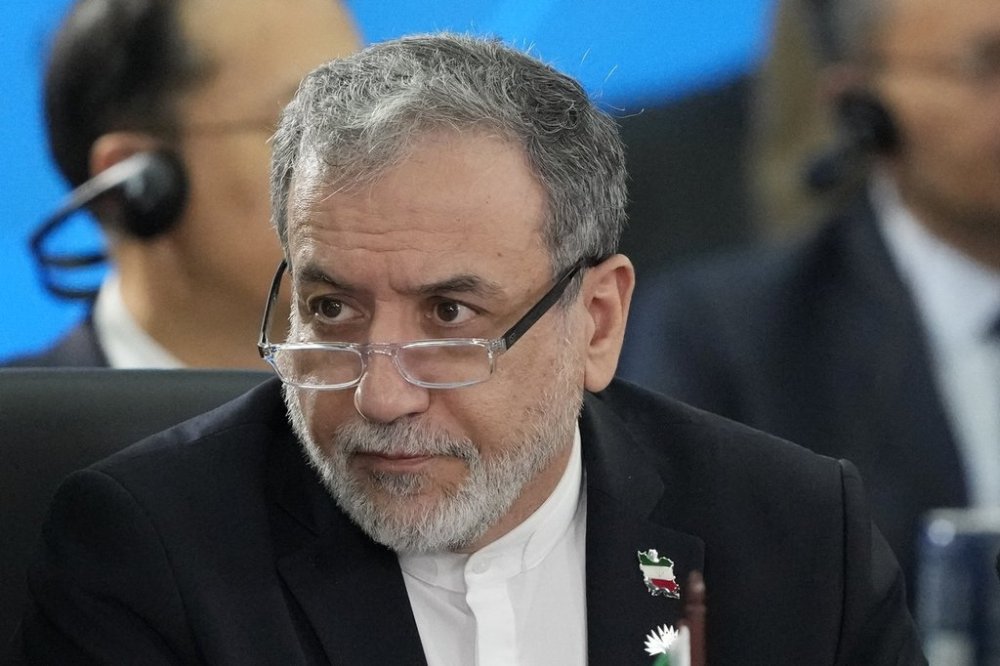
Iran’s foreign minister said Saturday that his country would accept a resumption of nuclear talks with the U.S. if there were assurances of no more attacks against it, state media reported.
Foreign Minister Abbas Araghchi said in a speech to Tehran-based foreign diplomats that Iran has always been ready and will be ready in the future for talks about its nuclear program, but, “assurance should be provided that in case of a resumption of talks, the trend will not lead to war.”
Referring to the 12-day Israeli bombardment of Iran’s nuclear and military sites, and the U.S. strike on June 22, Araghchi said that if the U.S. and others wish to resume talks with Iran, “first of all, there should be a firm guarantee that such actions will not be repeated. The attack on Iran’s nuclear facilities has made it more difficult and complicated to achieve a solution based on negotiations.”
Following the strikes, Iran suspended cooperation with the U.N. nuclear watchdog, which led to the departure of inspectors.
Araghchi said that under Iranian law, the country will answer the agency’s request for cooperation “case by case,” based on Iran’s interests. He also said any inspection by the agency should be done based on Iran’s “security” concerns as well as the safety of the inspectors. “The risk of proliferation of radioactive ingredients and an explosion of ammunition that remains from the war in the attacked nuclear sites is serious,” he said.
He also reiterated Iran’s position on the need to continue enriching uranium on its soil. U.S. President Donald Trump has insisted that cannot happen.
Israel claims it acted because Tehran was within reach of a nuclear weapon. U.S. intelligence agencies and the International Atomic Energy Agency had assessed Iran last had an organized nuclear weapons program in 2003, though Tehran had been enriching uranium up to 60% — a short, technical step away from weapons-grade levels of 90%.
Iranian President Masoud Pezeshkian in an interview published Monday said the U.S. airstrikes so badly damaged his country’s nuclear facilities that Iranian authorities still have not been able to access them to survey the destruction.