

Judge sets February trial for man who faces death penalty in Memphis shooting rampage
Advertisement
Read this article for free:
or
Already have an account? Log in here »
To continue reading, please subscribe:
Monthly Digital Subscription
$1 per week for 24 weeks*
- Enjoy unlimited reading on winnipegfreepress.com
- Read the E-Edition, our digital replica newspaper
- Access News Break, our award-winning app
- Play interactive puzzles
*Billed as $4.00 plus GST every four weeks. After 24 weeks, price increases to the regular rate of $19.95 plus GST every four weeks. Offer available to new and qualified returning subscribers only. Cancel any time.
Monthly Digital Subscription
$4.99/week*
- Enjoy unlimited reading on winnipegfreepress.com
- Read the E-Edition, our digital replica newspaper
- Access News Break, our award-winning app
- Play interactive puzzles
*Billed as $19.95 plus GST every four weeks. Cancel any time.
To continue reading, please subscribe:
Add Free Press access to your Brandon Sun subscription for only an additional
$1 for the first 4 weeks*
*Your next subscription payment will increase by $1.00 and you will be charged $16.99 plus GST for four weeks. After four weeks, your payment will increase to $23.99 plus GST every four weeks.
Read unlimited articles for free today:
or
Already have an account? Log in here »
Hey there, time traveller!
This article was published 22/07/2025 (248 days ago), so information in it may no longer be current.
MEMPHIS, Tenn. (AP) — A February trial date is set for a man who faces the death penalty if convicted on charges of killing three people in a daylong series of shootings in Memphis that was livestreamed on social media.
Ezekiel Kelly’s trial will be Feb. 9, a county judge said Tuesday during a court hearing in Memphis. Kelly has pleaded not guilty to more than two dozen charges, including three counts of first-degree murder, in the September 2022 shooting rampage that left three others injured and led to a citywide shelter-in-place order during the ensuing manhunt.
Kelly’s trial had been set to begin July 14, but was delayed after his lawyers asked for more time to review evidence, including investigating about 400 witnesses and more than 300 videos.
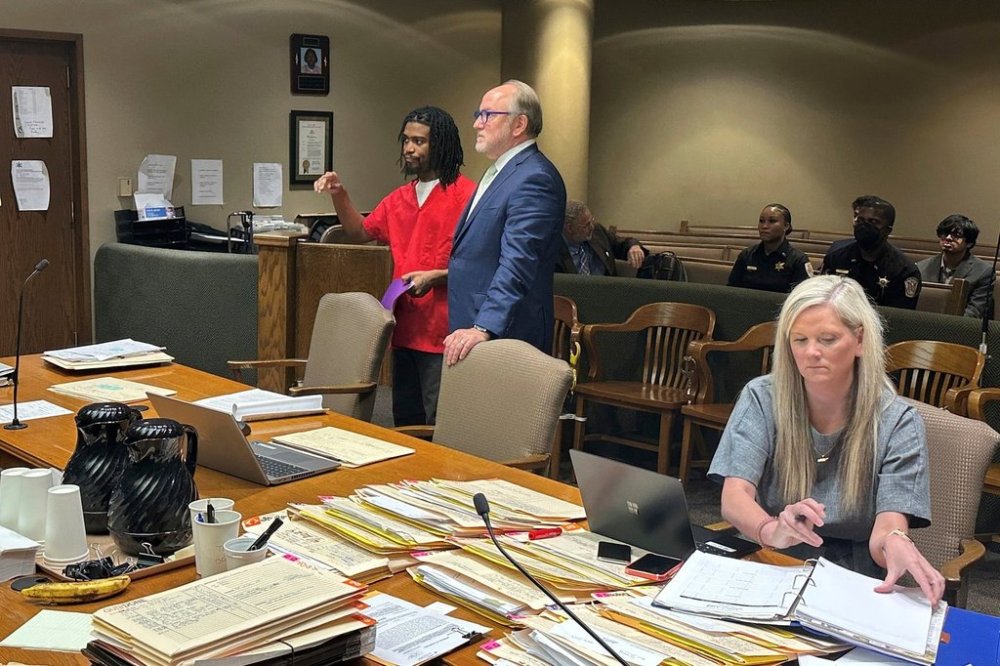
Prosecutors have said they plan to seek the death penalty if he’s convicted of first-degree murder. He appeared in court Tuesday with his lawyer, about five months after he told a judge that he wanted to represent himself in the shootings.
Kelly, 22, later reconsidered and his court-appointed lawyer, Michael Scholl, resumed serving as his primary representation. Scholl had been helping Kelly in an advisory capacity until Shelby County Judge James Jones Jr. re-appointed him in March.
Along with the killings of Dewayne Tunstall, Richard Clark and Allison Parker, Kelly also was charged with attempted murder, reckless endangerment with a deadly weapon and commission of an act of terrorism.
Kelly has until Sept. 16 to change his plea. Scholl told reporters after Tuesday’s hearing that he plans to file a motion to bring in a jury from outside of Memphis to hear the case. Lawyers typically file such change-of-venue motions in cases where there has been extensive pre-trial publicity.
At least three witnesses saw Kelly shoot Tunstall during a gathering at a Memphis home at about 1 a.m. on Sept. 7, 2022, according to a police affidavit. Clark and Parker were shot later that day, authorities said.
Police said three other people were wounded in the shootings, which took place in different parts of the city. A motive for the shootings was not clear. Some were livestreamed on social media platforms.
The shootings led to the shutdown of Memphis’ public bus system, the lockdown of two college campuses and the stoppage of a minor league baseball game.
Kelly carjacked at least two vehicles before he was arrested when he crashed a stolen car while fleeing police, authorities said.
Parker was a mother of three who worked as a medical assistant at a clinic in nearby West Memphis, Arkansas.
Clark worked as a campus safety officer at Christian Brothers University after retiring from a career as a corrections officer.