

DNA reveals identity of man whose body was found more than three decades ago in Missouri
Advertisement
Read this article for free:
or
Already have an account? Log in here »
To continue reading, please subscribe:
Monthly Digital Subscription
$1 per week for 24 weeks*
- Enjoy unlimited reading on winnipegfreepress.com
- Read the E-Edition, our digital replica newspaper
- Access News Break, our award-winning app
- Play interactive puzzles
*Billed as $4.00 plus GST every four weeks. After 24 weeks, price increases to the regular rate of $19.95 plus GST every four weeks. Offer available to new and qualified returning subscribers only. Cancel any time.
Monthly Digital Subscription
$4.99/week*
- Enjoy unlimited reading on winnipegfreepress.com
- Read the E-Edition, our digital replica newspaper
- Access News Break, our award-winning app
- Play interactive puzzles
*Billed as $19.95 plus GST every four weeks. Cancel any time.
To continue reading, please subscribe:
Add Free Press access to your Brandon Sun subscription for only an additional
$1 for the first 4 weeks*
*Your next subscription payment will increase by $1.00 and you will be charged $16.99 plus GST for four weeks. After four weeks, your payment will increase to $23.99 plus GST every four weeks.
Read unlimited articles for free today:
or
Already have an account? Log in here »
Hey there, time traveller!
This article was published 23/07/2025 (247 days ago), so information in it may no longer be current.
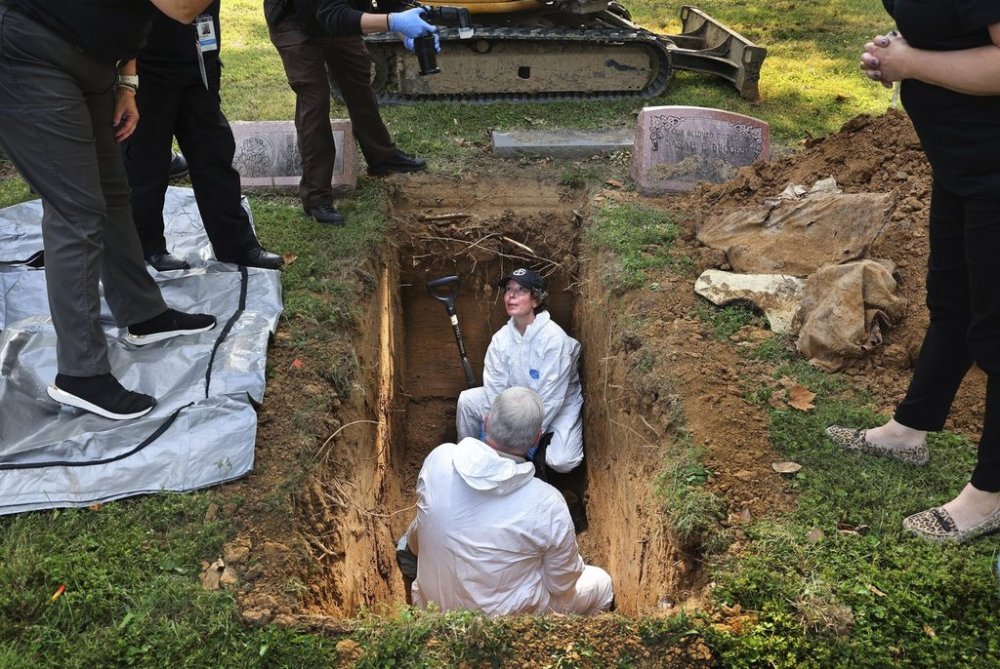
ST. LOUIS (AP) — A man whose body was found in the Mississippi River south of St. Louis in 1994 has finally been identified after authorities exhumed his remains to collect new DNA samples.
In the latest cold case to be solved through advances in DNA technology, the sheriff’s office in Jefferson County, Missouri, announced Tuesday that the former John Doe was Benny Leo Olson from Edwardsville, a suburb on the Illinois side of the river about 15 miles (24 kilometers) northeast of St. Louis.
Officials do not suspect any foul play in the case, the St. Louis Post-Dispatch reported.
After learning Olson had been dead more than three decades, his half-sister Catherine Heston told the newspaper, “We knew something must have happened, but you never really know.” If alive today, he would be 76.
She said Olson was a “perpetual student,” attending St. Louis Community College-Meramec, Western Illinois University in Macomb and at Southern Illinois University Edwardsville.
But mental illness also lurked in the background. In 1980, he was charged with trying to pay someone to burn down his stepmother’s house. His fingerprints were taken as part of that criminal case, and those prints ultimately helped confirm his identity following a partial DNA match to a distant relative.
Olson, who was diagnosed with paranoid schizophrenia, was deemed not competent to stand trial. He spent 11 years at a mental health facility in Illinois before being released in the early 1990s, Heston said.
Heston said the last time she heard from Olson would’ve been about a month before his body was found in the river, when he called during what she described as a “paranoid delusion.”
The family often wondered what happened. Over the years, her mother kept a box full of mementos, including his high school class ring, family photos and other keepsakes.
“This case resolution is a testament to the power of investigative genetic genealogy to give John and Jane Does their names back and provide answers to family,” Alyssa Feller, a forensic genetic genealogist who worked on the case, said in a news release.