

Supreme Court blocks North Dakota redistricting ruling that would gut key part of Voting Rights Act
Advertisement
Read this article for free:
or
Already have an account? Log in here »
To continue reading, please subscribe:
Monthly Digital Subscription
$1 per week for 24 weeks*
- Enjoy unlimited reading on winnipegfreepress.com
- Read the E-Edition, our digital replica newspaper
- Access News Break, our award-winning app
- Play interactive puzzles
*Billed as $4.00 plus GST every four weeks. After 24 weeks, price increases to the regular rate of $19.95 plus GST every four weeks. Offer available to new and qualified returning subscribers only. Cancel any time.
Monthly Digital Subscription
$4.99/week*
- Enjoy unlimited reading on winnipegfreepress.com
- Read the E-Edition, our digital replica newspaper
- Access News Break, our award-winning app
- Play interactive puzzles
*Billed as $19.95 plus GST every four weeks. Cancel any time.
To continue reading, please subscribe:
Add Free Press access to your Brandon Sun subscription for only an additional
$1 for the first 4 weeks*
*Your next subscription payment will increase by $1.00 and you will be charged $16.99 plus GST for four weeks. After four weeks, your payment will increase to $23.99 plus GST every four weeks.
Read unlimited articles for free today:
or
Already have an account? Log in here »
Hey there, time traveller!
This article was published 24/07/2025 (245 days ago), so information in it may no longer be current.
WASHINGTON (AP) — The Supreme Court on Thursday blocked a lower-court ruling in a redistricting dispute in North Dakota that would gut a landmark federal civil rights law for millions of people.
The justices indicated in an unsigned order that they are likely to take up a federal appeals court ruling that would eliminate the most common path people and civil rights groups use to sue under a key provision of the 60-year-old Voting Rights Act.
The case could be argued as early as 2026 and decided by next summer.
Three conservative justices, Samuel Alito, Neil Gorsuch and Clarence Thomas, would have rejected the appeal.
The court also has a separate redistricting case over a second majority Black congressional district in Louisiana. The justices heard arguments in March, but took the rare step of calling for a new round of arguments in their term that begins in October. They have yet to spell out what issues they want discussed.
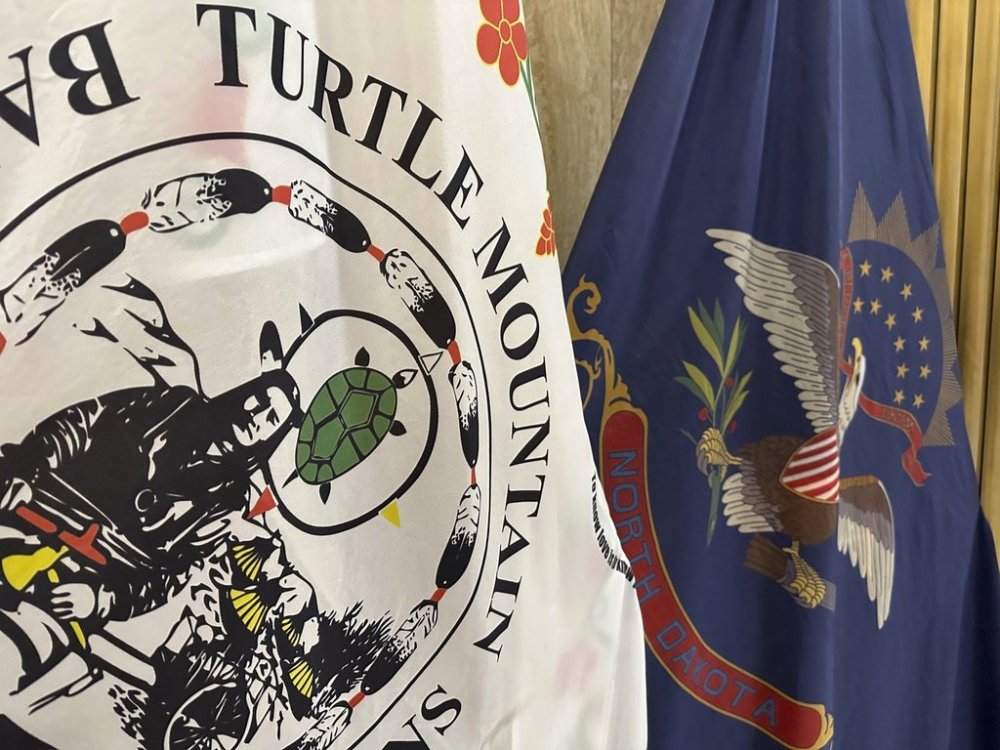
In the North Dakota case, the Spirit Lake Tribe and Turtle Mountain Band of Chippewa Indians, with reservations 60 miles apart, argued that the state’s 2021 legislative map violated the act by diluting their voting strength and ability to elect their own candidates.
The case went to trial in 2023, and a federal judge later ordered the use of a map of the area, including the reservations that led to the election last year of three Native Americans, all Democrats, to the Republican-supermajority Legislature.
But in a 2-1 ruling issued in May, a three-judge panel of the 8th U.S. Circuit Court of Appeals ruled that only the Justice Department can bring such lawsuits under the law’s Section 2.
The 8th Circuit also had ruled in an Arkansas case in 2023 that private individuals can’t sue under the same provision.
More than 90 percent of Section 2 cases have been brought through private enforcement, UCLA law professor Richard Hasen wrote on the Election Law blog.
The 8th Circuit rulings conflict with decades of decisions by appellate courts that have affirmed the rights of private individuals to sue under Section 2.
The Supreme Court often will step in when appeals courts around the country come to different decisions on the same legal issue.
In a statement, Turtle Mountain Band of Chippewa Indians Chairman Jamie Azure said, “We are relieved that Native voters in North Dakota retain the ability to protect ourselves from discrimination at the polls. Our fight for the rights of our citizens continues. The map enacted by the North Dakota legislature unlawfully dilutes the votes of Native voters, and it cannot be allowed to stand.”
North Dakota Secretary of State Michael Howe, a Republican, who is named in the lawsuit, said his office “will continue to follow election laws set by the North Dakota legislature or as directed by any final decisions by the courts.”
The 8th Circuit covers seven states: Arkansas, Iowa, Minnesota, Missouri, Nebraska, North Dakota and South Dakota. In the wake of the Arkansas decision, Minnesota and other states moved to shore up voting rights with state-level protections.
___
Dura reported from Bismarck, North Dakota.