

The last dance? Organizers of North America’s largest powwow say 2026 will be the event’s final year
Advertisement
Read this article for free:
or
Already have an account? Log in here »
To continue reading, please subscribe:

Digital Subscription
One year of digital access for only $205*
- Enjoy unlimited reading on winnipegfreepress.com
- Read the E-Edition, our digital replica newspaper
- Access News Break, our award-winning app
- Play interactive puzzles
*First annual payment billed as $205.00 + GST for one year. This annual subscription will automatically renew at $233.00 + GST every 52 weeks (10% off the regular annual price of $259.35). Offer available to new and qualified returning subscribers only. Cancel any time.
To continue reading, please subscribe:
Add Free Press access to your Brandon Sun subscription for only an additional
$1 for the first 4 weeks*
- Enjoy unlimited reading on winnipegfreepress.com
- Read the E-Edition, our digital replica newspaper
- Access News Break, our award-winning app
- Play interactive puzzles
*Your next Brandon Sun subscription payment will increase by $1.00 and you will be charged $17.95 plus GST for four weeks. After four weeks, your payment will increase to $24.95 plus GST every four weeks.
Read unlimited articles for free today:
or
Already have an account? Log in here »
Hey there, time traveller!
This article was published 16/08/2025 (422 days ago), so information in it may no longer be current.
ALBUQUERQUE, N.M. (AP) — For decades, tens of thousands of people have descended upon Albuquerque for what is billed as North America’s largest powwow, a celebration showcasing Indigenous dancers, musicians and artisans from around the world.
Organizers announced Saturday that 2026 will be the last time the cultural event is held, saying via email and social media that it will end after 43 years without providing details on the decision.
“There comes a time,” Gathering of Nations Ltd. said in a statement.
The official poster for the 2026 event features the words “The Last Dance.”
Organizers did not immediately respond to phone and email messages seeking comment.
The New Mexico fairgrounds have hosted the powwow since 2017, but it’s unclear whether the venue would be available for future events given that the state is considering redeveloping the site.
There also has been criticism over the years by some Native Americans who said Gathering of Nations organizers were capitalizing on Indigenous culture. Organizers dismissed those claims, saying the money raised goes toward the expenses of putting on the event.
While offering spectators a glimpse into Indigenous cultures, large powwows like the one in Albuquerque have become more commercialized events with prize money for dancing and drumming competitions.
For some Native American leaders, it can be a struggle to keep traditional cultural practices and commercial powwows from being lumped into the same category. There have been efforts to focus on promoting smaller powwows that are held in tribal communities.
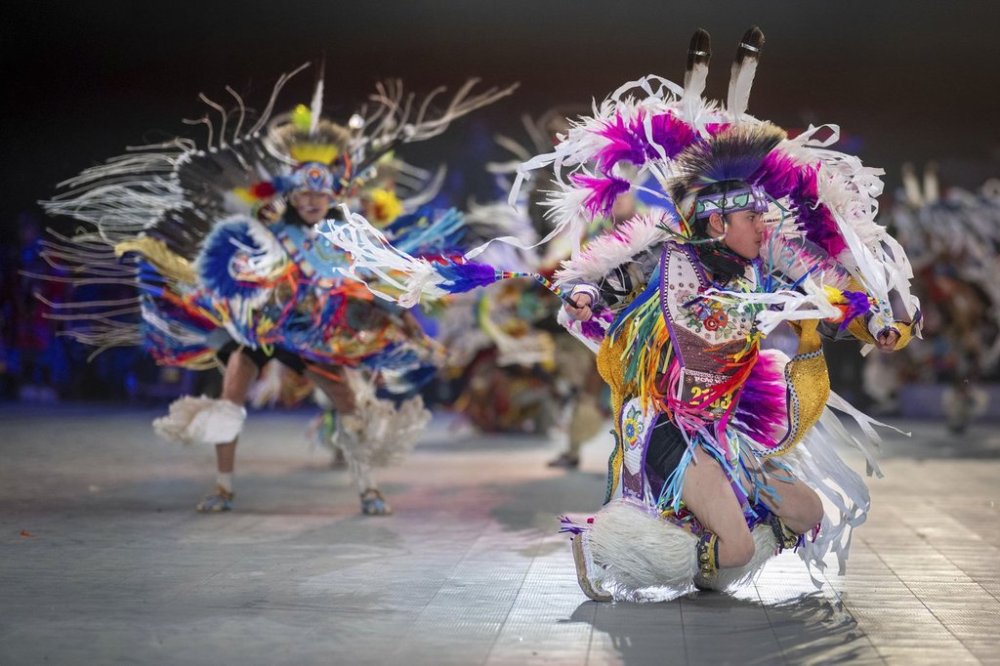
At Gathering of Nations, the signature event is the grand entry, in which a colorful procession of dancers spirals into the center of an arena. Participants wear elaborate regalia — some with jingling bells and others with feathers — and dance to rhythmic drumming.
The event also features the crowning of Miss Indian World, as well as horse parades in which riders are judged on the craftsmanship of their intricately beaded adornments or feathered headdresses and how well they work with their steeds.