

Rwanda-backed rebels parade new recruits raising questions over Congo peace deal
Advertisement
Read this article for free:
or
Already have an account? Log in here »
To continue reading, please subscribe:
Monthly Digital Subscription
$1 per week for 24 weeks*
- Enjoy unlimited reading on winnipegfreepress.com
- Read the E-Edition, our digital replica newspaper
- Access News Break, our award-winning app
- Play interactive puzzles
*Billed as $4.00 plus GST every four weeks. After 24 weeks, price increases to the regular rate of $19.95 plus GST every four weeks. Offer available to new and qualified returning subscribers only. Cancel any time.
Monthly Digital Subscription
$4.99/week*
- Enjoy unlimited reading on winnipegfreepress.com
- Read the E-Edition, our digital replica newspaper
- Access News Break, our award-winning app
- Play interactive puzzles
*Billed as $19.95 plus GST every four weeks. Cancel any time.
To continue reading, please subscribe:
Add Free Press access to your Brandon Sun subscription for only an additional
$1 for the first 4 weeks*
*Your next subscription payment will increase by $1.00 and you will be charged $16.99 plus GST for four weeks. After four weeks, your payment will increase to $23.99 plus GST every four weeks.
Read unlimited articles for free today:
or
Already have an account? Log in here »
Hey there, time traveller!
This article was published 16/09/2025 (191 days ago), so information in it may no longer be current.
LAGOS, Nigeria (AP) — A military parade at the weekend by a rebel group in control of mineral-rich eastern Congo has raised concerns over the future of an impending peace deal between the government and the rebels’ main backers, Rwanda.
The deal will shape the fate of the M23 rebel group in eastern Congo, which launched blitz attacks in January to take over key cities including Goma and Bukavu while the Congolese army swiftly retreated. U.N. experts said the M23 was backed by thousands of troops from neighboring Rwanda.
A central plank of the deal, which is expected to be signed in Washington in a few weeks, is the withdrawal of Rwanda’s support for the group. The deal is also expected to stipulate the concession of territories back to the Congolese authorities.
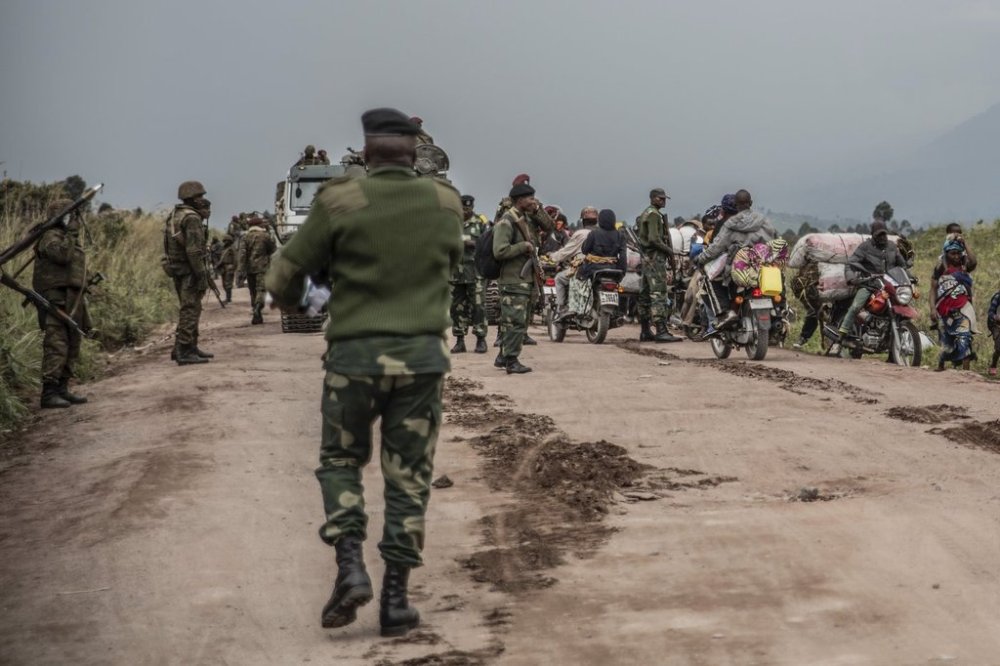
A Qatar-led mediation between the warring sides led to both sides committing to ending the conflict, but pockets of skirmishes have recently been reported between the M23 and government-aligned groups. Both sides have consistently accused each other of violating the ceasefire agreement.
On Sunday, the rebels paraded more than 7,000 new recruits in Goma, the regional center.
The M23 said the recruits included Congolese soldiers who surrendered when fighting escalated this year and the local militia members who fought with them. Rights groups have raised concerns about soldiers and young residents being pressured to join the rebels.
″(The parade) constitutes a form of materialization of an occupation that is taking root and increasingly taking the tacit form of a state within a state,” said Christian Moleka, a Congo-based political analyst.
The military show of force also sapped hope among residents in rebel-held cities who were looking forward to peace agreements to bring an end to the conflict.
“We’ve just seen thousands of new M23 fighters again. We are losing hope,” Adeline Munene, 34, told The Associated Press. “We thought the Washington and Doha agreements would bring peace. Now I’m disappointed.”
Christian Rumu, a senior campaigner at Amnesty International, said both sides are beefing up their military strength and presence in the conflict-hit regions. “So it means that, you know, they are not ready to go through the peaceful process,” he said
The conflict has precipitated a humanitarian crisis with at least 3,000 dead and millions displaced.
A new report by the United Nations revealed “horrific atrocities” in eastern Congo over the last year committed by both Congo’s armed forces and the M23 rebels. They include gang rape, sexual slavery, torture, killings of civilians and other crimes, the U.N. human rights office said, adding that the governments of both Congo and Rwanda bear responsibility.
The M23 is made up primarily of ethnic Tutsis who failed to integrate into the Congolese army and led a failed insurgency against the Congolese government in 2012. The group was dormant for a decade, until its resurgence in 2022.
___
Associated Press writers Baba Ahmed in Bamako, Mali and Ruth Alonga in Kinshasa, Congo, contributed to this report.