

A court in Tunisia sentenced a man to death for Facebook posts seen as insulting to the president
Advertisement
Read this article for free:
or
Already have an account? Log in here »
To continue reading, please subscribe:
Monthly Digital Subscription
$1 per week for 24 weeks*
- Enjoy unlimited reading on winnipegfreepress.com
- Read the E-Edition, our digital replica newspaper
- Access News Break, our award-winning app
- Play interactive puzzles
*Billed as $4.00 plus GST every four weeks. After 24 weeks, price increases to the regular rate of $19.95 plus GST every four weeks. Offer available to new and qualified returning subscribers only. Cancel any time.
Monthly Digital Subscription
$4.99/week*
- Enjoy unlimited reading on winnipegfreepress.com
- Read the E-Edition, our digital replica newspaper
- Access News Break, our award-winning app
- Play interactive puzzles
*Billed as $19.95 plus GST every four weeks. Cancel any time.
To continue reading, please subscribe:
Add Free Press access to your Brandon Sun subscription for only an additional
$1 for the first 4 weeks*
*Your next subscription payment will increase by $1.00 and you will be charged $16.99 plus GST for four weeks. After four weeks, your payment will increase to $23.99 plus GST every four weeks.
Read unlimited articles for free today:
or
Already have an account? Log in here »
TUNIS, Tunisia (AP) — A court in Tunisia has sentenced a 51-year-old man to death over Facebook posts deemed offensive to President Kais Saied and a threat to state security, his lawyer said Friday.
Saber Chouchen was convicted on Wednesday of three charges: attempting to overthrow the state, insulting the president and spreading false information online. Judges said the posts incited violence and chaos and violated Tunisia’s penal code as well as the controversial 2022 cybercrime law, Decree 54.
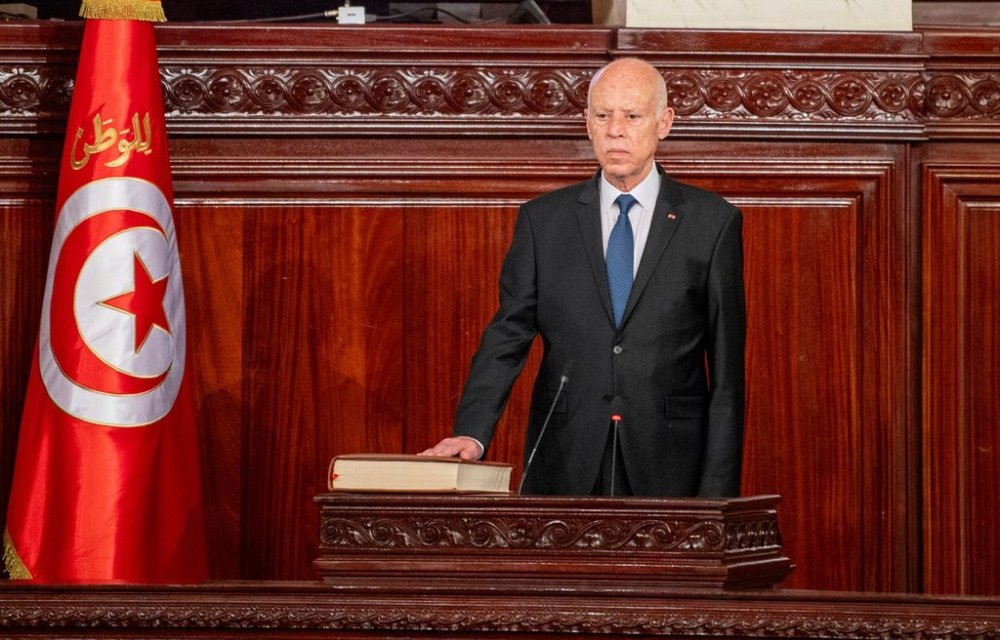
The ruling is the first of its kind in Tunisia, where dozens have been handed heavy prison sentences over similar charges since Saied seized power over all branches of government in July 2021.
Although capital punishment remains in Tunisia’s penal code and civilian courts occasionally issue death sentences, none have been carried out since the execution of a serial killer in 1991.
In a statement on Facebook, lawyer Oussama Bouthelja said his client had been in pretrial detention since January 2024. He said he was a father of three and an occasional day laborer who suffers from a permanent disability caused by a workplace accident.
Bouthelja described him as socially vulnerable and of a limited educational background, with little influence online.
“Most of the content he shared was copied from other pages, and some posts received no engagement at all,” Bouthelja wrote. “In court, he said his intent was to draw authorities’ attention to his difficult living conditions, not to incite unrest.”
The ruling is the latest to use Decree 54, a law that makes it illegal “to produce, spread, disseminate, send or write false news … with the aim of infringing the rights of others, harming public safety or national defense or sowing terror among the population.” Since its passage in 2022, journalists and human rights groups have condemned the law as a key tool used by authorities to curb freedom of expression in Tunisia.
Tunisia, the birthplace of the 2011 Arab Spring uprisings, was long seen as the last beacon of hope for democracy in the Middle East and North Africa. However, since Saied suspended parliament and consolidated his own power in 2021, political freedoms have shrunk. Saied continues to rule by decree and his most well-known critics are either in prison or abroad.
Rights advocates in Tunisia warned that applying the death penalty for online speech sets a dangerous precedent.