

Sudan’s top general rejects US-led ceasefire proposal, calling it ‘the worst yet’
Advertisement
Read this article for free:
or
Already have an account? Log in here »
To continue reading, please subscribe:

Digital Subscription
One year of digital access for only $205*
- Enjoy unlimited reading on winnipegfreepress.com
- Read the E-Edition, our digital replica newspaper
- Access News Break, our award-winning app
- Play interactive puzzles
*First annual payment billed as $205.00 + GST for one year. This annual subscription will automatically renew at $233.00 + GST every 52 weeks (10% off the regular annual price of $259.35). Offer available to new and qualified returning subscribers only. Cancel any time.
To continue reading, please subscribe:
Add Free Press access to your Brandon Sun subscription for only an additional
$1 for the first 4 weeks*
- Enjoy unlimited reading on winnipegfreepress.com
- Read the E-Edition, our digital replica newspaper
- Access News Break, our award-winning app
- Play interactive puzzles
*Your next Brandon Sun subscription payment will increase by $1.00 and you will be charged $17.95 plus GST for four weeks. After four weeks, your payment will increase to $24.95 plus GST every four weeks.
Read unlimited articles for free today:
or
Already have an account? Log in here »
Hey there, time traveller!
This article was published 24/11/2025 (268 days ago), so information in it may no longer be current.
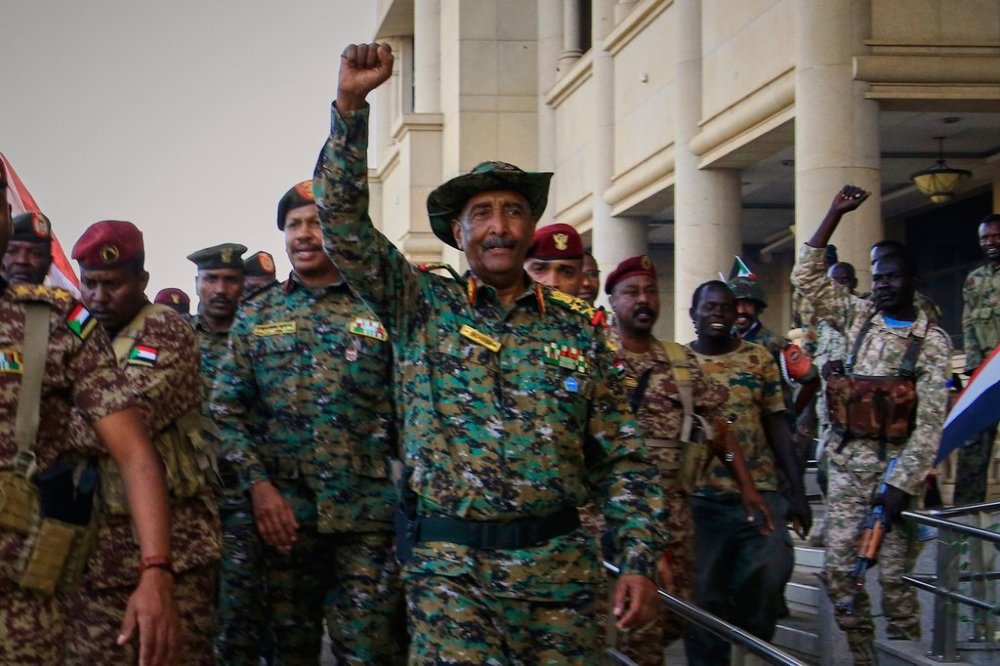
CAIRO (AP) — Sudan’s top general rejected a ceasefire proposal provided by U.S.-led mediators in a blow to efforts to stop a devastating war that has gripped the African country for over 30 months.
In video comments released by the military late Sunday, Gen. Abdel-Fattah Burhan said the proposal was unacceptable and “the worst yet,” accusing the mediators of being “biased” in their efforts to end the war.
Sudan plunged into chaos in April 2023 when a power struggle between the military and the powerful paramilitary Rapid Support Forces exploded into open fighting in the capital, Khartoum, and elsewhere in the country.
The devastating war has killed more than 40,000 people, according to U.N. figures, but aid groups say that is an undercount and the true number could be many times higher. It created the world’s largest humanitarian crisis with over 14 million people forced to flee their homes, fueled disease outbreaks and pushed parts of the country into famine.
The mediators, known as the Quad, have been trying for over two years to bring an end to the fighting and reestablish a path to democratic transition which was hampered by a military coup in 2021. They are comprised of the U.S., Saudi Arabia, Egypt and the United Arab Emirates.
This month, U.S. President Donald Trump said that he plans to put greater attention on helping find an end to Sudan’s war after being urged to take action by Saudi Crown Prince Mohammed bin Salman during his visit to the White House.
On Monday, U.N. Secretary-General António Guterres called for an immediate ceasefire and for both the military and the RSF to negotiate a settlement.
Writing on social platform X, he also called for a “safe & unimpeded delivery of humanitarian aid,” as well as an end to arms and fighters transfer to Sudan.
“We need peace in Sudan,” Guterres said.
Massad Boulos, a U.S. adviser for African affairs, told The Associated Press earlier this month that the latest proposal calls for a three-month humanitarian truce followed by a nine-month political process.
The RSF said it has agreed to the truce, following global outrage over the paramilitaries’ atrocities in the Darfur city of el-Fasher. In a video speech late Monday, the paramilitary commander Gen. Mohammed Hamdan Dagalo reiterated the group’s commitment to a three-month humanitarian truce and called for mediators to pressure the military to accept the proposal.
Burhan, Sudan’s top general, said however that the proposal “is considered the worst document yet,” since it “eliminates the Armed Forces, dissolves security agencies and keeps the militia where they are” — referring to the RSF.
“If the mediation continues in this direction, we will consider it to be biased mediation,” he said.
He lashed out at the U.S. adviser and accused him of attempting to “impose some conditions on us.”
“We fear that Massad Boulos will be an obstacle to the peace that all the people of Sudan seek,” Burhan said, without given further details about the plan.
In his comments, Burhan also took aim at the UAE. He said that since the Quad includes the Gulf country as a member, the mediation group was “not innocent of responsibility, especially since the entire world has witnessed the UAE’s support for the rebels against the Sudanese State.”
In a statement Monday, the UAE’s Foreign Ministry said Burhan, through his rejection of the ceasefire proposal, showed “obstructive behavior,” which it said “must be called out.”
The UAE is widely accused by rights groups of arming the paramilitaries. The AP reported earlier this month that U.S. intelligence assessments for many months have found that the Emirates, a close U.S. ally, has been sending weapons to the RSF, according to a U.S. official familiar with the classified reports who spoke on condition of anonymity to share details.
The UAE denies backing the paramilitaries.
Burhan denied that the military is controlled by Islamists or that it used chemical weapons in its fighting against the RSF — an accusation leveled by the Trump administration in May.
Burhan said the military will only agree to a truce when the RSF completely withdraws from civilian areas to allow the return of displaced people to their homes, before embarking on talks for a political settlement to the conflict.
“We’re not warmongers, and we don’t reject peace,” he said, “but no one can threaten us or dictate terms to us.”
___
Lee Keath in Cairo contributed to this report.