

Swiss voters reject mandatory national service for women and new inheritance tax
Advertisement
Read this article for free:
or
Already have an account? Log in here »
To continue reading, please subscribe:
Digital Subscription
One year of digital access for only $1.44 a week*
- Enjoy unlimited reading on winnipegfreepress.com
- Read the E-Edition, our digital replica newspaper
- Access News Break, our award-winning app
- Play interactive puzzles
*Billed as $5.77 plus GST every four weeks. After 52 weeks, price increases to the regular rate of $19.95 plus GST every four weeks. Offer available to new and qualified returning subscribers only. Cancel any time.
To continue reading, please subscribe:
Add Free Press access to your Brandon Sun subscription for only an additional
$1 for the first 4 weeks*
- Enjoy unlimited reading on winnipegfreepress.com
- Read the E-Edition, our digital replica newspaper
- Access News Break, our award-winning app
- Play interactive puzzles
*Your next Brandon Sun subscription payment will increase by $1.00 and you will be charged $17.95 plus GST for four weeks. After four weeks, your payment will increase to $24.95 plus GST every four weeks.
Read unlimited articles for free today:
or
Already have an account? Log in here »
Hey there, time traveller!
This article was published 30/11/2025 (325 days ago), so information in it may no longer be current.
GENEVA (AP) — Swiss voters on Sunday decisively rejected a call to require women to do national service in the military, civil protection teams or other forms, as men must do already.
In a referendum, over 84% of voters rejected the “citizen service initiative” and none of the country’s 26 cantons, or states, came anywhere near voting in favor. Proposals need a majority of both voters and cantons to pass.
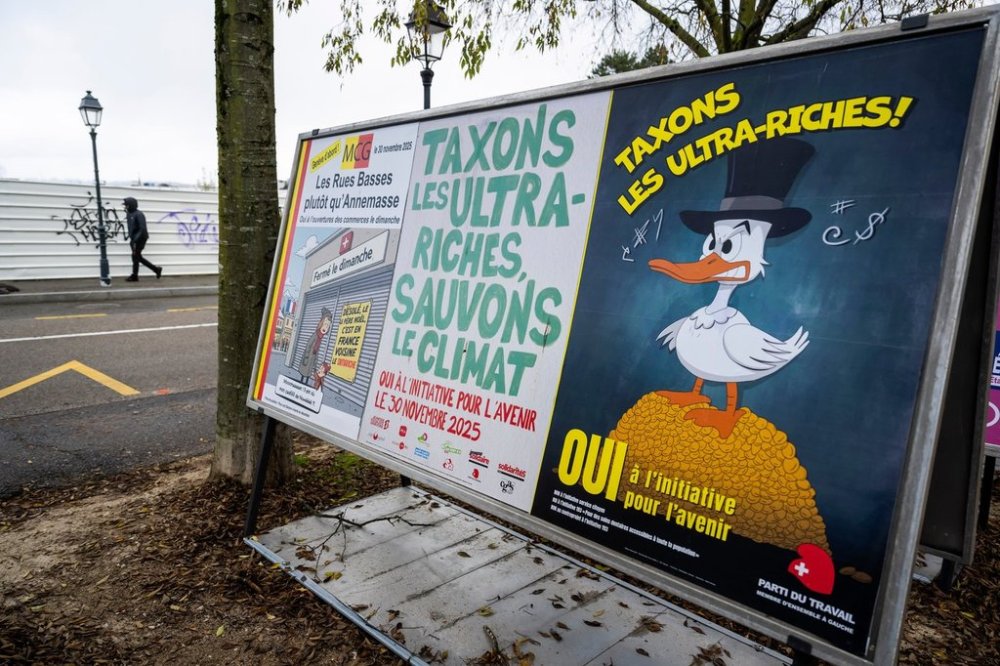
A separate proposal to impose a new national tax on individual donations or inheritances of more than 50 million francs ($62 million) was shot down by more than 78% of voters. The revenues were to be used to fight the impact of climate change and help Switzerland meet its ambitions to have net-zero greenhouse gas emissions by 2050.
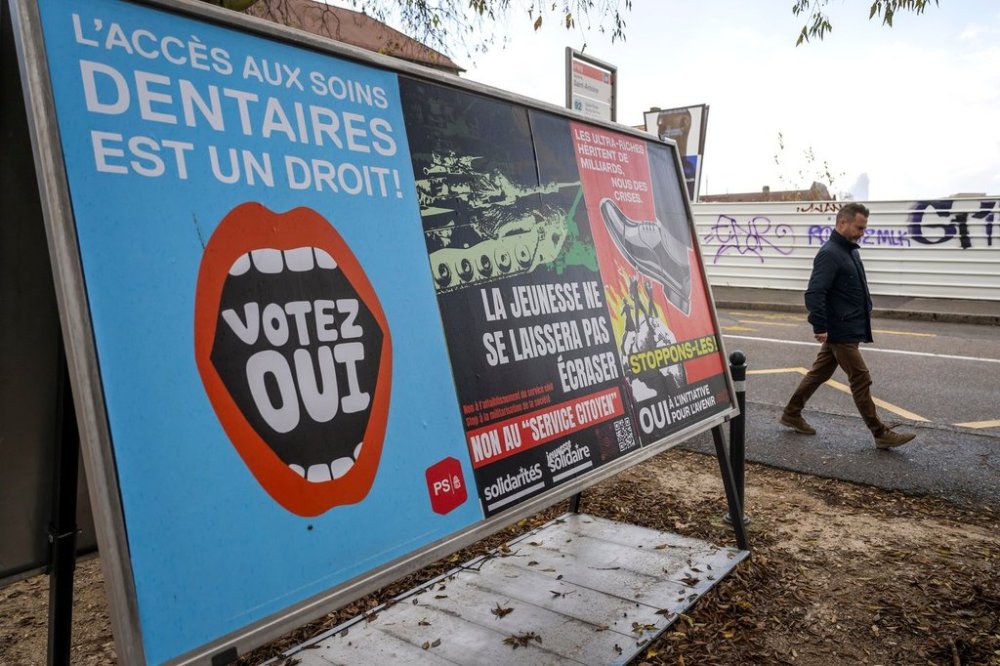
Supporters of the national service plan hoped that it would boost social cohesion by adding jobs in areas like environmental prevention, food security and elderly care. But lawmakers opposed it, mainly for cost reasons and out of concern that it could hurt the economy by taking many young people out of the workforce.
The proposal came at a time when other European countries are finding ways to bolster their armed forces in the face of growing concerns about Russia’s potential threat beyond the war in Ukraine.
Young men in neutral Switzerland are already required to carry out military service or join civil protection teams. Conscientious objectors can do other types of service, and those who opt out entirely must pay an exemption fee. Each year, about 35,000 men take part in mandatory service.
The failed initiative would have required all Swiss citizens to do national service — women can currently do so on a voluntary basis — and applied the concept of national security to areas beyond military service or civil protection.
Its supporters pointed to “landslides in the mountains, floods in the plains, cyberattacks, risks of energy shortages or war in Europe” and said that their plan would mean everyone taking responsibility for “a stronger Switzerland that’s able to stand up to crises.”
The government countered that the army and civil defense have enough staff, and no more people should be recruited than are needed.
While compulsory military service for women might be seen as “a step toward gender equality,” it added, the idea would “place an extra burden on many women, who already shoulder a large part of the unpaid work of raising and caring for children and relatives, as well as household tasks.”
The government also opposed the proposal for a new tax on large donations or inheritances, arguing that approval could prompt some of the wealthiest in Switzerland — an estimated 2,500 people — to move elsewhere. Sums beyond 50 million francs ($62 million) could have been hit with a 50% rate.
Switzerland holds national referendums four times a year, giving voters a direct say in policymaking.
___
Associated Press writer Geir Moulson in Berlin contributed to this report.