

Haiti’s transitional government adopts key law to hold a general election for first time since 2016
Advertisement
Read this article for free:
or
Already have an account? Log in here »
To continue reading, please subscribe:
Monthly Digital Subscription
$0 for the first 4 weeks*
- Enjoy unlimited reading on winnipegfreepress.com
- Read the E-Edition, our digital replica newspaper
- Access News Break, our award-winning app
- Play interactive puzzles
*No charge for 4 weeks then price increases to the regular rate of $19.00 plus GST every four weeks. Offer available to new and qualified returning subscribers only. Cancel any time.
Monthly Digital Subscription
$4.75/week*
- Enjoy unlimited reading on winnipegfreepress.com
- Read the E-Edition, our digital replica newspaper
- Access News Break, our award-winning app
- Play interactive puzzles
*Billed as $19 plus GST every four weeks. Cancel any time.
To continue reading, please subscribe:
Add Free Press access to your Brandon Sun subscription for only an additional
$1 for the first 4 weeks*
*Your next subscription payment will increase by $1.00 and you will be charged $16.99 plus GST for four weeks. After four weeks, your payment will increase to $23.99 plus GST every four weeks.
Read unlimited articles for free today:
or
Already have an account? Log in here »
SAN JUAN, Puerto Rico (AP) — Haiti’s transitional presidential council has backed an electoral law in the latest step toward holding a general election for the first time in nearly a decade.
The approval late Monday means that the government can finally publish an official and long-awaited electoral calendar, after fears that the council would try to push back the tentative dates to stay in power longer.
Council President Laurent Saint-Cyr called the move a “major decision” for Haiti.
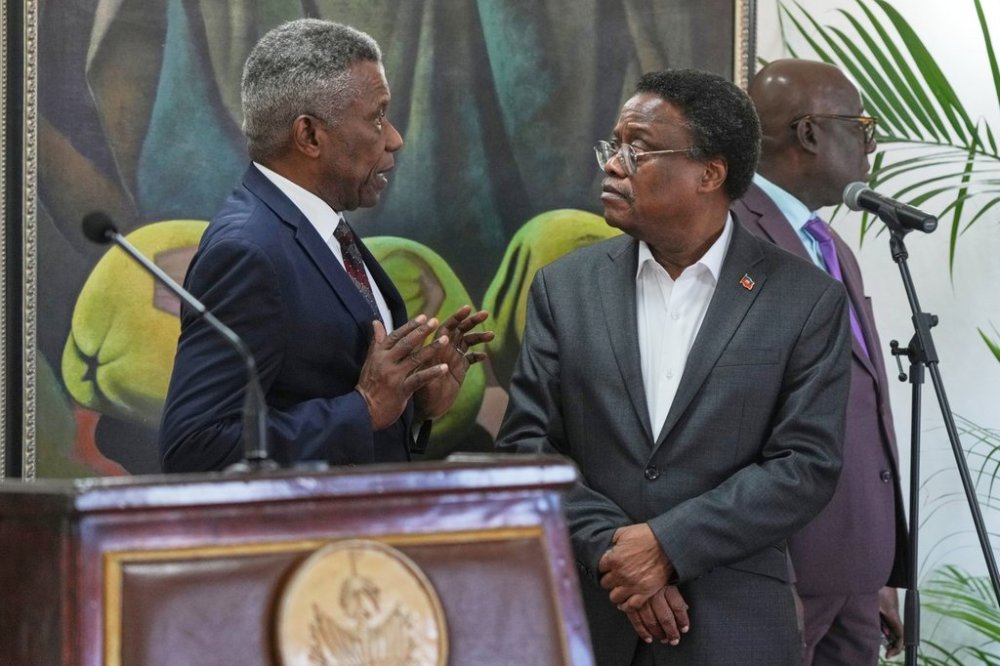
“We must finally offer the Haitian people the opportunity to freely and responsibly choose those who will lead them,” he wrote on X. “By taking this decisive step, while remaining fully committed to restoring security, we reaffirm our dedication to putting Haiti back on the path to democratic legitimacy and stability.”
The adoption of the electoral law came as some council members have pushed for the ouster of Prime Minister Alix Didier Fils-Aimé, including Fritz Alphonse Jean, who was recently sanctioned by the U.S. government.
Some believe that U.S. visa restrictions, like the one imposed on Jean, are being used as a threat to try and influence Haiti’s politics.
Three of seven council members with voting powers weren’t present for Monday’s meeting, where the electoral law was approved, including Jean, according to Le Nouvelliste newspaper.
Council member Frinel Joseph, who voted in favor of the law, said that it marked “a decisive turning point” in the transition of power and that it provided Haiti “with the necessary legal and political framework for holding elections.”
Haiti’s Provisional Electoral Council has said it plans to hold the first round of voting in August and the final round in December next year, although ongoing gang violence could push back those dates.
Meanwhile, the transitional presidential council is supposed to step down by Feb. 7 to give way to democratic rule.
Haiti last held a general election in 2016 and hasn’t had a president since Jovenel Moïse was killed at his private residence in July 2021.
The transitional presidential council was appointed after the killing, and the prime ministers that have served since the killing have been nominated by the council.