

About 400 immigrant children were detained longer than the recommended limit, ICE admits
Advertisement
Read this article for free:
or
Already have an account? Log in here »
To continue reading, please subscribe:

Digital Subscription
One year of digital access for only $205*
- Enjoy unlimited reading on winnipegfreepress.com
- Read the E-Edition, our digital replica newspaper
- Access News Break, our award-winning app
- Play interactive puzzles
*First annual payment billed as $205.00 + GST for one year. This annual subscription will automatically renew at $233.00 + GST every 52 weeks (10% off the regular annual price of $259.35). Offer available to new and qualified returning subscribers only. Cancel any time.
To continue reading, please subscribe:
Add Free Press access to your Brandon Sun subscription for only an additional
$1 for the first 4 weeks*
- Enjoy unlimited reading on winnipegfreepress.com
- Read the E-Edition, our digital replica newspaper
- Access News Break, our award-winning app
- Play interactive puzzles
*Your next Brandon Sun subscription payment will increase by $1.00 and you will be charged $17.95 plus GST for four weeks. After four weeks, your payment will increase to $24.95 plus GST every four weeks.
Read unlimited articles for free today:
or
Already have an account? Log in here »
Hey there, time traveller!
This article was published 09/12/2025 (256 days ago), so information in it may no longer be current.
McALLEN, Texas (AP) — Hundreds of immigrant children lingered in federal detention beyond a court-mandated limit, including some who were held more than five months, according to court filings that alarmed legal advocates who say the government is failing to safeguard children.
Attorneys for detainees highlighted the government’s own admissions to longer custody times for immigrant children, contaminated food, a lack of access to medical care or sufficient legal counsel reported by families and monitors at federal facilities, as well as a renewed reliance on hotels for detention.
The attorneys’ reports were filed late Monday in a civil lawsuit launched in 1985 that led to the creation in 1997 of court-ordered supervision of standards and eventually established a 20-day limit in custody. The Trump administration is attempting to end the agreement.
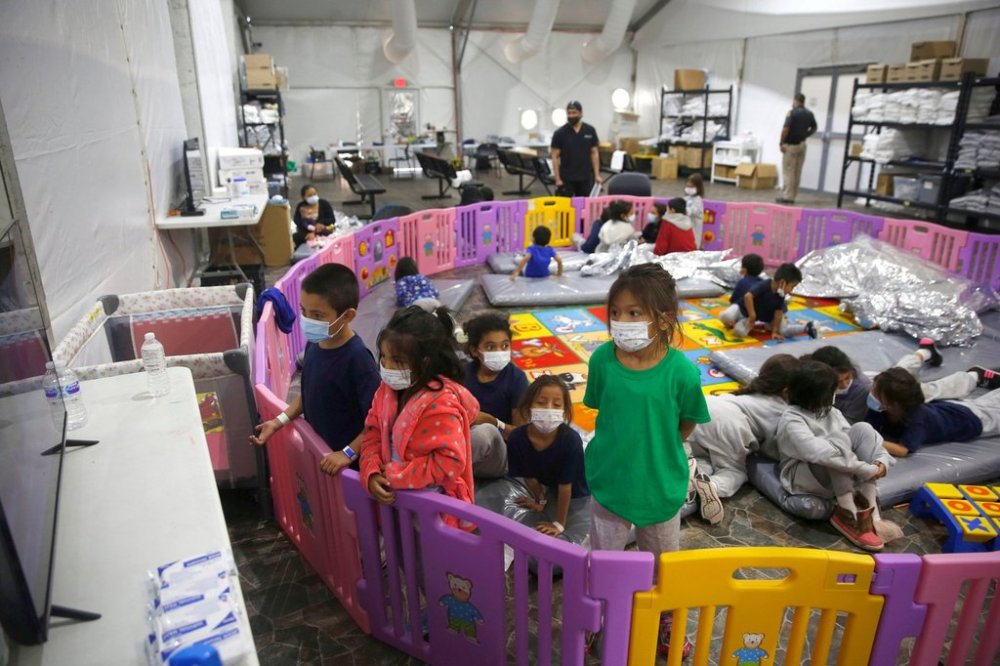
A Dec. 1 report from U.S. Immigration and Customs Enforcement indicated that about 400 immigrant children were held in custody for more than the 20-day limit from August to September. They told the court the problem was widespread and not specific to a region or facility. The primary factors that prolonged their release were categorized into three groups: transportation delays, medical needs, and legal processing.
Legal advocates for the children contended those reasons do not prove lawful justifications for the delays in their release. Through interviews with detained families, advocates identified five children held for 168 days. The report didn’t say how old those children were.
ICE did not immediately respond to a request for comment Tuesday.
Hotel use for temporary detention is allowed by the federal court for up to 72 hours, but attorneys questioned the government’s data, which they believe did not fully explain why children were held longer than three days in hotel rooms.
Conditions at the detention facilities continued to be an ongoing concern since the family detention site in Dilley, Texas, reopened this year.
Advocates documented injuries suffered by children and a lack of access to sufficient medical care. One child bleeding from an eye injury wasn’t seen by medical staff for two days. Another child’s foot was broken when a member of the staff dropped a volleyball net pole, according to the court filing. “Medical staff told one family whose child got food poisoning to only return if the child vomited eight times,” the advocates wrote in their response.
“Children get diarrhea, heartburn, stomach aches, and they give them food that literally has worms in it,” one person with a family staying at the facility in Dilley wrote in a declaration submitted to the court. Another wrote that they were given “broccoli and cauliflower that were moldy and had worms.”
Chief U.S. District Judge Dolly Gee of the Central District of California is scheduled to have a hearing on the reports next week, where she could decide if the court needs to intervene.
___
This story has been edited to show that the court filing was submitted Monday evening, not Wednesday.