

Judge orders special elections for Mississippi Supreme Court after Voting Rights Act violation
Advertisement
Read this article for free:
or
Already have an account? Log in here »
To continue reading, please subscribe:

Digital Subscription
One year of digital access for only $205*
- Enjoy unlimited reading on winnipegfreepress.com
- Read the E-Edition, our digital replica newspaper
- Access News Break, our award-winning app
- Play interactive puzzles
*First annual payment billed as $205.00 + GST for one year. This annual subscription will automatically renew at $233.00 + GST every 52 weeks (10% off the regular annual price of $259.35). Offer available to new and qualified returning subscribers only. Cancel any time.
To continue reading, please subscribe:
Add Free Press access to your Brandon Sun subscription for only an additional
$1 for the first 4 weeks*
- Enjoy unlimited reading on winnipegfreepress.com
- Read the E-Edition, our digital replica newspaper
- Access News Break, our award-winning app
- Play interactive puzzles
*Your next Brandon Sun subscription payment will increase by $1.00 and you will be charged $17.95 plus GST for four weeks. After four weeks, your payment will increase to $24.95 plus GST every four weeks.
Read unlimited articles for free today:
or
Already have an account? Log in here »
Hey there, time traveller!
This article was published 19/12/2025 (281 days ago), so information in it may no longer be current.
JACKSON, Miss. (AP) — A judge on Friday ordered special elections for the Mississippi Supreme Court after earlier finding that the electoral map used to select justices violates Section 2 of the Voting Rights Act.
U.S. District Judge Sharion Aycock in August ordered Mississippi to redraw the map, which was enacted in 1987, concluding the current configuration dilutes the power of Black voters. The Friday ruling gives the Mississippi Legislature until the end of its 2026 regular session to redraw the map.
Section 2, which is the primary way plaintiffs can push back against racially discriminatory election practices, is currently being challenged at the U.S. Supreme Court.
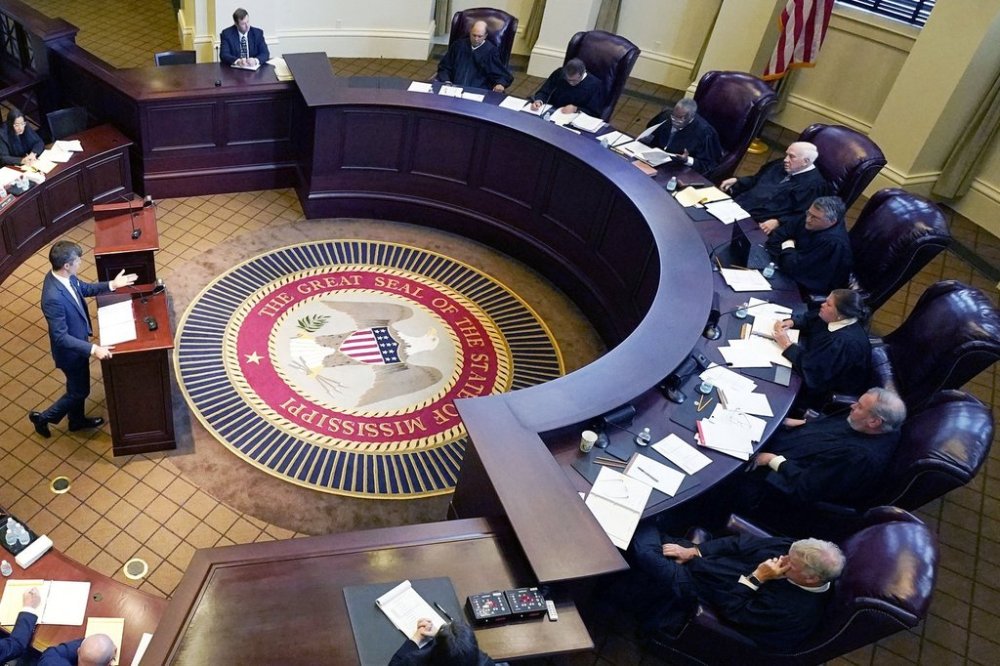
Once the legislature approves a new map, Aycock wrote that she will move quickly to meet any deadlines necessary to hold the special elections in November 2026.
Aycock also wrote that she will defer deciding which seats will be subject to a special election until after the new map has been adopted.
The order follows a 2022 lawsuit by the American Civil Liberties Union, which argued the current map cuts Mississippi’s Delta region — a historically Black area — in half, diminishing the Black vote in the Central District.
“Mississippi is nearly 40% Black, but has never had more than one Black Justice on the nine-member Court,” Ari Savitzky, a senior staff attorney with the ACLU’s Voting Rights Project, wrote in a statement. “We couldn’t be happier to see justice on the horizon.”
In her August ruling, Aycock noted only four Black people have served on Mississippi’s Supreme Court. All of them held the same seat in the Central District and were first appointed to the position by a sitting governor.
The Mississippi Secretary of State’s Office is appealing Aycock’s August ruling. The Fifth U.S. Circuit Court of Appeals has stayed its proceedings pending the outcomes of the SCOTUS case and other related cases.
The Mississippi Secretary of State and Attorney General’s offices did not immediately respond to requests for comment.
In December, two Mississippi Supreme Court justices were appointed to federal judgeships. Gov. Tate Reeves will appoint replacements to serve until new justices can be elected.
In Mississippi, Supreme Court elections are nonpartisan.