

Mali, Burkina Faso and Niger call for joint ‘large-scale operations’ against extremists
Advertisement
Read this article for free:
or
Already have an account? Log in here »
To continue reading, please subscribe:
Monthly Digital Subscription
$1 per week for 24 weeks*
- Enjoy unlimited reading on winnipegfreepress.com
- Read the E-Edition, our digital replica newspaper
- Access News Break, our award-winning app
- Play interactive puzzles
*Billed as $4.00 plus GST every four weeks. After 24 weeks, price increases to the regular rate of $19.95 plus GST every four weeks. Offer available to new and qualified returning subscribers only. Cancel any time.
Monthly Digital Subscription
$4.99/week*
- Enjoy unlimited reading on winnipegfreepress.com
- Read the E-Edition, our digital replica newspaper
- Access News Break, our award-winning app
- Play interactive puzzles
*Billed as $19.95 plus GST every four weeks. Cancel any time.
To continue reading, please subscribe:
Add Free Press access to your Brandon Sun subscription for only an additional
$1 for the first 4 weeks*
*Your next subscription payment will increase by $1.00 and you will be charged $16.99 plus GST for four weeks. After four weeks, your payment will increase to $23.99 plus GST every four weeks.
Read unlimited articles for free today:
or
Already have an account? Log in here »
BAMAKO, Mali (AP) — The head of an alliance of Mali, Burkina Faso and Niger declared Tuesday that the launch of a joint battalion “must be followed by large-scale operations in the coming days” in a region plagued by deadly extremism.
Burkina Faso leader Capt. Ibrahim Traoré gave no details in his comments after being named the new head of the Alliance of Sahel States, whose three military-led members withdrew from West Africa’s regional bloc this year. The alliance formed in 2023.
Mali, Burkina Faso and Niger are the most affected as the vast Sahel region south of the Sahara has become the deadliest place in the world for extremism, with armed groups linked to al-Qaida and the Islamic State group. All three countries have seen coups in recent years and struggled with overstretched security forces.
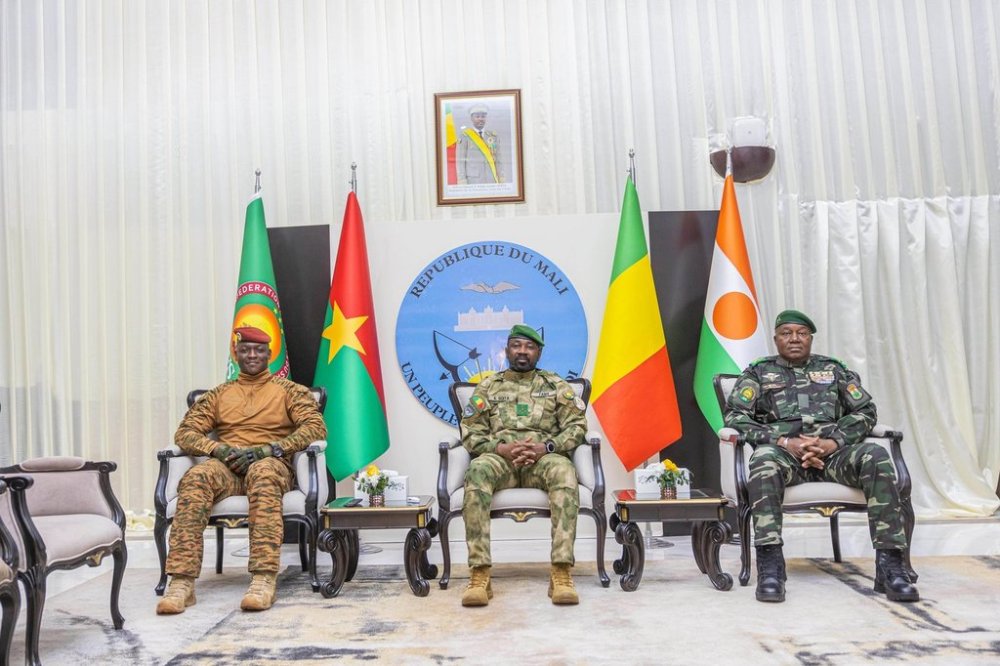
The countries’ leaders agreed in a summit Tuesday to boost security and economic ties, days after the weekend launch of the joint military battalion that’s meant to fight the armed groups. It is expected to have 5,000 personnel.
The alliance has “put an end to all occupation forces in our countries,” said Niger’s junta leader, Abdourahamane Tchiani, alluding to member states’ decisions to kick out longtime partners France and the United States.
“No country or interest group will decide for our countries anymore,” Tchiani added.
Mali, Burkina Faso and Niger, however, have turned to Russia as a major security ally.
The Sahel’s complex security crisis remains “very difficult to defeat” no matter who’s engaged with the alliance, said Rida Lyammouri, a Sahel specialist with the Policy Center for the New South think tank in Morocco.
The second annual summit shows growing collaboration among the three countries despite fractured relations and coup-related sanctions from global partners, said Ulf Laessing, head of the Sahel program at the Konrad Adenauer Foundation.
The alliance “enjoys popularity among citizens of the three countries” and is trying to keep momentum going by deepening cooperation beyond cross-border military operations, Laessing said.