

South Korea lawmakers pass bill to establish rebellion courts after complaints about Yoon case
Advertisement
Read this article for free:
or
Already have an account? Log in here »
To continue reading, please subscribe:

Digital Subscription
One year of digital access for only $205*
- Enjoy unlimited reading on winnipegfreepress.com
- Read the E-Edition, our digital replica newspaper
- Access News Break, our award-winning app
- Play interactive puzzles
*First annual payment billed as $205.00 + GST for one year. This annual subscription will automatically renew at $233.00 + GST every 52 weeks (10% off the regular annual price of $259.35). Offer available to new and qualified returning subscribers only. Cancel any time.
To continue reading, please subscribe:
Add Free Press access to your Brandon Sun subscription for only an additional
$1 for the first 4 weeks*
- Enjoy unlimited reading on winnipegfreepress.com
- Read the E-Edition, our digital replica newspaper
- Access News Break, our award-winning app
- Play interactive puzzles
*Your next Brandon Sun subscription payment will increase by $1.00 and you will be charged $17.95 plus GST for four weeks. After four weeks, your payment will increase to $24.95 plus GST every four weeks.
Read unlimited articles for free today:
or
Already have an account? Log in here »
Hey there, time traveller!
This article was published 23/12/2025 (257 days ago), so information in it may no longer be current.
SEOUL, South Korea (AP) — South Korea’s legislature on Tuesday passed a bill mandating specialized panels in Seoul’s district and high courts for cases involving rebellion, treason and foreign subversion after complaints about the pace of the rebellion trial of jailed former President Yoon Suk Yeol.
But the bill, which is likely to be signed into law by President Lee Jae Myung, would fall short of the effect the Democratic Party initially sought from the liberal-led legislature. Lawmakers altered the wording to ensure the measure would not apply to ongoing trials. Critics have said the original draft risked infringing on judicial independence.
The law would require the Seoul Central District Court and the Seoul High Court to establish at least two specialized panels for cases involving rebellion, treason and foreign subversion. Each panel must consist of a three-judge bench selected by the judges’ council at each court.
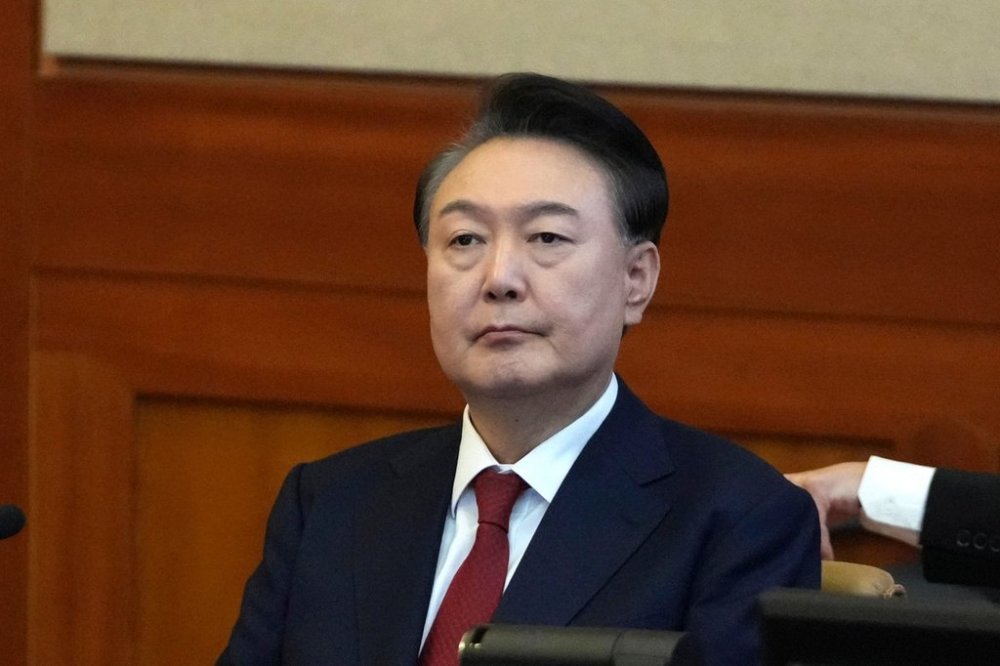
The bill passed the legislature 175–2 with two abstentions after many conservatives boycotted the vote.
The vote was delayed after Jang Dong-hyuk, the leader of the conservative People Power Party, staged a 24-hour filibuster, arguing that the bill remained unconstitutional even after repeated revisions and accusing Democrats of pressuring courts to create benches they favor. Following Tuesday’s vote, PPP leaders called on Lee to veto the bill.
The law would go into effect immediately after Lee signs the bill, but will not apply to Yoon’s ongoing rebellion trial, which is expected to reach a verdict in early 2026. If Yoon’s case reaches the high court, it would be handled by the specialized panels.
Yoon was a staunch conservative who declared martial law in December 2024 to suppress what he called the “anti-state” liberals obstructing his agenda. He was removed from office in April and re-arrested in July over his botched power grab that lasted only hours. He faces a slew of serious charges including rebellion, which is punishable by life in prison or the death penalty.
The Democratic Party has repeatedly criticized a judge at the Seoul Central District Court who is handling Yoon’s rebellion case, claiming he has delayed proceedings by spacing out hearings and arguing that courts should reconsider the longstanding practice of randomly assigning judges in cases of exceptional importance such as rebellion.
The judge, Jee Kui-youn, initially drew the ire of liberals in March by approving Yoon’s release from prison following his first arrest, allowing him to stand trial without detention until his rearrest in July.
The liberals’ complaints grew after other judges rejected investigators’ requests for arrest warrants on some key figures close to Yoon including former Prime Minister Han Duck-soo and senior conservative lawmaker Choo Kyung-ho. Han and Choo were accused, respectively, of aiding Yoon’s declaration of martial law and obstructing lawmakers from participating in a vote to lift the measure.