

Blast at mosque in Nigeria kills 5 and injures more than 30 in apparent suicide attack
Advertisement
Read this article for free:
or
Already have an account? Log in here »
To continue reading, please subscribe:

Digital Subscription
One year of digital access for only $205*
- Enjoy unlimited reading on winnipegfreepress.com
- Read the E-Edition, our digital replica newspaper
- Access News Break, our award-winning app
- Play interactive puzzles
*First annual payment billed as $205.00 + GST for one year. This annual subscription will automatically renew at $233.00 + GST every 52 weeks (10% off the regular annual price of $259.35). Offer available to new and qualified returning subscribers only. Cancel any time.
To continue reading, please subscribe:
Add Free Press access to your Brandon Sun subscription for only an additional
$1 for the first 4 weeks*
- Enjoy unlimited reading on winnipegfreepress.com
- Read the E-Edition, our digital replica newspaper
- Access News Break, our award-winning app
- Play interactive puzzles
*Your next Brandon Sun subscription payment will increase by $1.00 and you will be charged $17.95 plus GST for four weeks. After four weeks, your payment will increase to $24.95 plus GST every four weeks.
Read unlimited articles for free today:
or
Already have an account? Log in here »
Hey there, time traveller!
This article was published 24/12/2025 (266 days ago), so information in it may no longer be current.
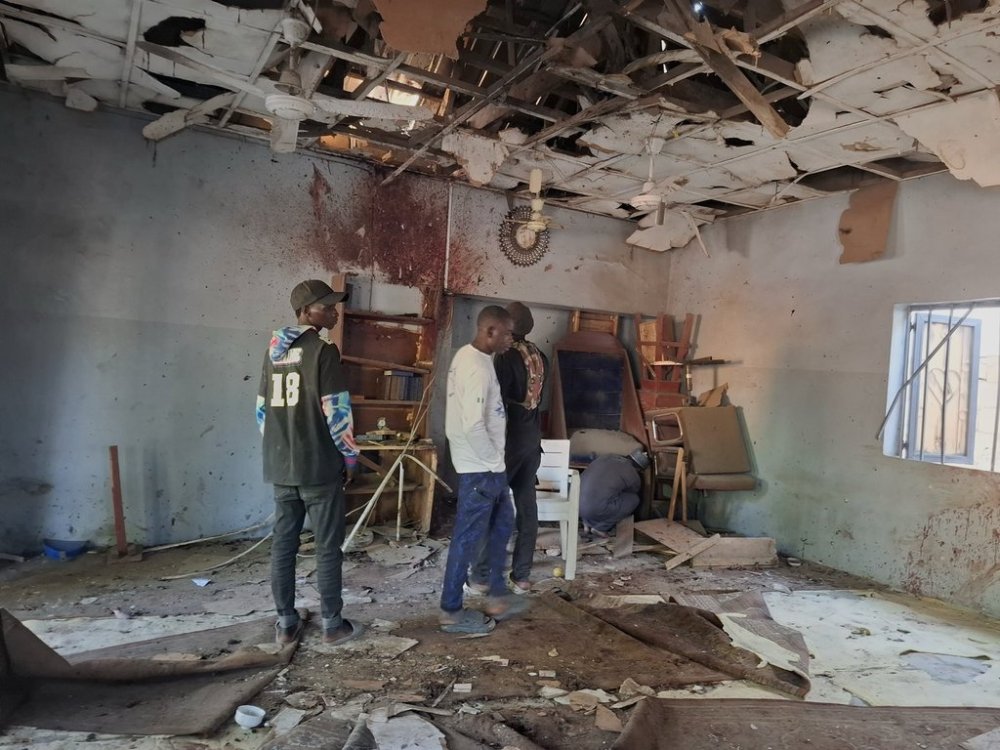
LAGOS, Nigeria (AP) — A bomb exploded during prayers at a mosque in Nigeria’s northeastern city of Maiduguri on Wednesday night, killing five people in what police described as a likely suicide attack.
Police said that 35 people were also injured in the attack.
Nahum Daso, spokesperson for police command in the surrounding state of Borno, said in a statement that fragments of a suspected suicide vest were found at the site.
The bombing is the latest in a series of attacks in Nigeria’s troubled northern region, where the country is battling multiple armed groups, including Boko Haram and its splinter group, Islamic State West Africa Province.
Several thousand people have been killed, with millions displaced from their homes since 2009, according to the United Nations.
No group has claimed responsibility for the attack, but the use of suicide bombers has been heavily attributed to Boko Haram, the Islamic militant group that has previously claimed responsibility for many such attacks across the northeastern region.
Analysts say the group’s use of suicide bombers has subsided over the past few years, but it still has the capacity to launch such attacks. In July 2024, a three-pronged suicide attack on a wedding ceremony in Borno raised the specter of a renewed use of the method by the militant group.
Related Articles
Nigerian villagers are rattled by US airstrikes that made their homes shake and the sky glow red
Advertisement Advertise With Us