

Algeria votes to declare French colonization a crime and demands restitution
Advertisement
Read this article for free:
or
Already have an account? Log in here »
To continue reading, please subscribe:

Digital Subscription
One year of digital access for only $205*
- Enjoy unlimited reading on winnipegfreepress.com
- Read the E-Edition, our digital replica newspaper
- Access News Break, our award-winning app
- Play interactive puzzles
*First annual payment billed as $205.00 + GST for one year. This annual subscription will automatically renew at $233.00 + GST every 52 weeks (10% off the regular annual price of $259.35). Offer available to new and qualified returning subscribers only. Cancel any time.
To continue reading, please subscribe:
Add Free Press access to your Brandon Sun subscription for only an additional
$1 for the first 4 weeks*
- Enjoy unlimited reading on winnipegfreepress.com
- Read the E-Edition, our digital replica newspaper
- Access News Break, our award-winning app
- Play interactive puzzles
*Your next Brandon Sun subscription payment will increase by $1.00 and you will be charged $17.95 plus GST for four weeks. After four weeks, your payment will increase to $24.95 plus GST every four weeks.
Read unlimited articles for free today:
or
Already have an account? Log in here »
Hey there, time traveller!
This article was published 25/12/2025 (241 days ago), so information in it may no longer be current.
ALGIERS, Algeria (AP) — Legislators in Algeria voted to declare France’s colonization of the North African country a crime, approving a law that calls for restitution of property taken by France during its 130-year rule, among other demands seeking to redress historical wrongs.
France slammed the law as a “hostile act” threatening bilateral efforts to heal wounds of the past. The two countries retain close cultural and economic ties but have troubled diplomatic relations.
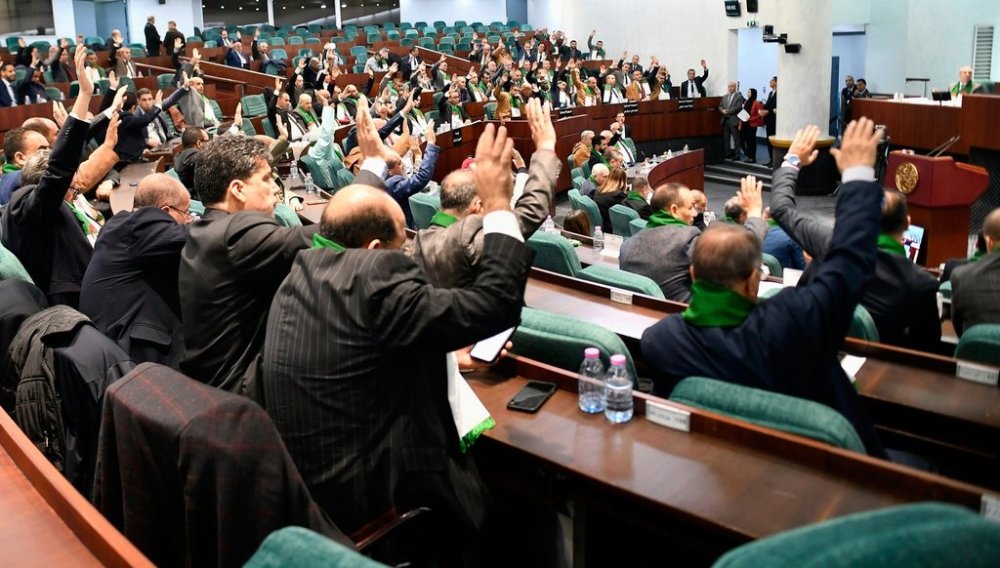
In a solemn ceremony steeped in symbolism, 340 of 407 members of Algeria’s National Assembly voted late Wednesday to approve the law. The move came just a few weeks after African countries made a collective resolution for recognition and reparations for colonial-era crimes.
The law covers the period from the landing of King Charles X’s army on the beaches of Sidi Ferruch west of Algiers in 1830 to July 5, 1962, the date of Algeria’s official independence.
The text provides for the restitution of Algerian archives and property moved to France during the colonial period, and the transmission to Algiers of detailed maps of French nuclear tests conducted in Algeria from 1960 to 1966. It also calls for the repatriation of the remains of some Algerian resistance fighters taken to France.
The law stipulates prison sentences for any action by an Algerian celebrating French colonialism, for attacks on symbols of the Algerian resistance, and “remarks with colonial connotations.”
France is unlikely to heed the demands in the law.
The law is “a manifestly hostile initiative,” the French Foreign Ministry spokesperson’s office said in a statement to The Associated Press. It noted efforts under French President Emmanuel Macron to address colonial-era grievances, and added: “We continue to work toward the renewal of dialogue,” notably about security and migration issues.
Macron, in 2017, described elements of France’s history in Algeria as a crime against humanity, but stopped short of an official apology. Meanwhile, the resurgent far right in France celebrates colonialists.
The economic cost of colonialism in Africa is believed to be staggering. Algeria suffered some of the most brutal forms of French colonial rule.
Nearly a million European settlers held greater political, economic and social privileges, even though Algeria was legally part of France and its men were conscripted in World War II. Hundreds of thousands died in Algeria’s revolution, during which French forces tortured detainees, disappeared suspects and devastated villages as part of a counterinsurgency strategy to maintain their grip on power.
Huge Algerian flags adorned the lower house of parliament as speaker Mohamed Boughali delivered his opening address Wednesday.
“Today, December 24, 2025, is a historic day, to be written in letters of gold in the national narrative,” he began, before being interrupted by lawmakers intoning an excerpt from the Algerian national anthem: “O France, the hour of reckoning has arrived … we have sworn to revive Algeria, bear witness! Bear witness!”
The speaker called the law, ″a political message and an explicit moral stance.″
Government officials, professors, and former members of parliament who championed the bill were all invited to the ceremony. As the speaker declared the law adopted, shouts of “Allahu Akbar!” and “Tahya Al Djazair!” (Long live Algeria!) rose from the floor.
“This is a special day for me, full of emotion and pride. Today marks the culmination of a long struggle that we began in 2001 with fellow members of parliament, for the memory and honor of all those who fought against French colonization,” Mohamed Arezki Ferrad, a former lawmaker who initiated the bill, told the AP.
The law, which contains five chapters and 27 articles, declares that there is no statute of limitation on colonial-era crimes.