

How one Swiss hospital coped with the injured from the Alpine bar fire
Advertisement
Read this article for free:
or
Already have an account? Log in here »
To continue reading, please subscribe:
Monthly Digital Subscription
$1 per week for 24 weeks*
- Enjoy unlimited reading on winnipegfreepress.com
- Read the E-Edition, our digital replica newspaper
- Access News Break, our award-winning app
- Play interactive puzzles
*Billed as $4.00 plus GST every four weeks. After 24 weeks, price increases to the regular rate of $19.95 plus GST every four weeks. Offer available to new and qualified returning subscribers only. Cancel any time.
Monthly Digital Subscription
$4.99/week*
- Enjoy unlimited reading on winnipegfreepress.com
- Read the E-Edition, our digital replica newspaper
- Access News Break, our award-winning app
- Play interactive puzzles
*Billed as $19.95 plus GST every four weeks. Cancel any time.
To continue reading, please subscribe:
Add Free Press access to your Brandon Sun subscription for only an additional
$1 for the first 4 weeks*
*Your next subscription payment will increase by $1.00 and you will be charged $16.99 plus GST for four weeks. After four weeks, your payment will increase to $23.99 plus GST every four weeks.
Read unlimited articles for free today:
or
Already have an account? Log in here »
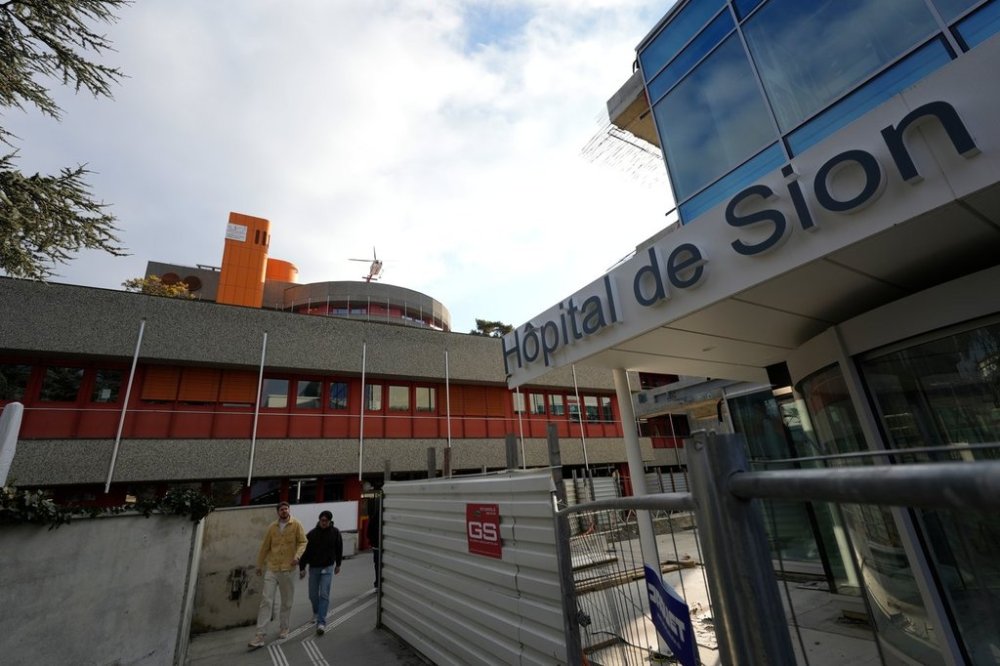
SION, Switzerland (AP) — The hospital that initially took in the majority of injured victims from a fire at a Swiss bar is no stranger to emergencies: In the heart of the Alps, it is used to treating winter sports enthusiasts who have accidents on the slopes.
But the flood of young and severely burned survivors from the blaze that tore through Le Constellation in Crans-Montana during New Year’s Eve revelry was something else.
Eric Bonvin, general director of the regional hospital in Sion that took in several dozen injured people, said those with severe burns face months of treatment but expressed hope that their youth will speed their recovery.
The injured were teenagers and young adults, roughly 20 years old on average, he told The Associated Press inside the hospital, which is about 10 kilometers (6 miles) from the resort by air. Survivors have described seeing their fellow revelers struggling to escape the inferno, some with severe burns.
Bonvin recounted how hospital staff scrambled to determine the extent of people’s injuries — aided by colleagues who had not been scheduled to work but rushed in to lend a hand.
“It’s a very particular situation because at the beginning burns are not necessarily apparent, the nerve endings are burnt so feelings are lost and the person is most of all in a state of shock,” he said. “At those moments, every minute counts.”
Injured survivors suffered burns to varying degrees, not just to their skin but also to their airways.
“There were inhalations of both smoke and also of heat that for some probably led to internal burns. That’s a really catastrophic situation, as you can imagine,” Bonvin said.
The hospital was well staffed, despite the holiday, because the end of year festivities are so busy in the Alpine Valais region, attracting crowds to its mountains but also leading to ski accidents and other medical emergencies.
“Our population doubles in a week,” he said. “Every year it’s a period of intense stress for our emergency unit.”
But “many people (staffers) came spontaneously, even those who were on holiday or having a night out,” he said. “That worked well.”
Still the hospital, which doesn’t have a specialized burn unit, quickly hit full capacity, authorities said. As the injured streamed in Thursday, all of the hospital’s surgical operating rooms were opened and intensive care facilities became strained.
Bonvin said 55 gravely injured people were rushed to his hospital by medical transports. Others with injuries came of their own accord, some brought in by loved ones.
By Friday afternoon, most had been transferred to other hospitals, while others had been discharged, Bonvin said.
Some medical workers treated the injured without knowing whether their loved ones might be among them.
“It was hard to live through for everyone. Also probably because everyone was asking themselves, ‘Was my child, my cousin, someone from the region at this party?’ This place was very well known as somewhere to celebrate the new year,” Bonvin said. “Also, seeing young people arrive — that’s always traumatic.”
The road to recovery for the gravely injured will likely be long and arduous, he cautioned.
“For those with serious burns, intensive care treatment lasts several months,” he said.
“But it’s not without hope,” he added. “They are young and that means they still have a lot of vitality.”