

Dispute erupts over who will represent former Venezuelan leader Nicolás Maduro in court
Advertisement
Read this article for free:
or
Already have an account? Log in here »
To continue reading, please subscribe:

Digital Subscription
One year of digital access for only $205*
- Enjoy unlimited reading on winnipegfreepress.com
- Read the E-Edition, our digital replica newspaper
- Access News Break, our award-winning app
- Play interactive puzzles
*First annual payment billed as $205.00 + GST for one year. This annual subscription will automatically renew at $233.00 + GST every 52 weeks (10% off the regular annual price of $259.35). Offer available to new and qualified returning subscribers only. Cancel any time.
To continue reading, please subscribe:
Add Free Press access to your Brandon Sun subscription for only an additional
$1 for the first 4 weeks*
- Enjoy unlimited reading on winnipegfreepress.com
- Read the E-Edition, our digital replica newspaper
- Access News Break, our award-winning app
- Play interactive puzzles
*Your next Brandon Sun subscription payment will increase by $1.00 and you will be charged $17.95 plus GST for four weeks. After four weeks, your payment will increase to $24.95 plus GST every four weeks.
Read unlimited articles for free today:
or
Already have an account? Log in here »
Hey there, time traveller!
This article was published 09/01/2026 (261 days ago), so information in it may no longer be current.
NEW YORK (AP) — Days after Nicolás Maduro’s arraignment on drug trafficking charges, a squabble has erupted over who gets to represent the former Venezuelan president in the high-stakes case.
Defense attorney Barry Pollack, who sat with Maduro in court, accused lawyer Bruce Fein of trying to join the case without authorization. Fein, an associate deputy U.S. attorney general during Ronald Reagan’s presidency, said he was asked by a judge on Friday to let Maduro settle the dispute.
Fein told Manhattan federal Judge Alvin K. Hellerstein that “individuals credibly situated” within Maduro’s inner circle or family had sought out Fein’s assistance to help him navigate what the lawyer called the “extraordinary, startling, and viperlike circumstances” of his capture and criminal case.
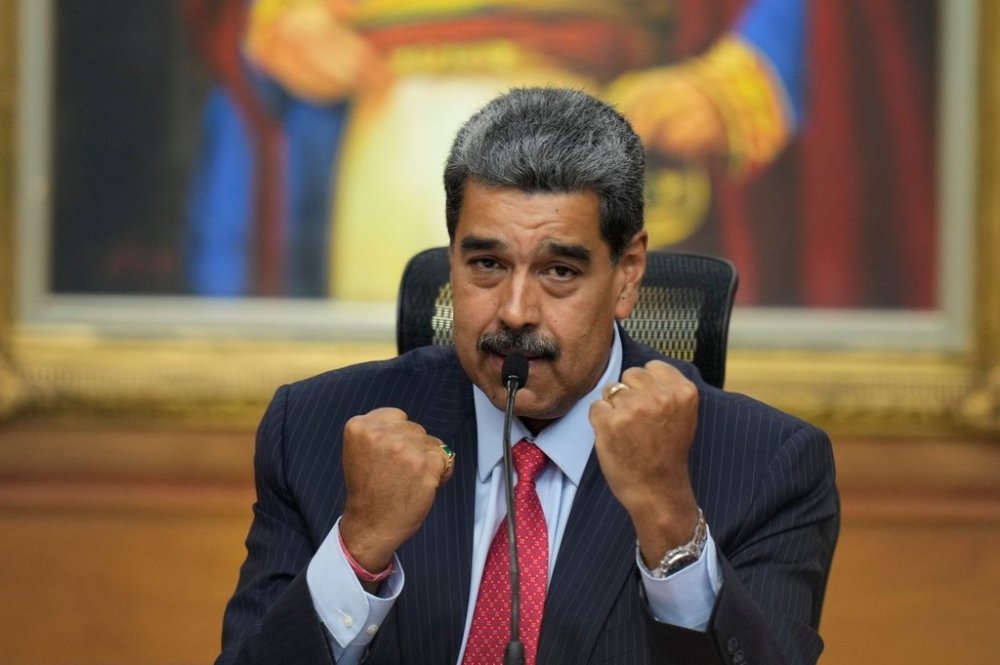
Fein said in a letter to the judge that he’d had no telephone, video or other direct contact with Maduro, who is being held at a federal jail in Brooklyn. But, Fein wrote, Maduro “had expressed a desire” for his “assistance in this matter.”
The dispute first came to light on Thursday when Pollack asked Hellerstein to rescind his approval for Fein to join Maduro’s legal team. Pollack said that Fein was not Maduro’s lawyer and that he had not authorized Fein to file paperwork telling the judge otherwise.
Pollack was the only lawyer representing Maduro on Monday as the deposed South American leader and his wife, Cilia Flores, pleaded not guilty to charges alleging he worked with drug cartels to facilitate the shipment of thousands of tons of cocaine into the U.S. Two days earlier, U.S. special forces seized Maduro and Flores from their home in Caracas.
In a written declaration to Hellerstein, Pollack said he attempted to contact Fein by telephone and email to ask him on what basis he was seeking to enter his appearance on behalf of Maduro and what authorization he had to do so.
“He has not responded,” Pollack said.
Pollack said he spoke to Maduro by phone on Thursday and confirmed that Maduro “does not know Mr. Fein and has not communicated with Mr. Fein, much less retained him, authorized him to enter an appearance, or otherwise hold himself out as representing Mr. Maduro.”
Pollack said Maduro authorized him to ask Hellerstein to modify the court docket so that it no longer showed Fein as representing Maduro.
Fein, in his response Friday, told the judge he doesn’t dispute or question the accuracy of Pollack’s assertions. Instead, he suggested that Hellerstein question Maduro in private to “definitively ascertain President Maduro’s representation wishes,” including whether he wants to be represented by Pollack, Fein or both.
“Maduro was apprehended under extraordinary, startling, and viperlike circumstances, including deprivation of liberty, custodial restrictions on communications, and immediate immersion in a foreign criminal process in a foreign tongue, fraught with the potential for misunderstandings or miscommunications,” Fein wrote.