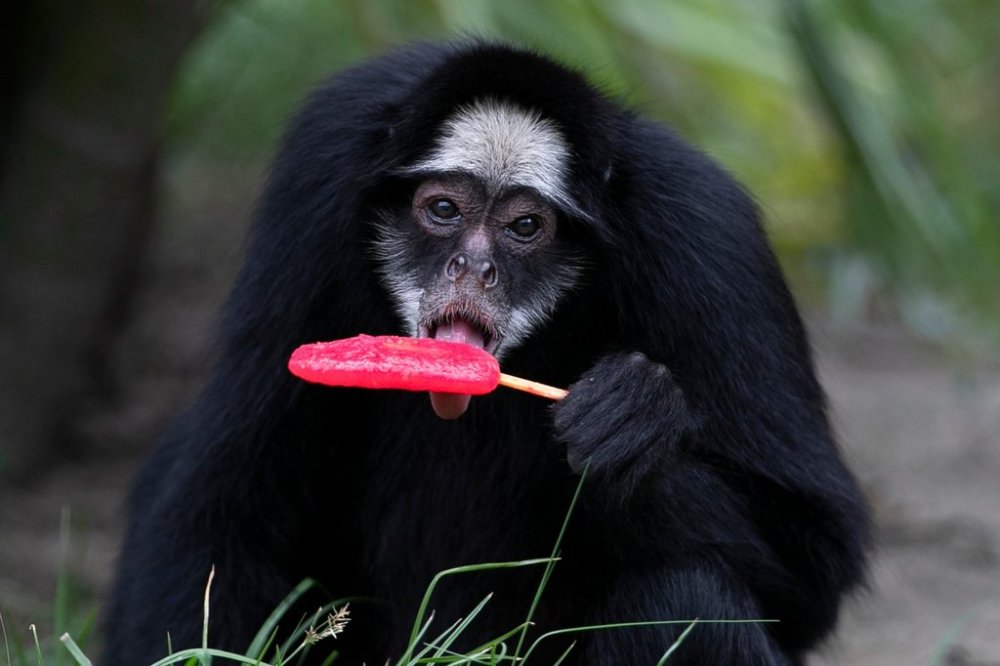
Rio de Janeiro zoo animals are treated to popsicles as the city faces scorching summer weather
Advertisement
Read this article for free:
or
Already have an account? Log in here »
To continue reading, please subscribe:

Digital Subscription
One year of digital access for only $205*
- Enjoy unlimited reading on winnipegfreepress.com
- Read the E-Edition, our digital replica newspaper
- Access News Break, our award-winning app
- Play interactive puzzles
*First annual payment billed as $205.00 + GST for one year. This annual subscription will automatically renew at $233.00 + GST every 52 weeks (10% off the regular annual price of $259.35). Offer available to new and qualified returning subscribers only. Cancel any time.
To continue reading, please subscribe:
Add Free Press access to your Brandon Sun subscription for only an additional
$1 for the first 4 weeks*
- Enjoy unlimited reading on winnipegfreepress.com
- Read the E-Edition, our digital replica newspaper
- Access News Break, our award-winning app
- Play interactive puzzles
*Your next Brandon Sun subscription payment will increase by $1.00 and you will be charged $17.95 plus GST for four weeks. After four weeks, your payment will increase to $24.95 plus GST every four weeks.
Read unlimited articles for free today:
or
Already have an account? Log in here »
Hey there, time traveller!
This article was published 13/01/2026 (270 days ago), so information in it may no longer be current.
RIO DE JANEIRO (AP) — Animals at Rio de Janeiro’s BioParque zoo received popsicles and frozen treats Tuesday as the city faced another day of extreme heat during Brazil’s summer.
Jaguars, monkeys and other animals were given an iced diet prepared according to each species’ needs, zoo officials said. Some received frozen fruit, while others were offered mixtures containing frozen blood.
A group of monkeys were handed watermelon popsicles by zoo keepers. A jaguar tried to fish out ground chicken popsicles from a tray that floated in its water tank.
“When she tries to fish out the frozen food, she ends up ingesting water as well,” said Letizia Feitoza, a biologist at the zoo. “This is important for her hydration.”
Zoo officials said the frozen foods are part of routine animal care and help provide thermal comfort during periods of extreme heat. Similar initiatives were carried out last summer as high temperatures affected much of Brazil’s southeast.
Temperatures in Rio de Janeiro rose over 40 degrees Celsius (104 Fahrenheit) on Sunday and Monday, prompting city authorities to issue a Level 3 heat alert and warn of health risks linked to prolonged exposure.
The high temperatures haven’t stopped residents from visiting the Bioparque Zoo, where they watched the animals licking on their red popsicles.
“I thought it was really cool,” said Lorena Carvalho, a teacher visiting the zoo. “I think it brings them more comfort.”