

Serbians mark Orthodox Christian New Year according to old tradition
Advertisement
Read this article for free:
or
Already have an account? Log in here »
To continue reading, please subscribe:
Monthly Digital Subscription
$1 per week for 24 weeks*
- Enjoy unlimited reading on winnipegfreepress.com
- Read the E-Edition, our digital replica newspaper
- Access News Break, our award-winning app
- Play interactive puzzles
*Billed as $4.00 plus GST every four weeks. After 24 weeks, price increases to the regular rate of $19.95 plus GST every four weeks. Offer available to new and qualified returning subscribers only. Cancel any time.
Monthly Digital Subscription
$4.99/week*
- Enjoy unlimited reading on winnipegfreepress.com
- Read the E-Edition, our digital replica newspaper
- Access News Break, our award-winning app
- Play interactive puzzles
*Billed as $19.95 plus GST every four weeks. Cancel any time.
To continue reading, please subscribe:
Add Free Press access to your Brandon Sun subscription for only an additional
$1 for the first 4 weeks*
*Your next subscription payment will increase by $1.00 and you will be charged $16.99 plus GST for four weeks. After four weeks, your payment will increase to $23.99 plus GST every four weeks.
Read unlimited articles for free today:
or
Already have an account? Log in here »
BELGRADE, Serbia (AP) — Nearly two weeks after celebrating New Year, many Serbians did it again on Tuesday evening, this time according to old Orthodox Christian tradition.
Some Eastern Orthodox churches follow the ancient Julian calendar, which runs 13 days later than the Gregorian calendar used by Catholic and Protestant churches and much of the secular world.
The streets in central Belgrade’s commercial pedestrian zone were busy with people on Tuesday night, and Christmas and New Year’s decorations were still on full display.
“I celebrate the Serbian (New Year),” said Zoran Todorovic, a Belgrade resident. “We’re going out. We’ll take a walk, drink mulled wine, eat traditional sweets, and then we’ll go home and treat ourselves to a meal. I feel lovely.”
Jovan Brkic, also from Belgrade, was skeptical. “I don’t celebrate Serbian New Year. I don’t give it much attention.”
“I think it’s the same as the non-Serbian one, the usual, commercial New Year,” he added. “It’s just an economic trick to get people to spend a bit more money, to give them a reason to be cheerful.”
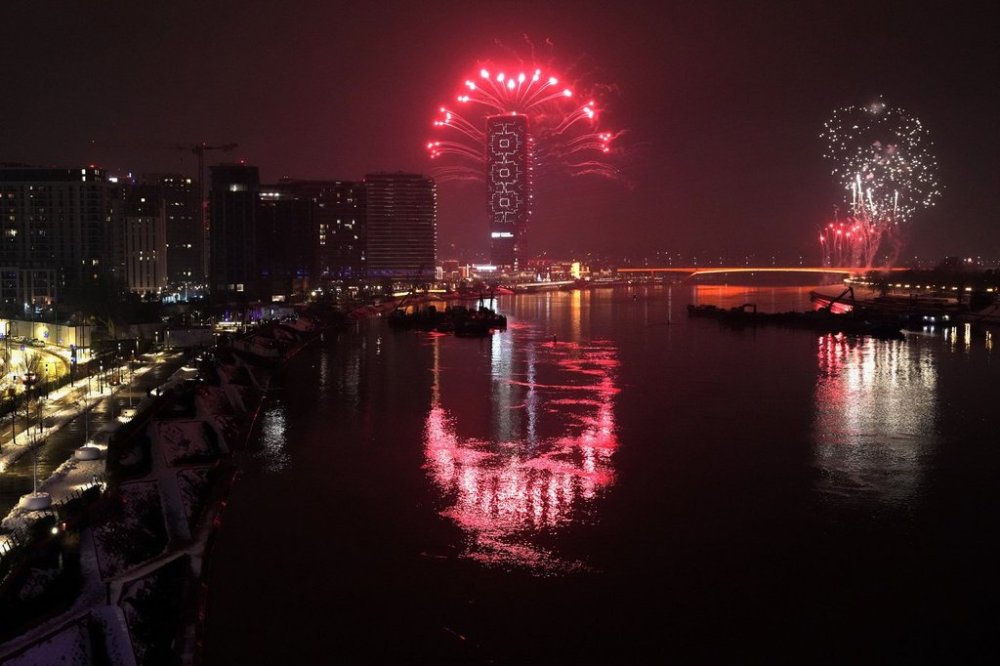
A fireworks and a drone show was held at midnight at a newly built and much-criticized residential block by the Sava River in Belgrade that was backed by Serbia’s populist President Aleksandar Vucic.
In the central Serbian town of Cacak, however, protesters snowballed a folk singer performing at the main square, angry that the local authorities were using public money for the celebrations, N1 regional television reported.
Vucic faced street protests throughout last year against his autocratic rule in Serbia that were triggered by a train station disaster in November 2024 that killed 16 people in a northern city.