

Russian court considers central bank’s $232B lawsuit against Euroclear over seized assets
Advertisement
Read this article for free:
or
Already have an account? Log in here »
To continue reading, please subscribe:

Digital Subscription
One year of digital access for only $205*
- Enjoy unlimited reading on winnipegfreepress.com
- Read the E-Edition, our digital replica newspaper
- Access News Break, our award-winning app
- Play interactive puzzles
*First annual payment billed as $205.00 + GST for one year. This annual subscription will automatically renew at $233.00 + GST every 52 weeks (10% off the regular annual price of $259.35). Offer available to new and qualified returning subscribers only. Cancel any time.
To continue reading, please subscribe:
Add Free Press access to your Brandon Sun subscription for only an additional
$1 for the first 4 weeks*
- Enjoy unlimited reading on winnipegfreepress.com
- Read the E-Edition, our digital replica newspaper
- Access News Break, our award-winning app
- Play interactive puzzles
*Your next Brandon Sun subscription payment will increase by $1.00 and you will be charged $17.95 plus GST for four weeks. After four weeks, your payment will increase to $24.95 plus GST every four weeks.
Read unlimited articles for free today:
or
Already have an account? Log in here »
Hey there, time traveller!
This article was published 16/01/2026 (257 days ago), so information in it may no longer be current.
MOSCOW (AP) — A court in Moscow on Friday began considering a lawsuit filed by the central bank against Euroclear, the Brussels-based clearing house that holds the bulk of Russian assets frozen by the European Union.
The lawsuit seeks to recover 18.2 trillion rubles ($232 billion) in damages incurred when Russia was barred from managing and disposing of its Euroclear funds and securities, the bank said. The case is being heard behind closed doors.
The EU has frozen 210 billion euros ($244 billion) worth of Russian assets as part of the sanctions imposed on Moscow after it sent troops into Ukraine in February 2022. Euroclear holds around 193 billion euros of the seized funds.
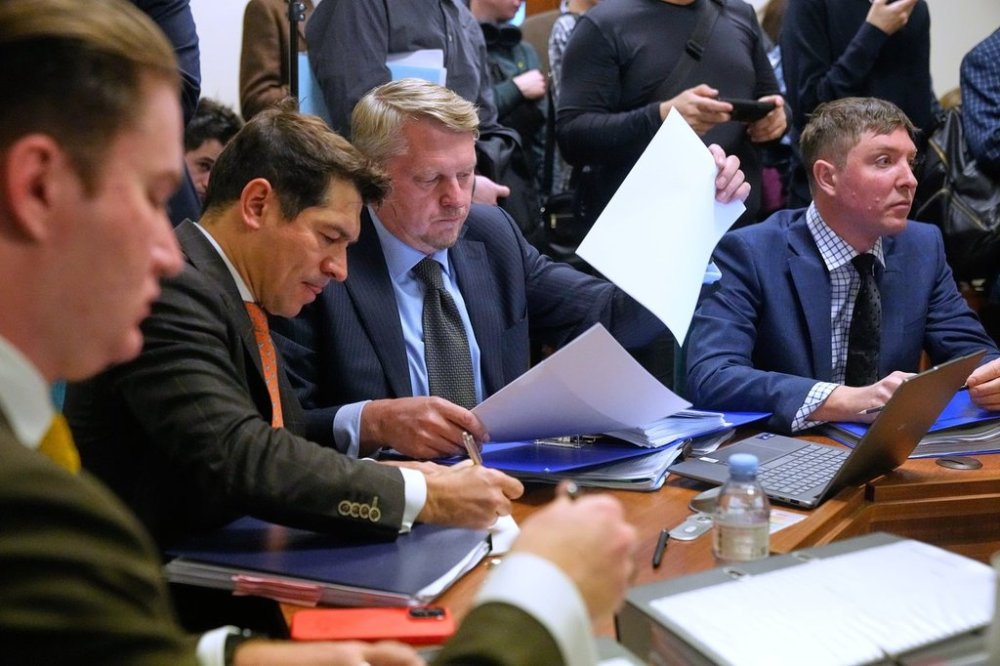
Moscow’s Arbitration Court picked up the case even though the EU last month set aside its initial plan to use frozen Russian assets to assist Ukraine after failing to convince Belgium that it would be protected from Russia’s retaliation. The bloc opted instead for borrowing 90 billion euros on capital markers to provide an interest-free loan to Ukraine to meet its military and economic needs for the next two years.
Russia’s Central Bank has condemned the use of frozen assets to aid Ukraine as “illegal, contrary to international law,” arguing that they violated “the principles of sovereign immunity of assets.”