

Death toll from US strikes on alleged drug boats reaches 126 people
Advertisement
Read this article for free:
or
Already have an account? Log in here »
To continue reading, please subscribe:
Monthly Digital Subscription
$1 per week for 24 weeks*
- Enjoy unlimited reading on winnipegfreepress.com
- Read the E-Edition, our digital replica newspaper
- Access News Break, our award-winning app
- Play interactive puzzles
*Billed as $4.00 plus GST every four weeks. After 24 weeks, price increases to the regular rate of $19.95 plus GST every four weeks. Offer available to new and qualified returning subscribers only. Cancel any time.
Monthly Digital Subscription
$4.99/week*
- Enjoy unlimited reading on winnipegfreepress.com
- Read the E-Edition, our digital replica newspaper
- Access News Break, our award-winning app
- Play interactive puzzles
*Billed as $19.95 plus GST every four weeks. Cancel any time.
To continue reading, please subscribe:
Add Free Press access to your Brandon Sun subscription for only an additional
$1 for the first 4 weeks*
*Your next subscription payment will increase by $1.00 and you will be charged $16.99 plus GST for four weeks. After four weeks, your payment will increase to $23.99 plus GST every four weeks.
Read unlimited articles for free today:
or
Already have an account? Log in here »
WASHINGTON (AP) — The death toll from the Trump administration’s strikes on alleged drug boats is up to 126 people, with the inclusion of those presumed dead after being lost at sea, the U.S. military confirmed Monday.
The figure includes 116 people who were killed immediately in at least 36 attacks carried out since early September in the Caribbean Sea and eastern Pacific Ocean, U.S. Southern Command said. Ten others are believed dead because searchers did not locate them following a strike.
Eight of the presumed dead had jumped off boats when American forces attacked a trio of vessels accused of trafficking drugs on Dec. 30, the military said. The number was not released previously, though the military said when announcing those strikes that the U.S. Coast Guard had searched for survivors. The two other people presumed dead were on boats that were attacked on Oct. 27 and last Friday.
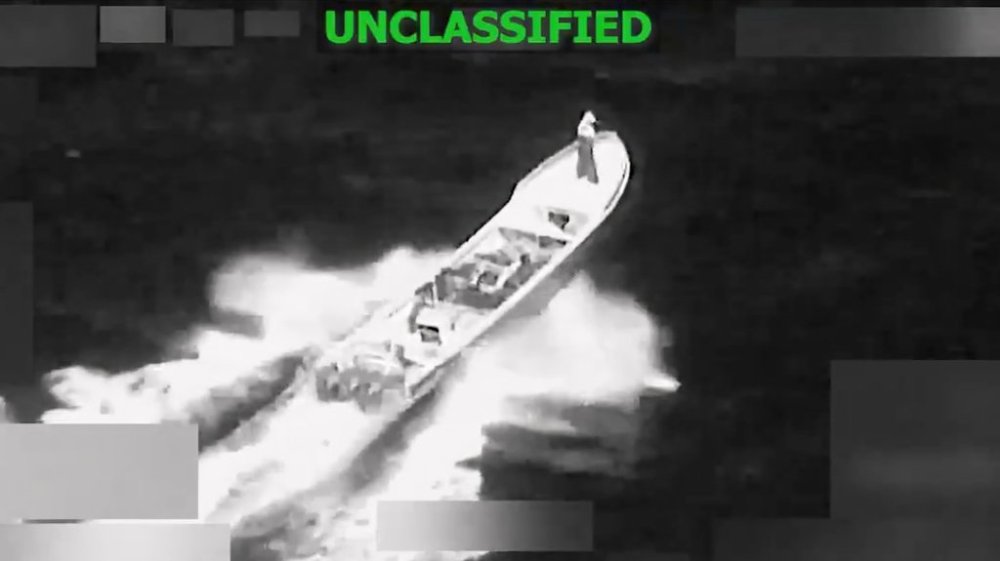
President Donald Trump has said the U.S. is in “armed conflict” with cartels in Latin America and has justified the attacks as a necessary escalation to stem the flow of drugs. But his administration has offered little evidence to support its claims of killing “narcoterrorists.”
Critics have questioned the overall legality of the strikes as well as their effectiveness, in part because the fentanyl behind many fatal overdoses is typically trafficked to the U.S. overland from Mexico, where it is produced with chemicals imported from China and India.
The campaign also drew intense criticism following the revelation that the military killed survivors of the very first boat attack with a follow-up strike. The Trump administration and many Republican lawmakers said it was legal and necessary, while Democratic lawmakers and legal experts said the killings were murder, if not a war crime.
The boat strikes began amid one of the largest buildups of U.S. military might in Latin America in generations, in a pressure campaign that culminated with the capture of Venezuelan President Nicolás Maduro. He was brought to the U.S. to face drug trafficking charges after the Jan. 3 raid by American forces.
There has been one boat strike since then, although the U.S. has been more focused on seizing oil tankers connected with Venezuela as part of the Trump administration’s broader efforts to take control of the South American country’s oil.
Republicans in Congress have defeated Democratic-led efforts to rein in Trump’s ability to conduct further attacks in Venezuela.