

NATO chief wishes ‘good luck’ to those who think Europe can defend itself without US help
Advertisement
Read this article for free:
or
Already have an account? Log in here »
To continue reading, please subscribe:

Digital Subscription
One year of digital access for only $205*
- Enjoy unlimited reading on winnipegfreepress.com
- Read the E-Edition, our digital replica newspaper
- Access News Break, our award-winning app
- Play interactive puzzles
*First annual payment billed as $205.00 + GST for one year. This annual subscription will automatically renew at $233.00 + GST every 52 weeks (10% off the regular annual price of $259.35). Offer available to new and qualified returning subscribers only. Cancel any time.
To continue reading, please subscribe:
Add Free Press access to your Brandon Sun subscription for only an additional
$1 for the first 4 weeks*
- Enjoy unlimited reading on winnipegfreepress.com
- Read the E-Edition, our digital replica newspaper
- Access News Break, our award-winning app
- Play interactive puzzles
*Your next Brandon Sun subscription payment will increase by $1.00 and you will be charged $17.95 plus GST for four weeks. After four weeks, your payment will increase to $24.95 plus GST every four weeks.
Read unlimited articles for free today:
or
Already have an account? Log in here »
Hey there, time traveller!
This article was published 26/01/2026 (223 days ago), so information in it may no longer be current.
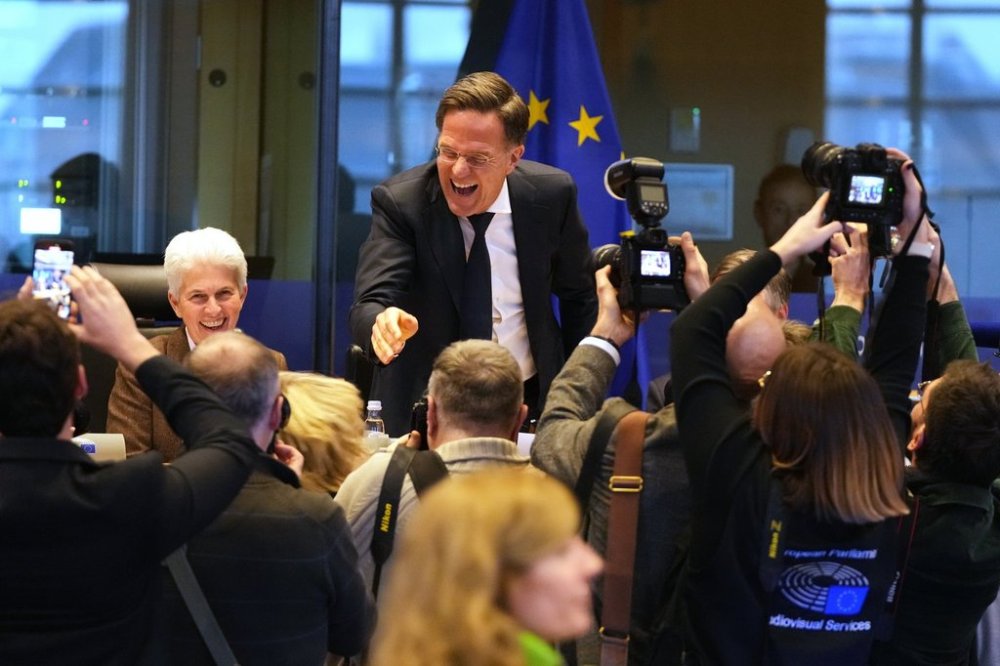
BRUSSELS (AP) — NATO Secretary-General Mark Rutte insisted Monday that Europe is incapable of defending itself without U.S. military support and would have to more than double current military spending targets to be able to do so.
“If anyone thinks here … that the European Union or Europe as a whole can defend itself without the U.S., keep on dreaming. You can’t,” Rutte told EU lawmakers in Brussels. Europe and the United States “need each other,” he said.
Tensions are festering within NATO over U.S. President Donald Trump’s renewed threats in recent weeks to annex Greenland, which is a semiautonomous territory of NATO ally Denmark.
Trump also said that he was slapping new tariffs on Greenland’s European backers, but later dropped his threats after a “framework” for a deal over the mineral-rich island was reached, with Rutte’s help. Few details of the agreement have emerged.
The 32-nation military organization is bound together by a mutual defense clause, Article 5 of NATO’s founding Washington treaty, which commits every country to come to the defense of an ally whose territory is under threat.
At NATO’s summit in The Hague in July, European allies — with the exception of Spain — plus Canada agreed to Trump’s demand that they invest the same percentage of their economic output on defense as the United States within a decade.
They pledged to spend 3.5% of gross domestic product on core defense, and a further 1.5% on security-related infrastructure – a total of 5% of GDP – by 2035.
“If you really want to go it alone,” Rutte said, “forget that you can ever get there with 5%. It will be 10%. You have to build up your own nuclear capability. That costs billions and billions of euros.”
France has led calls for Europe to build its “strategic autonomy,” and support for its stance has grown since the Trump administration warned last year that its security priorities lie elsewhere and that the Europeans would have to fend for themselves.
Rutte told the lawmakers that without the United States, Europe “would lose the ultimate guarantor of our freedom, which is the U.S. nuclear umbrella. So, hey, good luck!”