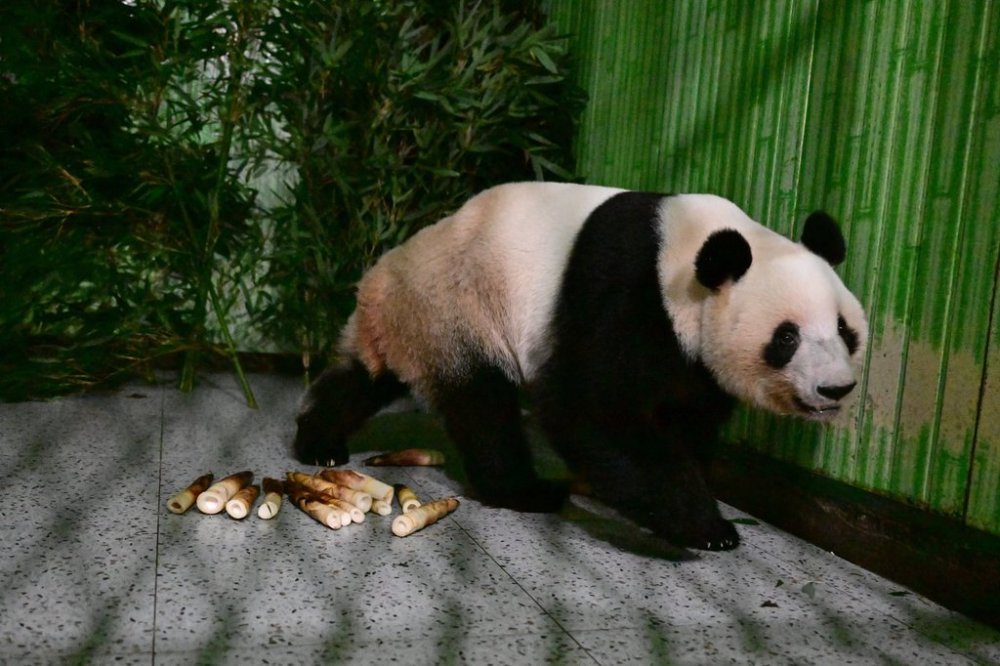
Japan’s last pair of pandas have arrived back in China
Advertisement
Read this article for free:
or
Already have an account? Log in here »
To continue reading, please subscribe:

Digital Subscription
One year of digital access for only $205*
- Enjoy unlimited reading on winnipegfreepress.com
- Read the E-Edition, our digital replica newspaper
- Access News Break, our award-winning app
- Play interactive puzzles
*First annual payment billed as $205.00 + GST for one year. This annual subscription will automatically renew at $233.00 + GST every 52 weeks (10% off the regular annual price of $259.35). Offer available to new and qualified returning subscribers only. Cancel any time.
To continue reading, please subscribe:
Add Free Press access to your Brandon Sun subscription for only an additional
$1 for the first 4 weeks*
- Enjoy unlimited reading on winnipegfreepress.com
- Read the E-Edition, our digital replica newspaper
- Access News Break, our award-winning app
- Play interactive puzzles
*Your next Brandon Sun subscription payment will increase by $1.00 and you will be charged $17.95 plus GST for four weeks. After four weeks, your payment will increase to $24.95 plus GST every four weeks.
Read unlimited articles for free today:
or
Already have an account? Log in here »
Hey there, time traveller!
This article was published 27/01/2026 (204 days ago), so information in it may no longer be current.
BANGKOK (AP) — Japan’s last pair of pandas have returned to China, leaving Japan without the lovable bears for the first time in half a century.
The bears are heading back as diplomatic relations between the two countries are at their lowest point in years over the new Japanese Prime Minister’s stance on Taiwan, an island Beijing claims as its own, making it unlikely that there will be replacement bears.
The twins Xiao Xiao and Lei Lei have an adoring fan base in Japan, where thousands of people flocked to Tokyo’s Ueno Zoo ahead of their departure.

China first sent pandas to Japan in 1972, a gift meant to mark the normalization of diplomatic ties between the two neighbors. Beijing has long used the bears as a diplomatic tool: a sign of good will and an extension of the country’s soft power, and one that it can retract when bilateral relationships turn adversarial.
Images from state broadcaster CCTV, showed the two pandas, Xiao Xiao and Lei Lei, arriving in crates in southwestern China’s Sichuan province, where they will stay in quarantine at the China Conservation and Research Center for the Giant Panda.
The pandas arrived safely early Wednesday morning, the conservation center said in a statement.
Xiao Xiao and his sister Lei Lei were born in Tokyo’s Ueno Zoo in 2021. While Beijing lends pandas to other countries, it maintains ownership over the animals, including new cubs.