

Unmentioned but present, Trump is a common denominator in efforts to strengthen Asia-Europe ties
Advertisement
Read this article for free:
or
Already have an account? Log in here »
To continue reading, please subscribe:
Digital Subscription
One year of digital access for only $1.44 a week*
- Enjoy unlimited reading on winnipegfreepress.com
- Read the E-Edition, our digital replica newspaper
- Access News Break, our award-winning app
- Play interactive puzzles
*Billed as $5.77 plus GST every four weeks. After 52 weeks, price increases to the regular rate of $19.95 plus GST every four weeks. Offer available to new and qualified returning subscribers only. Cancel any time.
To continue reading, please subscribe:
Add Free Press access to your Brandon Sun subscription for only an additional
$1 for the first 4 weeks*
- Enjoy unlimited reading on winnipegfreepress.com
- Read the E-Edition, our digital replica newspaper
- Access News Break, our award-winning app
- Play interactive puzzles
*Your next Brandon Sun subscription payment will increase by $1.00 and you will be charged $17.95 plus GST for four weeks. After four weeks, your payment will increase to $24.95 plus GST every four weeks.
Read unlimited articles for free today:
or
Already have an account? Log in here »
Hey there, time traveller!
This article was published 29/01/2026 (267 days ago), so information in it may no longer be current.
BEIJING (AP) — Stability. Consistency. Ever-changing complexity.
With language like that, deployed in separate meetings in three Asian capitals this week, government leaders forged closer ties driven in part by a figure halfway around the world: the president of the United States. And much of the time, they didn’t even mention Donald Trump’s name.
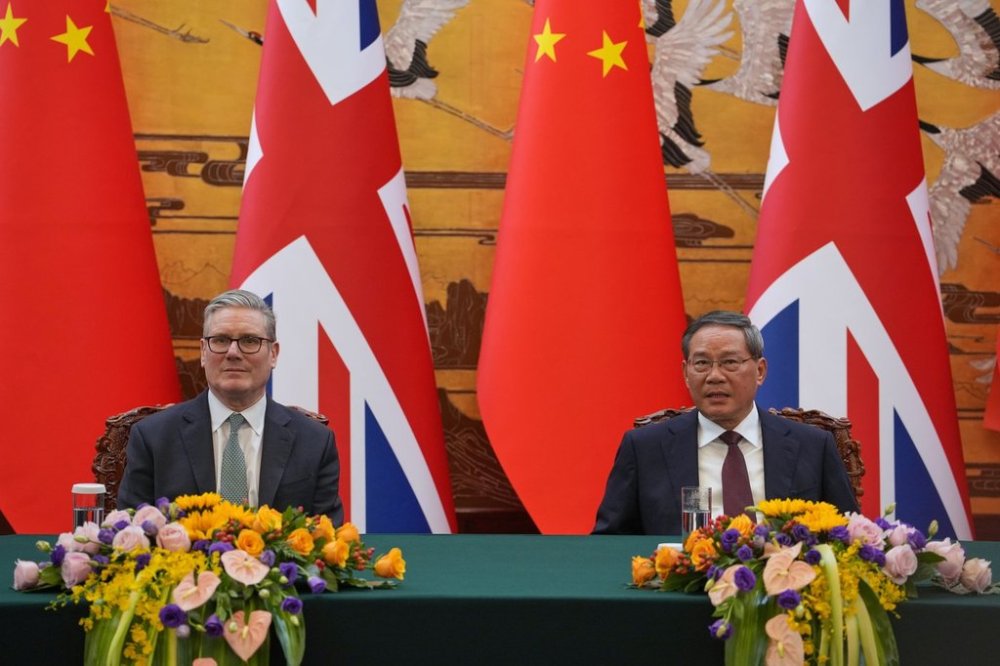
IN BEIJING: The U.K. and Chinese leaders called Thursday for a “long-term, stable, and comprehensive strategic partnership” between their two countries. The important words are long-term and stable. The two countries committed a decade ago to building a comprehensive strategic partnership but progress has been halting at best.
IN HANOI: About 1,100 kilometers (700 miles) to the south, Vietnam and the European Union used the same phrasing on the same day. They upgraded ties to a comprehensive strategic partnership. The agreement places Vietnam on the same diplomatic footing with the EU as the United States, China and Russia.
IN NEW DELHI: Two days earlier, the EU and India reached a major free trade accord that had been mired in negotiations for years. It covers everything from textiles to medicines and will bring down India’s high tariffs on European wine and cars.
Trump was not the only factor behind the agreements, but his shaking up of the global order is worrying friends and foes and driving them closer. From a purely economic perspective, his import tariffs have sent countries seeking new markets to reduce their dependency on the American consumer.
More broadly, all the agreements have been accompanied by words from the leaders referring to the uncertainty that Trump has introduced to global affairs, though mostly without mentioning his name. The systems they have relied on to manage the world since the end of the Cold War and, in some cases since World War II, appear at risk.
British Prime Minister Keir Starmer called for working with China on global stability “during challenging times for the world.” Chinese leader Xi Jinping described the international situation as “complex and ever-changing.” In New Delhi, Prime Minister Narendra Modi said the partnership with the EU “will strengthen stability in the international system” at a time of ”turmoil in the global order.”
European Council President António Costa summed up the sentiment Thursday in the Vietnamese capital: “At a moment when the international rules-based order is under threat from multiple sides, we need to stand side by side as reliable and predictable partners.”