

Chinese national who exposed rights abuses is freed from US detention after being granted asylum
Advertisement
Read this article for free:
or
Already have an account? Log in here »
To continue reading, please subscribe:

Digital Subscription
One year of digital access for only $205*
- Enjoy unlimited reading on winnipegfreepress.com
- Read the E-Edition, our digital replica newspaper
- Access News Break, our award-winning app
- Play interactive puzzles
*First annual payment billed as $205.00 + GST for one year. This annual subscription will automatically renew at $233.00 + GST every 52 weeks (10% off the regular annual price of $259.35). Offer available to new and qualified returning subscribers only. Cancel any time.
To continue reading, please subscribe:
Add Free Press access to your Brandon Sun subscription for only an additional
$1 for the first 4 weeks*
- Enjoy unlimited reading on winnipegfreepress.com
- Read the E-Edition, our digital replica newspaper
- Access News Break, our award-winning app
- Play interactive puzzles
*Your next Brandon Sun subscription payment will increase by $1.00 and you will be charged $17.95 plus GST for four weeks. After four weeks, your payment will increase to $24.95 plus GST every four weeks.
Read unlimited articles for free today:
or
Already have an account? Log in here »
Hey there, time traveller!
This article was published 04/02/2026 (223 days ago), so information in it may no longer be current.
WASHINGTON (AP) — Guan Heng, a Chinese national who exposed human rights abuses in his homeland, has been released from federal detention more than five months after being swept up in the Trump administration’s mass immigration enforcement operation.
Guan was released and reunited with his mother on Tuesday, nearly a week after being granted asylum by an immigration judge who determined that he faced a well-founded fear of persecution if sent back to China.
“I’m in a great mood,” Guan, 38, told The Associated Press on Wednesday. “I didn’t feel the excitement yesterday. I felt I was still in prison, but today many friends have come to see me.”
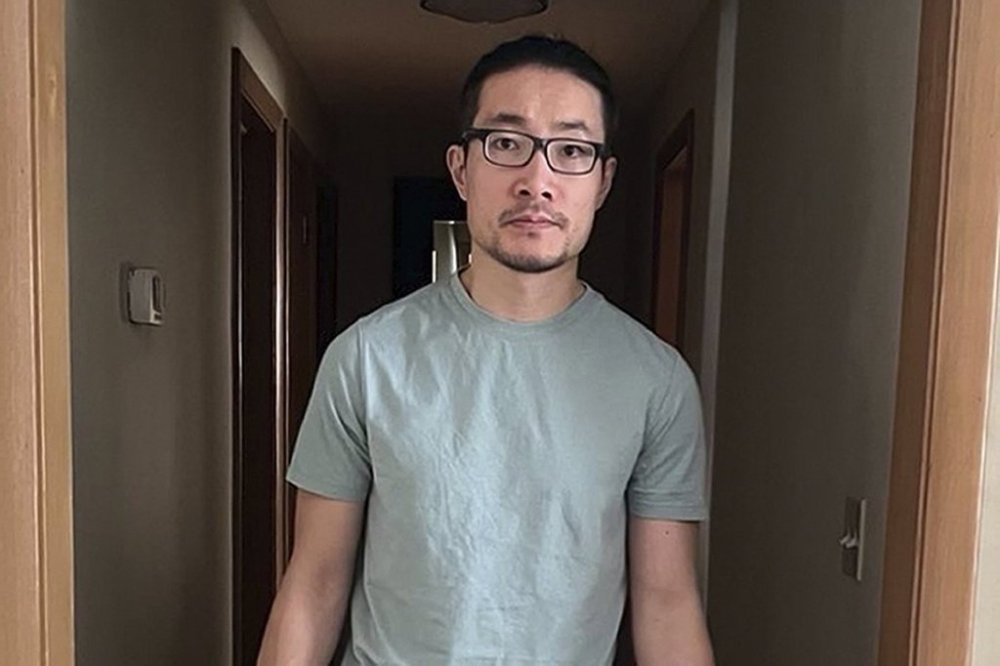
Guan, who is staying temporarily in Binghamton, New York, said he has not yet had time to think about what he will do in the longer term.
Hs mother, Luo Yun, who traveled to the U.S. from her home in Taiwan to support her son, said she finally felt relieved.
“For five and half months I didn’t sleep one good sleep, but today I feel assured,” Luo said.
It was a rare successful outcome for an asylum seeker since President Donald Trump returned to office. At one point in detention, Guan was faced with deportation to Uganda, but the Department of Homeland Security dropped the plan in December after his plight raised public concerns and attracted attention on Capitol Hill. DHS, which has 30 days to appeal the immigration judge’s Jan. 28 ruling, did not immediately respond to a request to confirm if it has decided not to appeal.
Rep. Ro Khanna, the top Democrat on the House Select Committee on the Chinese Communist Party, said Guan should not have had to spend months in detention for the right outcome to be reached.
“His release is a reminder that the rule of law and our moral duty to protect those who expose human rights abuses go hand in hand,” Khanna said, vowing to press for transparency in similar cases.
Guan in 2020 secretly filmed detention facilities in Xinjiang, adding to a body of evidence of what activists say are widespread rights abuses in the Chinese region, where as many as 1 million members of ethnic minorities, especially the Uyghurs, have been locked up.
The Chinese government has denied allegations of rights abuses in Xinjiang, saying it runs vocational training programs to help local residents learn employable skills while rooting out radical thoughts. Beijing has silenced dissenting views on its practices in Xinjiang through a range of coercive means.
The State Department, while declining to comment on Guan’s case because of confidentiality rules, said it condemns the Chinese ruling party’s “genocide, religious persecution, and crimes against humanity against Uyghurs and others in Xinjiang.”
During his asylum hearing last week, Guan said he didn’t set out to document the detention facilities Xinjiang so he could claim asylum in the United States. He said he sympathized with the persecuted Uyghurs and wanted to bear witness to their plight.
Guan knew he had to leave China if he wanted to publish the footage. He went first to Hong Kong and from there to Ecuador, where Chinese tourists could travel without a visa, and then to the Bahamas. He released most of his video footage on YouTube shortly before arriving in Florida by boat in October 2021.
Guan told the immigration judge he didn’t know whether he would survive the boat trip and wanted to make sure the footage would be seen.