

Haiti’s presidential council dissolves after rocky tenure as unelected US-backed ruler remains
Advertisement
Read this article for free:
or
Already have an account? Log in here »
To continue reading, please subscribe:

Digital Subscription
One year of digital access for only $205*
- Enjoy unlimited reading on winnipegfreepress.com
- Read the E-Edition, our digital replica newspaper
- Access News Break, our award-winning app
- Play interactive puzzles
*First annual payment billed as $205.00 + GST for one year. This annual subscription will automatically renew at $233.00 + GST every 52 weeks (10% off the regular annual price of $259.35). Offer available to new and qualified returning subscribers only. Cancel any time.
To continue reading, please subscribe:
Add Free Press access to your Brandon Sun subscription for only an additional
$1 for the first 4 weeks*
- Enjoy unlimited reading on winnipegfreepress.com
- Read the E-Edition, our digital replica newspaper
- Access News Break, our award-winning app
- Play interactive puzzles
*Your next Brandon Sun subscription payment will increase by $1.00 and you will be charged $17.95 plus GST for four weeks. After four weeks, your payment will increase to $24.95 plus GST every four weeks.
Read unlimited articles for free today:
or
Already have an account? Log in here »
Hey there, time traveller!
This article was published 07/02/2026 (182 days ago), so information in it may no longer be current.
PORT-AU-PRINCE, Haiti (AP) — Haiti’s presidential council stepped down on Saturday after almost two years of tumultuous rule alongside a U.S.-backed prime minister, who is expected to remain in power as the country prepares for the first general elections in a decade.
Days before the nine-member council was dissolved, the U.S. deployed a warship and two U.S. Coast Guard boats to waters near Haiti’s capital, where gangs control 90% of Port-au-Prince.
“The naval presence appears to provide the latest proof of Washington’s willingness to use the threat of force to shape politics in the Western Hemisphere,” said Diego Da Rin, an analyst with the International Crisis Group.
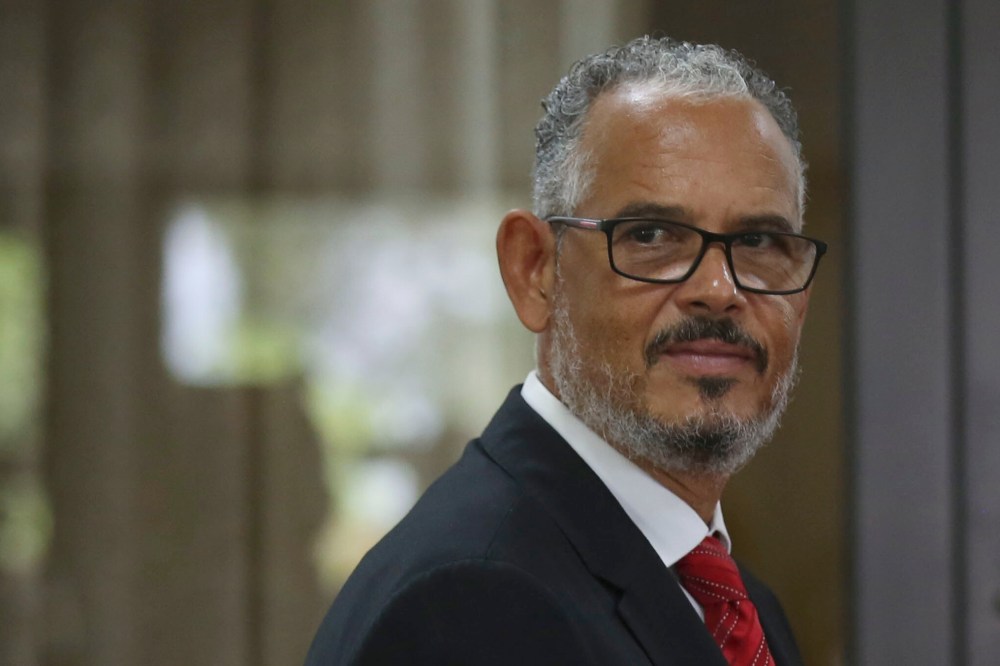
In late January, two of the council’s most influential members announced that a majority had voted to oust Prime Minister Alix Didier Fils-Aimé, defying calls from the U.S. government to uphold the country’s fragile political stability.
Days later, the U.S. government announced visa revocations for four unidentified council members and a Cabinet minister.
The council’s plan to oust Fils-Aimé for reasons not made public appeared to fall to the wayside as it stepped down in an official ceremony on Saturday.
“We need to put our personal interest to the side and continue progress for security,” said the council’s outgoing president, Laurent Saint-Cyr, who rejected a push to dismiss the prime minister.
Fils-Aimé spoke briefly, saying he would address the nation later in the day.
“The presidential council has done its work by paving the way for a governance mindful of security and electoral issues,” he said.
‘I don’t promise miracles’
On Saturday evening, in a rare move for a Haitian prime minister, Fils-Aimé spoke at the hour announced and promised to establish security, hold elections and develop an emergency humanitarian plan to provide food, care and shelter for the most vulnerable.
“The suffering of the population demands immediate action,” he said, stressing that Haitians must unite.
Fils-Aimé, who was flanked by police and army officials, also pledged to make Haiti a safer place. More than 8,100 killings were reported across the country of nearly 11 million people from January to November last year, according to the United Nations, which warned those figures are underreported.
“The gangs and those who support them will be hunted down, one by one. Every occupied area will be retaken, until the day every child walks to school without fear,” he said.
However, Fils-Aimé acknowledged that Haiti has reached what he called a dangerous crossroads.
“The coming days will be demanding,” he said. “I don’t promise miracles.”
Da Rin said negotiations are ongoing to decide what, if anything, would replace the council as a new multinational security mission prepares to transform a U.N.-backed mission led by Kenyan police that was understaffed and underfunded.
“Clarity on who will govern Haiti is essential,” Da Rin wrote in a recent essay. “Countries contributing to this force will want to know they are working alongside a government whose legitimacy is undisputed.”
Feb. 7 is a historic date for Haiti that marks the start of democratic rule after a nearly 30-year dictatorship. It’s also when presidents are traditionally sworn in.
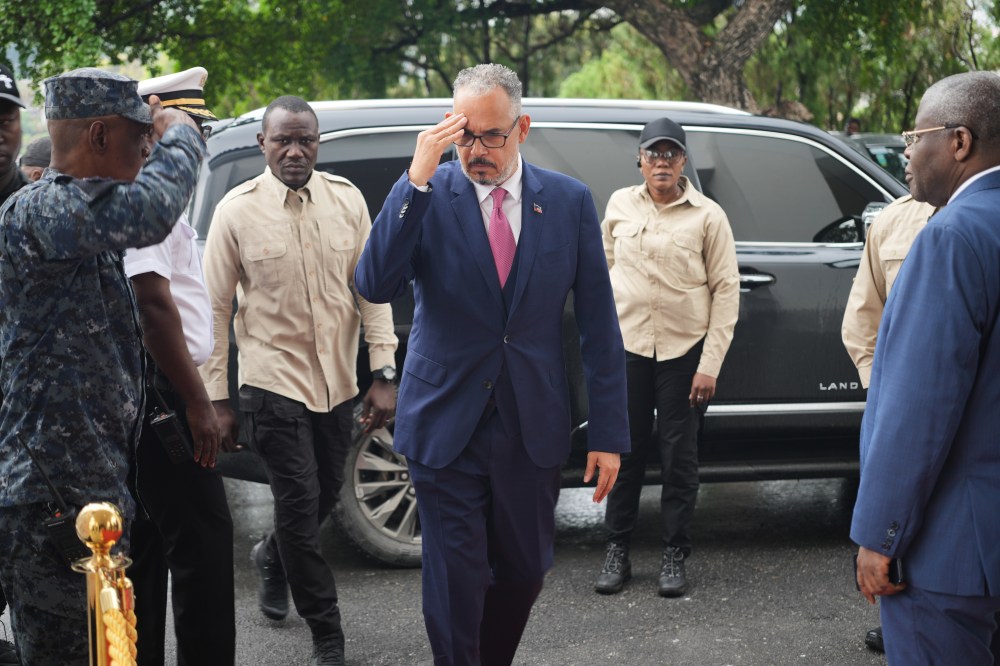
But Haiti failed to hold general elections on Saturday as envisioned a couple of years ago, with gang violence gripping much of the capital and swaths of land in the country’s central region. Tentative dates were announced for August and December, but many believe it’s unlikely an election and a runoff will be held this year.
A troubled tenure
The council was established in April 2024, nearly three years after President Jovenel Moïse was killed at his residence, throwing Haiti into widespread upheaval.
At the time, former Prime Minister Ariel Henry was unable to return to Haiti following an official trip to Kenya because a powerful gang coalition had attacked key state infrastructure over the course of several days, forcing the country’s main international airport to close for nearly three months.
The council was created after Caribbean leaders and U.S. officials urgently met in Jamaica to build a framework for a political transition after Henry resigned.
Council members had long pledged to quell gang violence and improve life for Haiti but fell overwhelmingly short.
“The government has been unable to push back criminal gangs that control most of Port-au-Prince and have expanded into other areas,” Da Rin noted.
The council also was rocked by accusations of corruption, with a government agency accusing three members of bribery in late 2024.
As the council stepped down on Saturday, André Joseph, 42, a street vendor who was selling candy outside their government offices celebrated. He currently lives in a makeshift shelter — one of 1.4 million people displaced by gang violence — and said he wants to return home.
“Their time is up. They were there nearly two years and didn’t do anything for the country,” he said of the council. “Haiti needs to move on with a better government in charge that could lead the country into a better direction.”
___
Coto reported from San Juan, Puerto Rico.