

Nicaraguan government blocks key pathway used by Cuban migrants to reach United States
Advertisement
Read this article for free:
or
Already have an account? Log in here »
To continue reading, please subscribe:

Digital Subscription
One year of digital access for only $205*
- Enjoy unlimited reading on winnipegfreepress.com
- Read the E-Edition, our digital replica newspaper
- Access News Break, our award-winning app
- Play interactive puzzles
*First annual payment billed as $205.00 + GST for one year. This annual subscription will automatically renew at $233.00 + GST every 52 weeks (10% off the regular annual price of $259.35). Offer available to new and qualified returning subscribers only. Cancel any time.
To continue reading, please subscribe:
Add Free Press access to your Brandon Sun subscription for only an additional
$1 for the first 4 weeks*
- Enjoy unlimited reading on winnipegfreepress.com
- Read the E-Edition, our digital replica newspaper
- Access News Break, our award-winning app
- Play interactive puzzles
*Your next Brandon Sun subscription payment will increase by $1.00 and you will be charged $17.95 plus GST for four weeks. After four weeks, your payment will increase to $24.95 plus GST every four weeks.
Read unlimited articles for free today:
or
Already have an account? Log in here »
Hey there, time traveller!
This article was published 08/02/2026 (245 days ago), so information in it may no longer be current.
MEXICO CITY (AP) — Nicaragua’s government on Sunday blocked Cuban citizens from entering the country without a visa, effectively cutting off a key route for Cuban migration to the United States at a time when the Trump administration has put the Caribbean island in an economic chokehold.
Nicaragua’s government confirmed to The Associated Press that it suspended an exemption that allows Cubans to enter the Central American nation without a visa.
The move would effectively cut off Cubans from a country that has long acted as a bridge for Caribbean migrants traveling to the U.S. For years, Cuban migrants would fly to Nicaragua and meet up with smugglers, who would then help them migrate north through Central America and Mexico to get to the U.S. border.
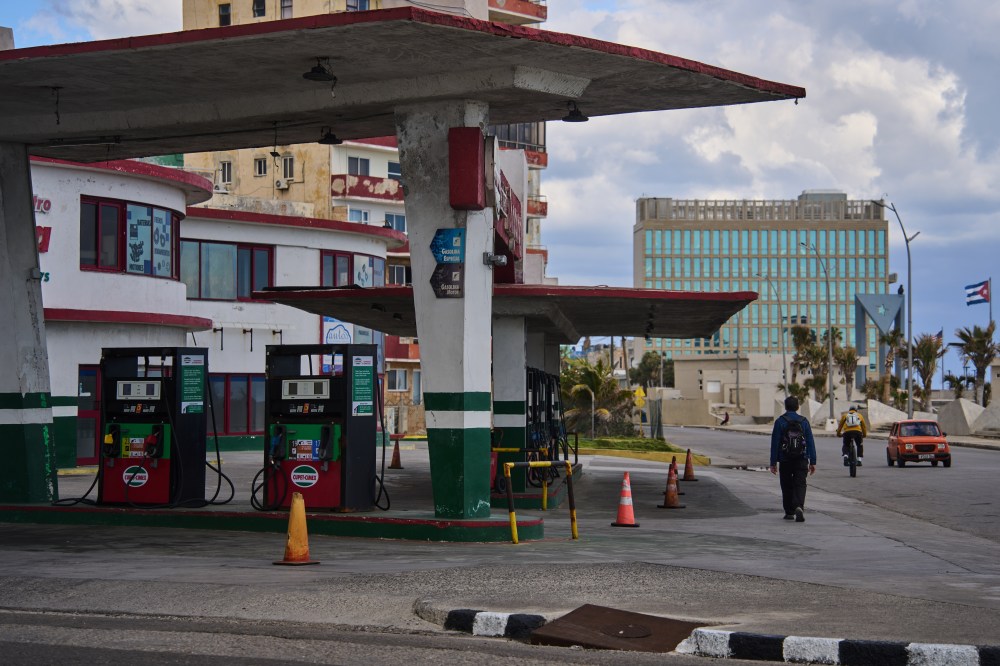
Experts say Nicaragua kept its doors open to people from countries like Cuba and Haiti in a move to weaponize migrants fleeing turmoil against its longtime adversary, the U.S.
But the change comes amid mounting pressure by Trump administration on Latin American nations to fall in line with its vision for the hemisphere, particularly on issues like migration and security.
After a U.S. military operation deposed Venezuelan President Nicolás Maduro in early January, the Trump administration began to step up pressure, particularly on adversary governments like Cuba and Nicaragua.
At the end of January, Trump threatened to impose tariffs on countries that provide oil to Cuba, thrusting the island into an even deepen economic and energy crisis that’s likely to fuel even more migration from a nation that has seen record numbers of people leaving in recent years.
As the Trump administrations carries out a contentious migratory crackdown and largely eliminated access to asylum along the southern border, migration to the U.S. has hit record lows, but the new rules in Nicaragua would put up extreme new barriers for Cuban migrants who hope to reach the U.S. in the future.
What remains is primarily Guyana, a small South American nation where Cubans have also traveled to in order to reach the U.S. From Guyana, Cuban migrants normally travel through the perilous jungled trenches of the Darien Gap dividing Colombia and Panama before winding their way up through the Americas.
In the past, migrants with few other options have also taken precarious boat rides from Cuba to Florida’s coast.

Advertisement Advertise With Us