

Families of Venezuelan prisoners stage hunger strike demanding quick liberation of dissidents
Advertisement
Read this article for free:
or
Already have an account? Log in here »
To continue reading, please subscribe:
Monthly Digital Subscription
$1 per week for 24 weeks*
- Enjoy unlimited reading on winnipegfreepress.com
- Read the E-Edition, our digital replica newspaper
- Access News Break, our award-winning app
- Play interactive puzzles
*Billed as $4.00 plus GST every four weeks. After 24 weeks, price increases to the regular rate of $19.95 plus GST every four weeks. Offer available to new and qualified returning subscribers only. Cancel any time.
Monthly Digital Subscription
$4.99/week*
- Enjoy unlimited reading on winnipegfreepress.com
- Read the E-Edition, our digital replica newspaper
- Access News Break, our award-winning app
- Play interactive puzzles
*Billed as $19.95 plus GST every four weeks. Cancel any time.
To continue reading, please subscribe:
Add Free Press access to your Brandon Sun subscription for only an additional
$1 for the first 4 weeks*
*Your next subscription payment will increase by $1.00 and you will be charged $16.99 plus GST for four weeks. After four weeks, your payment will increase to $23.99 plus GST every four weeks.
Read unlimited articles for free today:
or
Already have an account? Log in here »
CARACAS, Venezuela (AP) — Relatives of Venezuelan prisoners went on hunger strike on Saturday to demand the freedom of their loved ones as politicians in the South American nation debate an amnesty law for dissidents imprisoned under President Nicolas Maduro ’s rule.
In a message posted on Instagram, the Committee for the Freedom of Political Prisoners said the hunger strike is being staged by 10 people and would last until the government frees all 33 political prisoners still being held at a prison known as Zona 7, according to the civil society group’s estimates.
Earlier on Saturday 17 prisoners were released from the Zona 7 detention center in Caracas and held tearful reunions with their families.
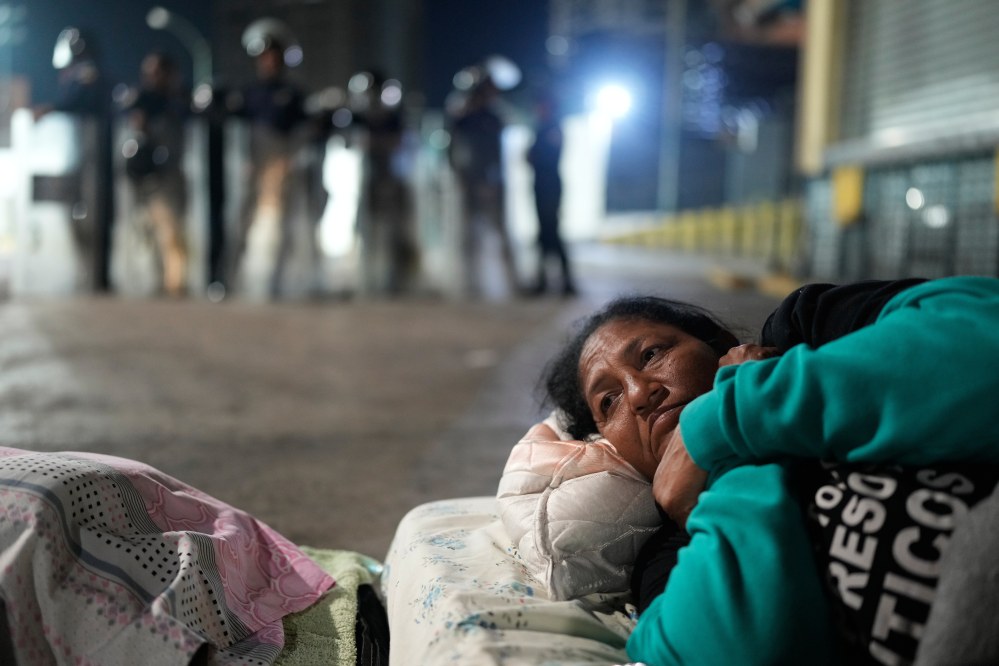
Relatives of dissidents being held at the facility have been sleeping outside since Jan. 8, when Venezuelan officials had announced there would be significant prisoner releases aimed at promoting national reconciliation following a U.S. raid on the country in which Maduro was captured with his wife.
But while hundreds of dissidents have been released from other prisons in Venezuela in recent weeks, liberations at Zona 7 have been scarce.
“We demand that National Assembly president Jorge Rodriguez keep his word and release all of the political prisoners,” said Yessy Orozco, the daughter of a former legislator who was arrested in November.
Venezuela’s authoritarian government has been under pressure from Washington to make political reforms even as the Trump administration eases sanctions on the nation’s oil industry and officials from both nations meet to discuss ways to jump start oil production.
The National Assembly, which is still controlled by the ruling party, on Thursday debated a measure that could free hundreds of opposition members, activists and human rights defenders who have been detained for months or years for political reasons.
The debate in itself was a stark turn for Venezuela, where authorities have for decades denied the country has any political prisoners.
Although lawmakers approved portions of the measure, they ultimately voted to suspend the session to resolve some sticking points, including whether people who left the country to avoid detention can be granted amnesty.
The debate is expected to resume next week.
Venezuela’s exiled opposition leader, Maria Corina Machado, said on Saturday that she will continue to push for new elections to be held in the country as part of a transition to democracy.
She was speaking via video conference to a group of policy analysts who had attended the Munich Security Conference, an annual event that is attended by world leaders.
“A transition to democracy will be orderly, it will be peaceful, and as soon as it takes place it will be better not only for Venezuelans but also for the region and the United States,” said Machado, who was awarded the Nobel Peace Prize in December.
She did not provide a date for when elections should be held, arguing that depended on “political conditions.” Trump administration officials, including Secretary of State Marco Rubio, have also expressed their desire for new elections in Venezuela, but have so far refrained from laying out a time frame.
Machado rejected suggestions made by some analysts that chaos would break out in Venezuela if the current government is replaced.
“We have a civil society that is cohesive, united, with no religious, racial or regional factions,” she said. “And we have the support of the majority of the armed forces.”