

Colombian president accepts rebel’s proposal to have a commission investigate its possible drug ties
Advertisement
Read this article for free:
or
Already have an account? Log in here »
To continue reading, please subscribe:
Monthly Digital Subscription
$1 per week for 24 weeks*
- Enjoy unlimited reading on winnipegfreepress.com
- Read the E-Edition, our digital replica newspaper
- Access News Break, our award-winning app
- Play interactive puzzles
*Billed as $4.00 plus GST every four weeks. After 24 weeks, price increases to the regular rate of $19.95 plus GST every four weeks. Offer available to new and qualified returning subscribers only. Cancel any time.
Monthly Digital Subscription
$4.99/week*
- Enjoy unlimited reading on winnipegfreepress.com
- Read the E-Edition, our digital replica newspaper
- Access News Break, our award-winning app
- Play interactive puzzles
*Billed as $19.95 plus GST every four weeks. Cancel any time.
To continue reading, please subscribe:
Add Free Press access to your Brandon Sun subscription for only an additional
$1 for the first 4 weeks*
*Your next subscription payment will increase by $1.00 and you will be charged $16.99 plus GST for four weeks. After four weeks, your payment will increase to $23.99 plus GST every four weeks.
Read unlimited articles for free today:
or
Already have an account? Log in here »
BOGOTA, Colombia (AP) — Colombian President Gustavo Petro said Sunday he would accept a proposal made by the nation’s largest remaining rebel group to allow an independent commission to investigate the group’s alleged links to the drug trade.
The proposal was made in a video published on Jan. 20 video by Antonio Garcia, the head of the National Liberation Army, or ELN. In the video, Garcia said that while the rebels impose a tax on cocaine traders, they do not run any drug trafficking routes or cocaine labs.
“The ELN has no relation to drug trafficking,” Garcia said in the video and challenged the government to allow an independent commission to verify the group’s claims.
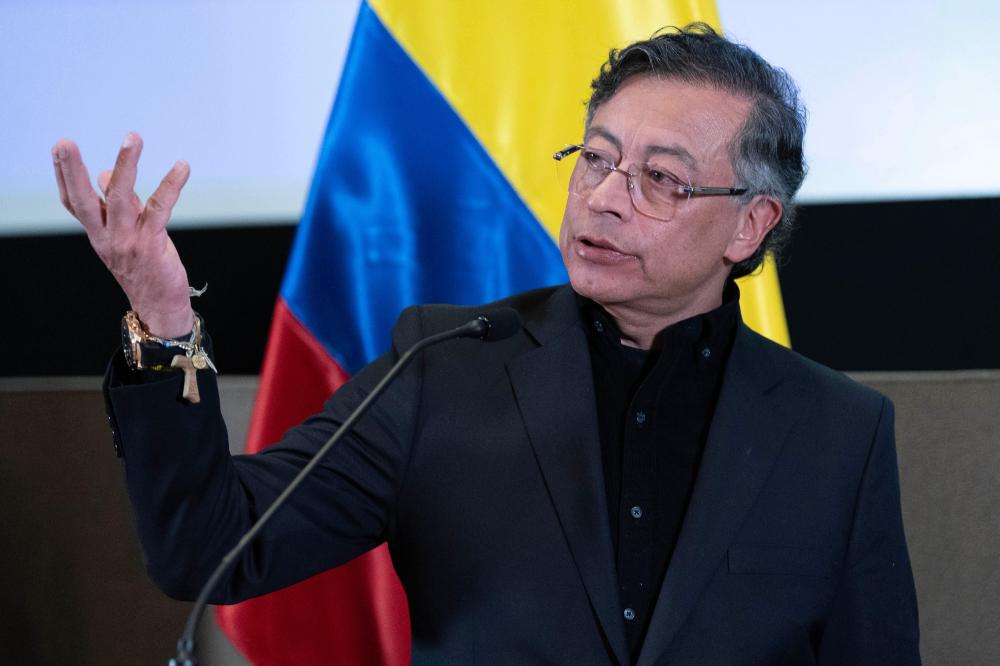
In a message on X Sunday, Petro said he would accept the proposal, adding that the agency that verifies the rebel’s claims should be “scientific and independent of governments” and should deliver its findings to the United Nations. Petro also urged the rebels to back efforts to replace coca crops in the northeastern Catatumbo region.
Colombia’s president has long accused the rebels of profiting from the drug trade calling its leadership “drug traffickers dressed up as guerrilla fighters.”
The group’s alleged relation to drug trafficking was one of the issues that stopped peace talks from advancing in the first two years of the Petro administration.
Peace talks between both sides ultimately broke down last year after the ELN staged an offensive in Catatumbo in which dozens of people were killed and more than 50,000 were forced to flee their homes.
The ELN said in January that it would like to work with the government on a “national accord” that would enable negotiations to resume.
But Petro has said that he will only resume talks with the group when it gives up drug trafficking.
The ELN was founded in the early 1960s and has approximately 5,000 fighters in Colombia and neighboring Venezuela.
The ELN’s grip over rural communities along Colombia’s border with Venezuela has increased in recent years as it fills a power vacuum left by the Revolutionary Armed Forces of Colombia, the rebel group that disbanded in 2017, after signing a peace deal with Colombia’s government.
In January, Colombian officials said that in call with President Donald Trump they discussed the possibility of staging attacks on the ELN with the help of the U.S. military.