

Venezuelan nonprofit says 16 verified prisoners released under Venezuela’s amnesty
Advertisement
Read this article for free:
or
Already have an account? Log in here »
To continue reading, please subscribe:

Digital Subscription
One year of digital access for only $205*
- Enjoy unlimited reading on winnipegfreepress.com
- Read the E-Edition, our digital replica newspaper
- Access News Break, our award-winning app
- Play interactive puzzles
*First annual payment billed as $205.00 + GST for one year. This annual subscription will automatically renew at $233.00 + GST every 52 weeks (10% off the regular annual price of $259.35). Offer available to new and qualified returning subscribers only. Cancel any time.
To continue reading, please subscribe:
Add Free Press access to your Brandon Sun subscription for only an additional
$1 for the first 4 weeks*
- Enjoy unlimited reading on winnipegfreepress.com
- Read the E-Edition, our digital replica newspaper
- Access News Break, our award-winning app
- Play interactive puzzles
*Your next Brandon Sun subscription payment will increase by $1.00 and you will be charged $17.95 plus GST for four weeks. After four weeks, your payment will increase to $24.95 plus GST every four weeks.
Read unlimited articles for free today:
or
Already have an account? Log in here »
Hey there, time traveller!
This article was published 22/02/2026 (191 days ago), so information in it may no longer be current.
CARACAS, Venezuela (AP) — Venezuela-based prisoners’ rights group Foro Penal said on X Sunday that it had verified the release of 16 people since an amnesty bill for people in held for political reasons was signed into law this week.
That number is far below those given by National Assembly leader Jorge Rodríguez a day prior. On Saturday, he said that 1,557 applications were being processed immediately and that hundreds people deprived of liberty benefiting from the amnesty law were already being released.
Venezuela’s acting President Delcy Rodríguez signed the amnesty measure into law on Thursday, signaling a major shift in policy following last month’s stunning U.S. military raid in the capital, Caracas, to capture then-President Nicolás Maduro.
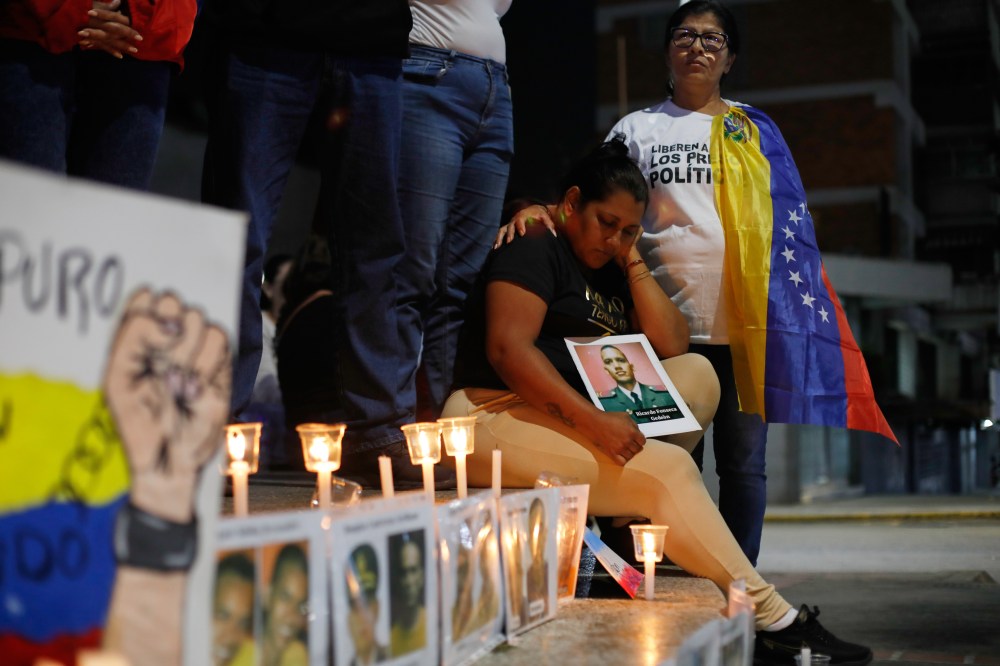
It is expected to benefit opposition members, activists, human rights defenders, journalists and many others detained for months or even years.
But human rights organizations have reacted with distrust to the approval of the law, calling it insufficient because it leaves out, for example, imprisoned military personnel.
The new law also excludes those convicted of homicide, drug trafficking and serious human rights violations.
Days after Maduro’s capture, Rodríguez’s government offered to release a significant number of prisoners as a gesture to consolidate peace. Since then, a total of 464 people have been released but more than 600 remain detained, according to Foro Penal.
These releases did not grant full freedom but rather are a precautionary measure substituting imprisonment. Released detainees are banned from speaking to the press, leaving the country and participating in political activities.
The opposition has demanded an amnesty law which grants full freedom to political detainees.
The Venezuelan Red Cross in a statement on Sunday that it would accept the government’s invitation to accompany the release process stemming from the amnesty law.