

Syrian government forces and Druze fighters exchange prisoners from summer clashes
Advertisement
Read this article for free:
or
Already have an account? Log in here »
To continue reading, please subscribe:

Digital Subscription
One year of digital access for only $205*
- Enjoy unlimited reading on winnipegfreepress.com
- Read the E-Edition, our digital replica newspaper
- Access News Break, our award-winning app
- Play interactive puzzles
*First annual payment billed as $205.00 + GST for one year. This annual subscription will automatically renew at $233.00 + GST every 52 weeks (10% off the regular annual price of $259.35). Offer available to new and qualified returning subscribers only. Cancel any time.
To continue reading, please subscribe:
Add Free Press access to your Brandon Sun subscription for only an additional
$1 for the first 4 weeks*
- Enjoy unlimited reading on winnipegfreepress.com
- Read the E-Edition, our digital replica newspaper
- Access News Break, our award-winning app
- Play interactive puzzles
*Your next Brandon Sun subscription payment will increase by $1.00 and you will be charged $17.95 plus GST for four weeks. After four weeks, your payment will increase to $24.95 plus GST every four weeks.
Read unlimited articles for free today:
or
Already have an account? Log in here »
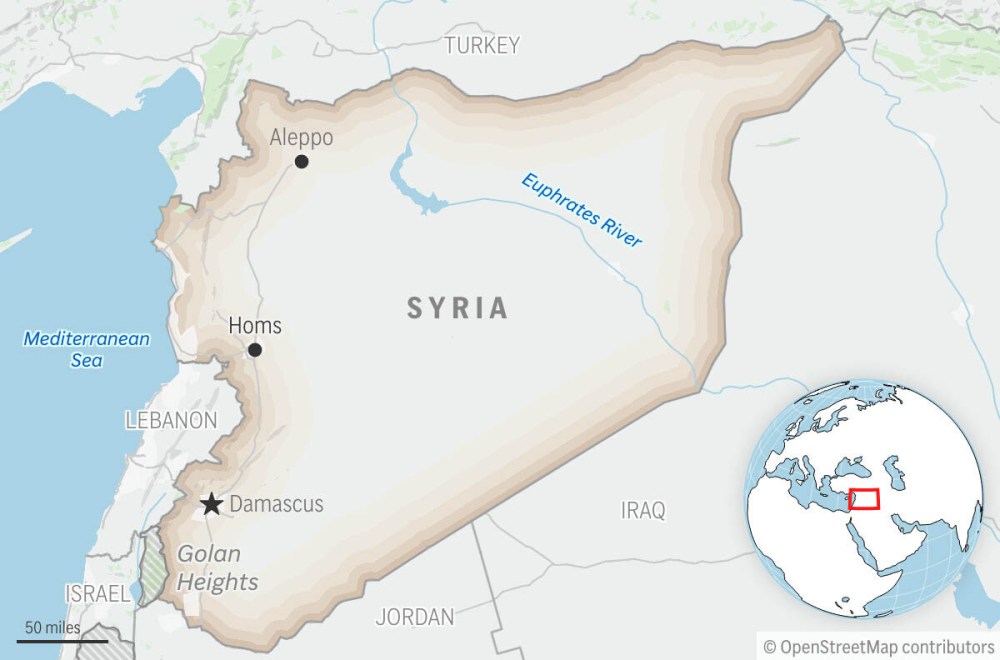
AL MATUNA, Syria (AP) — Syrian government forces and Druze militiamen who control areas in the southern Sweida province on Thursday exchanged prisoners taken in clashes last summer, a rare step toward a possible political resolution of simmering tensions in the country.
The exchange was the first major sign of progress in attempts by the United States and Jordan to broker a political settlement between the two sides.
The Syrian government side handed over 61 prisoners while local authorities in the Druze-run parts of Sweida released 25 at a checkpoint in the al-Matuna area in northern Sweida. The exchange was facilitated by the International Committee of the Red Cross.
Syrian Interior Ministry spokesperson Noureddine al-Baba told journalists that the exchange deal was reached “through the combined efforts of international and local parties, and it reflects the Syrian state’s commitment to all its citizens, from all backgrounds and affiliations and across all provinces.”
Stephan Sakalian, head of the ICRC delegation in Syria, expressed “hopes that this operation will pave the way toward possible further releases and dialogue between all parties on other humanitarian concerns,” including the fate of people who went missing during the violence.
Talal Amer, spokesperson for the National Guard, the de facto military in Sweida, said the deal was made via the ICRC “and international guarantors without any direct contact with the Damascus government.”
Amer said the prisoners released into Sweida were civilians, while those from the government side were members of the military. Baba did not specify whether captives from Sweida were civilians or fighters but praised “the heroes of the Syrian Arab Army and the Ministry of Interior officers who have returned to us after being patient.”
In mid-July, armed groups affiliated with Druze leader Sheikh Hikmat al-Hijri clashed with local Bedouin clans, spurring intervention by government forces, which effectively sided with the Bedouins.
Hundreds of civilians, mostly Druze, were killed, many by government fighters. Tens of thousands of people, both Druze and Bedouins, were displaced in the fighting.
Since then, a large group of the militias banded together under al-Hijri, creating a de facto anonymous area in large swaths of the province, backed by neighboring Israel.
Since former Syrian President Bashar Assad was ousted in an offensive by Islamist-led insurgents in December 2024, the new authorities in Damascus have struggled to unify the country and consolidate control over the territory.

A deal reached last month with the Kurdish-led Syrian Democratic Forces that have controlled much of the country’s northeast was a significant step toward consolidation — and also left Sweida as the main area left outside government control.
The Druze religious sect began as a 10th-century offshoot of Ismailism, a branch of Shiite Islam. Over half of the roughly 1 million Druze worldwide live in Syria. Most other Druze live in Lebanon and Israel, including in the Golan Heights, which Israel seized from Syria in 1967 and later annexed.
——
Associated Press journalist Abdelrahman Shaheen in Damascus, Syria, contributed.