

Satellite images show damage to Iran’s Natanz nuclear facility
Advertisement
Read this article for free:
or
Already have an account? Log in here »
To continue reading, please subscribe:

Digital Subscription
One year of digital access for only $205*
- Enjoy unlimited reading on winnipegfreepress.com
- Read the E-Edition, our digital replica newspaper
- Access News Break, our award-winning app
- Play interactive puzzles
*First annual payment billed as $205.00 + GST for one year. This annual subscription will automatically renew at $233.00 + GST every 52 weeks (10% off the regular annual price of $259.35). Offer available to new and qualified returning subscribers only. Cancel any time.
To continue reading, please subscribe:
Add Free Press access to your Brandon Sun subscription for only an additional
$1 for the first 4 weeks*
- Enjoy unlimited reading on winnipegfreepress.com
- Read the E-Edition, our digital replica newspaper
- Access News Break, our award-winning app
- Play interactive puzzles
*Your next Brandon Sun subscription payment will increase by $1.00 and you will be charged $17.95 plus GST for four weeks. After four weeks, your payment will increase to $24.95 plus GST every four weeks.
Read unlimited articles for free today:
or
Already have an account? Log in here »
Hey there, time traveller!
This article was published 03/03/2026 (187 days ago), so information in it may no longer be current.
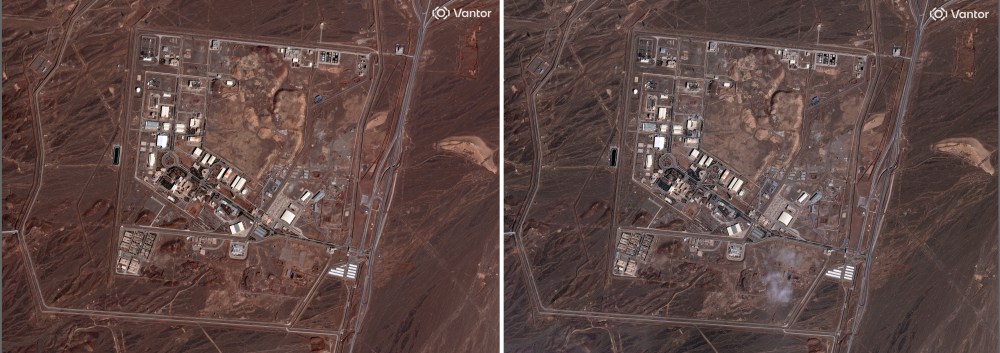
Satellite images of Iran’s Natanz nuclear facility taken on Monday show several damaged buildings, compared with imagery from the previous day, along with additional damage across the facility’s complex.
Vantor, an imaging company based in Colorado and formerly known as Maxar Technologies, released images that it said showed damage to buildings housing personnel and to vehicle entrances to the underground fuel enrichment complex.
Earlier Tuesday, the United Nations’ nuclear watchdog said the Natanz enrichment site sustained “some recent damage” following the U.S.-Israeli attack on Iran.
The International Atomic Energy Agency (IAEA) said there was “no radiological consequence expected.”
The nuclear facility at Natanz, located nearly 220 kilometers (135 miles) southeast of Tehran, is Iran’s main enrichment site. It had been targeted by Israeli airstrikes in the 12-day war between Iran and Israel in June 2025, and by the U.S.
Monday’s attack on the Natanz facility marks the first confirmed strike against a nuclear site in Iran during the latest round of fighting.
Following last summer’s brief war, U.S. President Donald Trump and his administration said that Iran’s nuclear capabilities had been “obliterated”. But ahead of the current round of hostilities, Trump again warned of Iran’s nuclear ambitions. He claimed on Monday that Iran was seeking to rebuild its nuclear program.
Iran has four declared nuclear enrichment facilities. The IAEA said last week in a confidential report, seen by The Associated Press, that due to lack of access it “cannot provide any information on the current size, composition or whereabouts of the stockpile of enriched uranium in Iran.”
Iran has said it has not enriched since June, but it has blocked international inspectors from visiting the sites the U.S. bombed. Satellite photos analyzed by AP have shown new activity at two of those sites, suggesting Iran was trying to assess and potentially recover material.
Related Articles
Explosions sound in the Iranian capital as war with US and Israel enters a fifth day
Advertisement Advertise With Us