

Young people expect little change as the Republic of Congo heads to a presidential election
Advertisement
Read this article for free:
or
Already have an account? Log in here »
To continue reading, please subscribe:
Monthly Digital Subscription
$1 per week for 24 weeks*
- Enjoy unlimited reading on winnipegfreepress.com
- Read the E-Edition, our digital replica newspaper
- Access News Break, our award-winning app
- Play interactive puzzles
*Billed as $4.00 plus GST every four weeks. After 24 weeks, price increases to the regular rate of $19.95 plus GST every four weeks. Offer available to new and qualified returning subscribers only. Cancel any time.
Monthly Digital Subscription
$4.99/week*
- Enjoy unlimited reading on winnipegfreepress.com
- Read the E-Edition, our digital replica newspaper
- Access News Break, our award-winning app
- Play interactive puzzles
*Billed as $19.95 plus GST every four weeks. Cancel any time.
To continue reading, please subscribe:
Add Free Press access to your Brandon Sun subscription for only an additional
$1 for the first 4 weeks*
*Your next subscription payment will increase by $1.00 and you will be charged $16.99 plus GST for four weeks. After four weeks, your payment will increase to $23.99 plus GST every four weeks.
Read unlimited articles for free today:
or
Already have an account? Log in here »
BRAZZAVILLE, Republic of Congo (AP) — Voters in the Republic of Congo will be heading to the polls in a presidential election this weekend, with the outcome of the vote all but a foregone conclusion as the country’s longtime leader faces little opposition in the political arena.
Many young people say they see no reason to participate in the election that the incumbent, President Dennis Sassou N’Guesso, is certain to win. The six opposition candidates have not mounted a significant challenge to the man who has ruled the oil-rich Central African country of 5.61 million people for a total of 42 years.
The 82-year-old Sassou N’Guesso first came to power in 1979, and served until the 1992 election when he finished third. He then took hold of the country again as a militia leader after a four-month civil war in 1997, and has been at the helm ever since, winning four elections against a fragmented opposition.
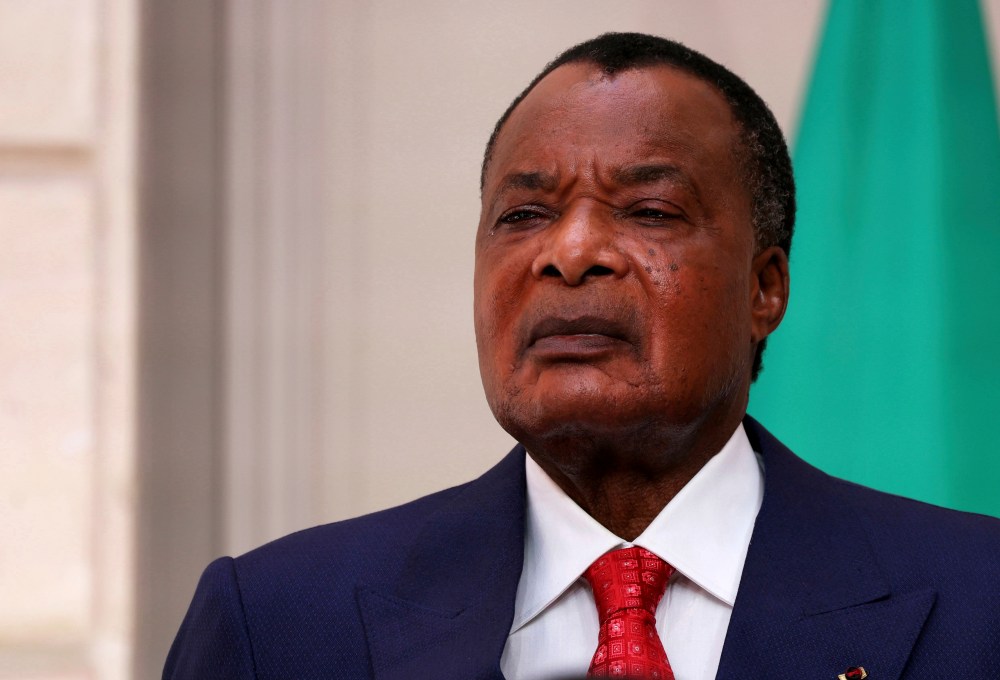
He is the third longest ruling African leader, after Cameroon ’s Paul Biya and Equatorial Guinea ’s Teodoro Obiang Nguema Mbasogo. A 2015 referendum removed presidential age limits and term limits, allowing Sassou N’Guesso to remain eligible for office.
Disillusioned young people
Among the country’s young people, there seems to be little hope for any change and many plan to sit out the vote on Sunday.
Among them is Macaire Epoha, a 38-year-old mathematician who says he takes up odd jobs to survive in the country’s capital of Brazzaville.
“N’Guesso will be re-elected with his usual scores, which are close to 80%,” Epoha said. “The elections have no bearing on young people.”
Cyprien Massamba graduated from the university with a degree in geography but has been a taxi driver for 10 years. He says he won’t vote and hopes enough people boycott the election to bring the country’s dire economic conditions to the attention of the international community.
“The people are languishing in poverty,” Massamba said.
Remadji Hoinathy, a senior researcher on central Africa at the Institute of Security Studies, says the elections only serve to “legitimize power without competition.”
‘Oil revenues have been ill-managed’
N’Guesso, who is running on the list of his Congolese Party of Labor, is being challenged by six candidates, including Mabio Mavoungou Zinga, a former member of parliament who leads an opposition coalition.
Experts say the opposition has no chance after the ruling party consolidated power, often using intimidation tactics to weaken the opposition. Two major opposition candidates are boycotting the election over allegations of unfair electoral practices.
Struggling with high levels of debt and an enduring economic slump, the unemployment among young people between the ages of 15 and 24 is 41% — nearly double the 22% rate for the whole labor force, according to the World Bank.
Tethered to its oil resources, the country’s economy is exposed to the shocks of the international oil market and battles a skyrocketing debt-to-GDP ratio — which measures its debt to its economic output — that stands at 95.4%, according to the World Bank.
“If you look at the level of the debt and youth unemployment, then it clearly appears the oil revenues have been ill-managed in terms of being unable to diversify the economy, respond to people’s daily needs and create jobs for the youth,” said Hoinathy, the senior Central Africa researcher.
An ‘old guard’ that won’t last forever
Political analysts see another issue on the horizon — that of the president’s successor. Pending the almost-certain election win and considering his age, this could well be N’Guesso’s last term in office, they say.
Denis-Christel Sassou Nguesso — the 51-year-old son of the president who has served as minister of international cooperation and promotion of public-private partnership since 2021 — is being primed for the role, they say.
The president’s campaign pitch to the country’s young people has been a call to “accelerate the march toward development,” promising to speed up infrastructure development and mechanization of agriculture.
But in a nation where 47% of the population is under 18, the young have apparently not been rallied by the call.
“The system is locked down by the old guard,” said Coretta Imongui, a 28-year mother of three who is looking for a job.
“However, they will not live forever,” she said. “I still have hope for my children and grandchildren.”
___
Adetayo reported from Lagos, Nigeria.