

El Salvador’s Bukele pushes through life sentences in nation that has imprisoned 1% of population
Advertisement
Read this article for free:
or
Already have an account? Log in here »
To continue reading, please subscribe:

Digital Subscription
One year of digital access for only $205*
- Enjoy unlimited reading on winnipegfreepress.com
- Read the E-Edition, our digital replica newspaper
- Access News Break, our award-winning app
- Play interactive puzzles
*First annual payment billed as $205.00 + GST for one year. This annual subscription will automatically renew at $233.00 + GST every 52 weeks (10% off the regular annual price of $259.35). Offer available to new and qualified returning subscribers only. Cancel any time.
To continue reading, please subscribe:
Add Free Press access to your Brandon Sun subscription for only an additional
$1 for the first 4 weeks*
- Enjoy unlimited reading on winnipegfreepress.com
- Read the E-Edition, our digital replica newspaper
- Access News Break, our award-winning app
- Play interactive puzzles
*Your next Brandon Sun subscription payment will increase by $1.00 and you will be charged $17.95 plus GST for four weeks. After four weeks, your payment will increase to $24.95 plus GST every four weeks.
Read unlimited articles for free today:
or
Already have an account? Log in here »
Hey there, time traveller!
This article was published 17/03/2026 (197 days ago), so information in it may no longer be current.
SAN SALVADOR (AP) — El Salvador’s Congress approved a constitutional amendment pushed forward by President Nayib Bukele on Tuesday to permit life sentences in a country that has imprisoned more than 1% of its population in its war against gangs.
The reform was presented by Bukele’s security cabinet earlier in the day before El Salvador’s legislature, which is firmly in control of the populist leader’s party.
The measure was approved by 59 of the 60 lawmakers, and is slated to be ratified next week.
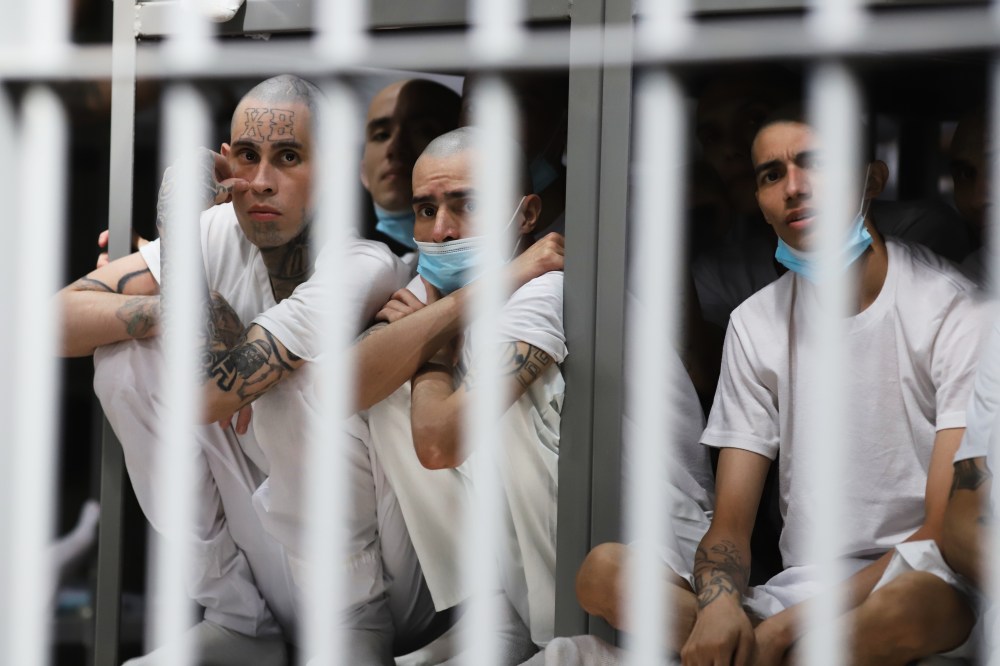
It comes as Bukele has pushed forward rounds of constitutional reforms, which have been sharply criticized for chipping away at checks and balances as well as undermining the country’s delicate democracy.
“We will see who supports this reform and who dares to defend the idea that the Constitution should continue prohibiting murderers and rapists from remaining in prison,” Bukele wrote in a post on X on Tuesday.
In August, the government pushed through another reform that would do away with presidential term limits, paving the way for Bukele to stay in power indefinitely. Legal experts widely consider Bukele’s second term, that began in 2024 to violate the constitution, which prohibits consecutive reelection.
The latest reform builds upon other measures Bukele has taken to combat El Salvador’s gangs, including a state of emergency that began in March 2022 following a wave of gang violence.
The measure, which is meant to be temporary but has been extended for nearly four years, suspends key constitutional rights and has led to around 91,300 people being detained.
Human rights groups have documented cases of arbitrary detentions for years, with one group even alleging before the Inter-American Commission on Human Rights (IACHR) that the vast majority of those imprisoned under the state of emergency were arbitrarily detained. Bukele sharply criticized the allegation, but he has said that 8,000 innocent people have been released.
Emboldened by Bukele’s alliance with U.S. President Donald Trump, the government has also gone after its enemies, detaining critics and activists, and increasingly forcing journalists and opposition voices to choose between exile or prison.
Those detained under the state of exception are held in prisons with little evidence, under vague accusations by authorities, and with very little access to due process. Prisoners are often judged in mass trials and lawyers regularly lose track of where their clients are.
Officials in Bukele’s government have previously vowed that gang members detained “will never return” to the streets.
___
Follow AP’s Latin America coverage at https://apnews.com/hub/latin-america