

Shigeaki Mori, Hiroshima atomic bomb survivor and historian embraced by Obama, dies at 88
Advertisement
Read this article for free:
or
Already have an account? Log in here »
To continue reading, please subscribe:

Digital Subscription
One year of digital access for only $205*
- Enjoy unlimited reading on winnipegfreepress.com
- Read the E-Edition, our digital replica newspaper
- Access News Break, our award-winning app
- Play interactive puzzles
*First annual payment billed as $205.00 + GST for one year. This annual subscription will automatically renew at $233.00 + GST every 52 weeks (10% off the regular annual price of $259.35). Offer available to new and qualified returning subscribers only. Cancel any time.
To continue reading, please subscribe:
Add Free Press access to your Brandon Sun subscription for only an additional
$1 for the first 4 weeks*
- Enjoy unlimited reading on winnipegfreepress.com
- Read the E-Edition, our digital replica newspaper
- Access News Break, our award-winning app
- Play interactive puzzles
*Your next Brandon Sun subscription payment will increase by $1.00 and you will be charged $17.95 plus GST for four weeks. After four weeks, your payment will increase to $24.95 plus GST every four weeks.
Read unlimited articles for free today:
or
Already have an account? Log in here »
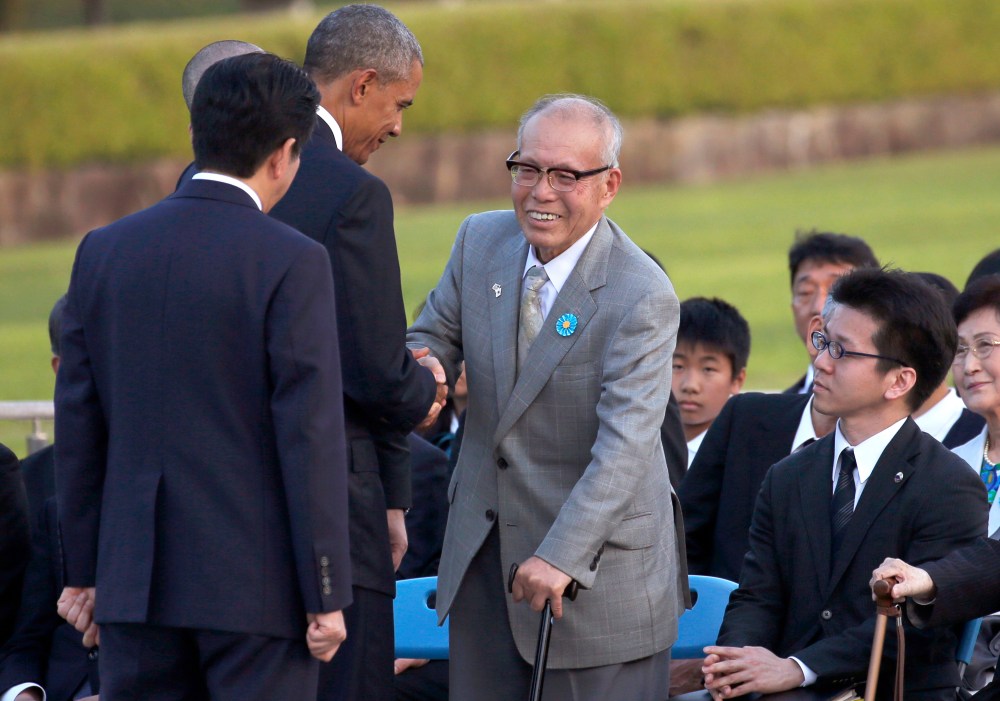
TOKYO (AP) — Shigeaki Mori, a Japanese atomic bomb survivor in Hiroshima and a historian but best known for a big hug he was given by then U.S. President Barack Obama during his historic visit to the city a decade ago, has died. He was 88.
Born in 1937, Mori was 8 years old when he survived the Aug. 6, 1945 U.S. attack only 2 1/2 kilometers (1 1/2 miles) away from the blast. About 30 years later, he learned a little known fact — that American prisoners of war held in Japan were among those killed by the atomic bomb dropped by their own country.
Working as a full-time company employee, Mori researched U.S. and Japanese official documents and tracked down 12 American POWs. He wrote letters to their bereaved families in the U.S. who didn’t know how their loved ones had died.
The U.S. atomic attack on Hiroshima instantly destroyed the city and killed tens of thousands. The death toll by the end of that year was 140,000. A second bomb dropped on Nagasaki killed another 70,000.
Mori authored a book, “The Secret of the American POWs Killed by the Atomic Bomb,” published in Japanese in 2008. The book won him a prestigious Kikuchi Kan Prize, and was later translated into English.
Editors of the English translation of his book said on their website that Mori died on Sunday. Japanese media reported that he died at a Hiroshima hospital.
His research eventually led to U.S. confirmation of the deaths of the 12 captured American service members in the bombing.
“The research I spent more than 40 years was not about people from the enemy country. It was about human beings,” Mori later said.
Obama, who became the first U.S. leader to visit Hiroshima’s Peace Memorial Park in 2016, mentioned in his speech “a dozen Americans held prisoner” as being among the victims. He recognized Mori for seeking out the Americans’ families, believing their loss was equal to his own, and later gave him a hug.