

Iranian and Romanian charged after trying to enter UK’s nuclear submarine base
Advertisement
Read this article for free:
or
Already have an account? Log in here »
To continue reading, please subscribe:

Digital Subscription
One year of digital access for only $205*
- Enjoy unlimited reading on winnipegfreepress.com
- Read the E-Edition, our digital replica newspaper
- Access News Break, our award-winning app
- Play interactive puzzles
*First annual payment billed as $205.00 + GST for one year. This annual subscription will automatically renew at $233.00 + GST every 52 weeks (10% off the regular annual price of $259.35). Offer available to new and qualified returning subscribers only. Cancel any time.
To continue reading, please subscribe:
Add Free Press access to your Brandon Sun subscription for only an additional
$1 for the first 4 weeks*
- Enjoy unlimited reading on winnipegfreepress.com
- Read the E-Edition, our digital replica newspaper
- Access News Break, our award-winning app
- Play interactive puzzles
*Your next Brandon Sun subscription payment will increase by $1.00 and you will be charged $17.95 plus GST for four weeks. After four weeks, your payment will increase to $24.95 plus GST every four weeks.
Read unlimited articles for free today:
or
Already have an account? Log in here »
LONDON (AP) — An Iranian man and a Romanian woman have been charged after trying to enter the naval base in Scotland that is home to Britain’s nuclear-armed submarines, police said Saturday,
Police Scotland said the 34-year-old man and 31-year-old woman will appear at Dumbarton Sheriff Court on Monday.
As is customary in Scotland, police did not release the suspects’ names or the charges they face before their court hearing.
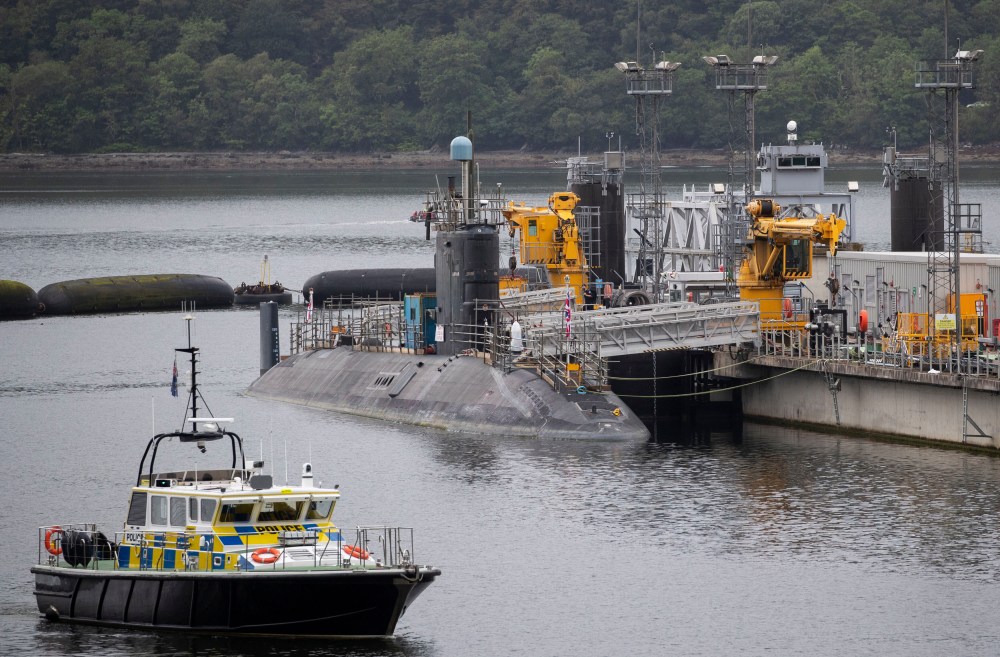
The pair were detained on Thursday after attempting to enter HM Naval Base Clyde, about 40 miles (64 kilometers) northwest of Glasgow.
The base, also known as Faslane, is home to the core of the U.K.’s submarine fleet, including the vessels that carry nuclear weapons.
Britain has been a nuclear power since the 1950s. Since the 1990s, its nuclear deterrent has consisted of four Royal Navy submarines armed with Trident missiles.